
BizTalk: What the coronavirus teaches us – CGTN
— Read on news.cgtn.com/news/7941544f7830575a306c5562684a335a764a4855/index.html
Day: February 28, 2020
‘Pandemic bonds’ are latest idea to beat disease
World Bank raises debt whose payments can be diverted from investors in emergency
— Read on archive.is/CnYja
Why Pandemic Bonds Aren’t Such A Bad Idea
WSJ – The Painful Problem of Pandemic Bonds
Breakingviews – Pandemic bonds are the sick man of finance
$425M in World Bank catastrophe bonds set to default if coronavirus declared a pandemic by June
Catastrophe Bonds Signal Coronavirus Nearing Pandemic Status
What the Coronavirus Means for the World’s First Pandemic Bonds
As Virus Spreads Over The Planet Governments Are Slow To React
Under the U.S. medical system testing will be expensive for the patients. Insurances may not pay for it. Many people will be unable or unwilling to spend money on it. Care for serious cases will also be limited by high prices. This guarantees that the virus will spread further. China was smart enough to guarantee 100% state coverage for testing and all necessary care. The U.S. should follow that principle but is unlikely to do so.
— Read on www.moonofalabama.org/2020/02/coronavirus-globally.html
Shows that U.S. needs Universal Healthcare!
Coronavirus could cost Trump the election, Goldman Sachs warns
A market meltdown. Surging recession fears. And a sudden spotlight on America’s health care system. Goldman Sachs is warning Wall Street that the coronavirus could cost President Donald Trump the
— Read on https://www.stltoday.com/business/coronavirus-could-cost-trump-the-election-goldman-sachs-warns/article_d2dc0a79-f33f-5626-93a0-3f6569711425.html
Memo by Crux Informatics threatens former employees with legal action
The memo, written by the firm’s CFO Marie Sonde, was sent to former employees on Valentine’s Day last week.
— Read on web.archive.org/web/20200220200131/https://www.businessinsider.com/memo-by-crux-informatics-threatens-former-employees-with-legal-action-2020-2
Michael Bloomberg called Goldman Sachs bankers his ‘peeps’ and promised to defend them, leaked tape reveals
Presidential candidate Michael Bloomberg is being criticised for telling bankers he would have defended them as president in a leaked audio from a private Goldman Sachs event in 2016. At the event, Mr Bloomberg first described the audience as his “peeps”, and said that had he run for president that year, his “first campaign platform” would have been “to defend the banks.”
— Read on www.independent.co.uk/news/world/americas/us-politics/michael-bloomberg-goldman-sachs-bank-wall-street-leaked-audio-a9356721.html
Breaking Up Is So Very Hard to Do
A 2018 independence vote in New Caledonia resulted in 43.3 percent in favor, with 56.67 percent opposed. On September 6, 2020, New Caledonia will hold another referendum. Independence for the French territory in the Pacific is prejudiced by the number of wealthy French Europeans who reside in the territory and outside political and intelligence influence by Australia. A similar independence referendum for the island chain of Chuuk in Micronesia is scheduled for March 2020. In August 2019, U.S. Secretary of State Mike Pompeo made the first visit by a Secretary of State to Micronesia, a former U.S. Trust Territory. On the agenda was U.S. militarization of the region, as well as firm opposition to the impending Chuukese independence referendum. That same bellicose attitude by the Pompeo State Department has resulted in postponed status referenda in the Danish territories of the Faroes and Greenland, where U.S. militarization of the Arctic is high on the Trump administration’s agenda
— Read on www.strategic-culture.org/news/2020/02/27/breaking-up-is-so-very-hard-to-do/
Can MIC just leave shit alone?!
As Usual, Western Media Grossly Distort Syria’s Conflict
Two significant events happened this week, both of which were largely ignored by Western media, which gives an indication of their duplicitous political agenda.
The Syrian army routed the terror groups from dozens of villages and towns in Aleppo countryside. What then followed were huge celebrations by civilians in Aleppo city because the terrorists would no longer be able to launch deadly rocket and mortar attacks on residents. It was these attacks over the past year in violation of countless ceasefire attempts by the government in Damascus that finally prompted the offensive by the Syrian army to eliminate the terrorist remnants.
The second significant event was the reopening of Aleppo international airport to flights. The airport was not able to operate despite the city having been fully liberated at the end of 2016 by the Syrian army and its Russian ally. The relentless shelling by terror groups from the surrounding countryside meant that Syria’s second city had to keep its airport closed for the past three years (in addition to the five years before liberation). As a result of finally clearing Aleppo province of militants this week, the city’s airport is now open for business. Life is returning to some normality.
— Read on popularresistance.org/as-usual-western-media-grossly-distort-syrias-conflict/
Turkey ups the ante in Syria and why the US, China are expelling journalists
Top stories in the Russian press on Friday, February 28
— Read on tass.com/pressreview/1124717
Nezavisimaya Gazeta: Beijing, Washington embark on tit-for-tat media battle
The United States and China have entered into a tit-for-tat conflict as far as the media goes. In response to the expulsion of Wall Street Journal reporters from China, the White House plans to get back at Chinese media outlets working in the US. The visas of up to a dozen of Chinese journalists may be cancelled. Beijing has vowed to take retaliatory steps, Nezavisimaya Gazeta writes.
Deputy Director of the Russian Academy of Sciences’ Institute of World Economy and International Relations Alexander Lomanov told the paper that “the media fray clearly shows that relations between the US and China have plunged to a serious low because all this is happening amid the coronavirus outbreak.” “China is going through tough times. The country’s authorities are fighting the virus, at the same time trying to hold the economy together. And the Americans choose this particular moment to designate a number of Chinese state media outlets as foreign agents,” he added.
The move comes amid an anti-China campaign in the Western media. “They allege either that China’s one-party system is ineffective, which is why the epidemic broke out, or that the authorities are infringing on people’s freedom by putting them under quarantine,” the expert pointed out.
The last straw came with a Wall Street Journal article that labeled China “the real sick man of Asia.” Beijing took it as an insult referring to the humiliation China had to endure in the late 19th and early 20th century.
“This is why I am pessimistic about the future of US-China relations. The Chinese are used to propaganda wars and they understand that their achievements don’t make America happy. However, the fact that Washington’s information attack came at such a time will keep torturing their minds,” Lomanov emphasized.
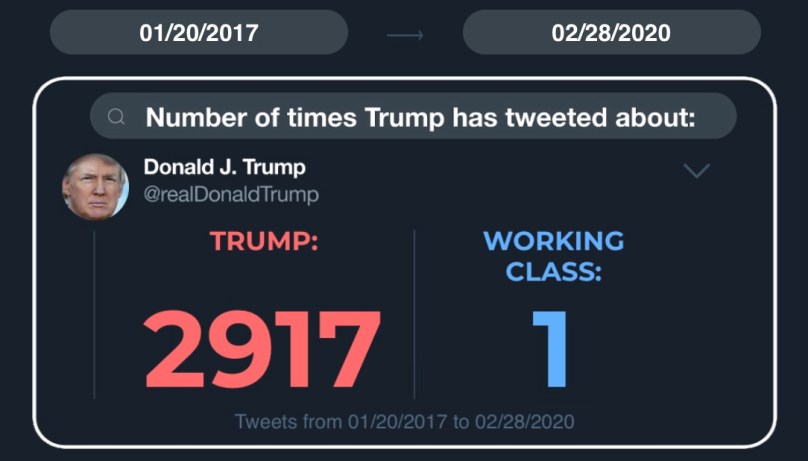
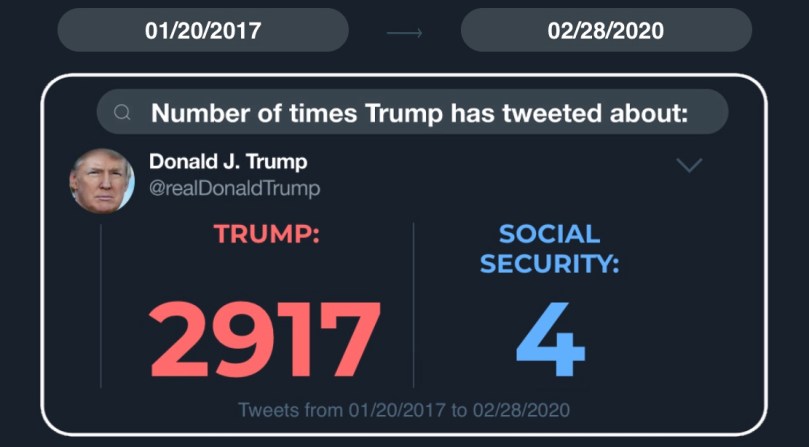
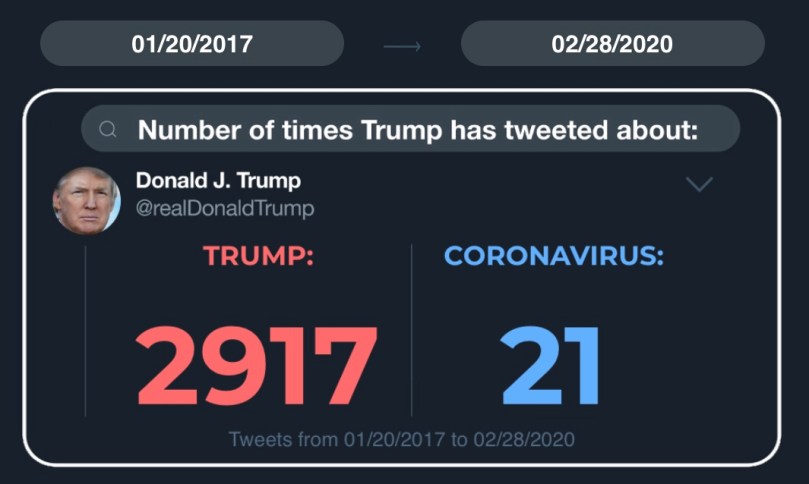
Trump’s Priorities Are Not Your Priorities
Trump’s priorities are not your priorities. No matter how much you try to convince yourself, the reality is otherwise.
— Read on elemifuentes.com/2020/02/28/trumps-priorities-are-not-your-priorities/
 Ms. Cat’s Chronicles
You must be logged in to post a comment.