
Boris is worried lockdown has gone too far, but only he can end it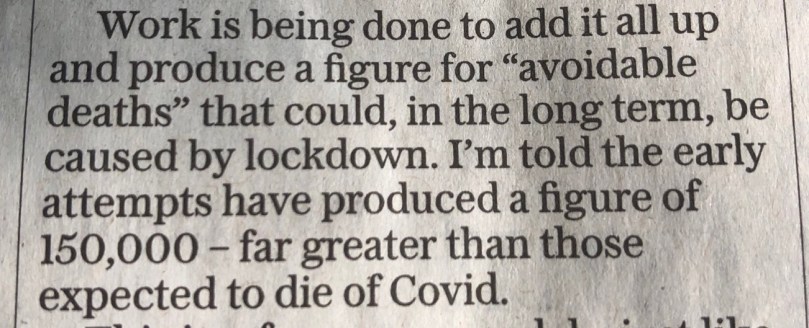
Day: April 10, 2020
Ecuador battles fake news of burning bodies, mass graves amid the coronavirus pandemic
Ecuador battles fake news of burning bodies, mass graves amid the coronavirus pandemic
Sounds familiar…Western Media’s playbook.
WHO warned of transmission risk in January, despite Trump claims
WHO warned of transmission risk in January, despite Trump claims
Notes to global health leaders on 10 and 11 January highlighted possible infection routes
Technical guidance notes seen by the Guardian and briefings by top WHO officials warned of potential human-to-human transmission and made clear that there was a threat of catching the disease through water droplets and contaminated surfaces, based on the experience of earlier coronavirus outbreaks, such as Sars and Mers.
PEPE ESCOBAR: Who Profits from the Pandemic?
PEPE ESCOBAR: Who Profits from the Pandemic?
Now, BlackRock is the new operating system (OS) of the Fed and the Treasury. The world’s biggest shadow bank – and no, it’s not Chinese.
Trump Keeps Talking. Some Republicans Don’t Like What They’re Hearing.
Trump Keeps Talking. Some Republicans Don’t Like What They’re Hearing.
Aides and allies increasingly believe the president’s daily briefings are hurting him more than helping, and are urging him to let his medical experts take center stage.
—
A Killer Enterprise: How One of Big Pharma’s Most Corrupt Companies Plans to Corner the Covid-19 Cure Market
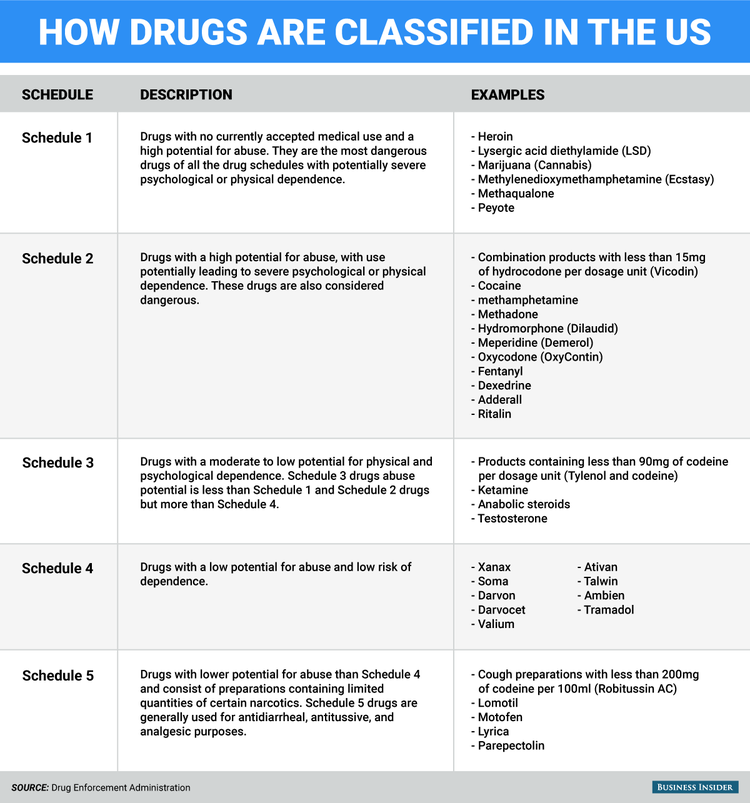
Two months after Emergent completed its acquisition of the Narcan monopoly, HHS began recommending that doctors co-prescribe the drug alongside opioid painkillers. However, HHS offered no measures aimed at preventing the over-prescription of opioid painkillers like fentanyl and has remained silent regarding efforts to make opioid painkillers a controlled, schedule 1 substance. After the HHS recommendation regarding Narcan, several states subsequently passed laws requiring doctors to co-prescribe the nasal spray. Emergent’s sale of Narcan, which now costs $150 per dose, predictably spiked.
Why would they make a medication, that has an actual medicinal use, a Schedule 1 Controlled Substance?! Even some of the medications, listed as Schedule 1, have a medicinal purpose, such as marijuana and hemp-derived CBD Oil!!

A year earlier in 1989, Ibrahim El-Hibri, a Venezuelan citizen who had made a fortune working for US telecommunications companies, had become a silent partner in Porton International. His son, Fuad El-Hibri, was made director of Porton Products, Ltd, a Porton International subsidiary, which was the conduit by which the El-Hibri family had made a killing selling anthrax vaccines to Saudi Arabia and other Gulf states at $300 to $500 a dose. Fuad El-Hibri had previously been an intelligence contractor for Booz Allen Hamilton and an executive at the Wall Street giant, CitiGroup.
This article states that Ibrahim was Lebanese. The links provided above don’t show the content suggesting that he is from Venezuela, but it may be that I am on a mobile device (iPad Mini)?!
Fuad El-Hibri, a 40-year-old German businessman with a Yale University management degree, formed a team of investors to buy the business, which included a $100 million contract with the Pentagon.
His bid faced a problem, though: He and his father, Ibrahim El-Hibri, a wealthy international financier from Lebanon, dominated ownership of the company, which they named BioPort.
Both were considered friendly to the United States. Father and son had directed a company involved in Britain’s anthrax vaccine program and they had worldwide interests in cell phone networks and other ventures.
Maybe I’m just being nitpicky?! 🤷🏼♀️
A third of Americans say their aid checks won’t cover a month
Lawmakers Want to Know: WTF Is Jared Kushner Doing?
Lawmakers Want to Know: WTF Is Jared Kushner Doing?
Democratic lawmakers are asking FEMA to help them better understand Kushner’s role in acquiring and distributing medical equipment, given that the First Son-in-Law is “unclear about basic facts.”
—
What about the surveillance?!
Kushner’s team seeks national coronavirus surveillance system
Analyzing the Opioid Crisis: 65 Articles by Dr. Josh Bloom
‘It All Comes Back to China’
80% of the medications marketed in the US are manufactured offshore, 66% of those APIs come from China, and are then, often shipped to India, for final manufacture. Because of recalls and issues of quality, many drugs that we commonly use in hospitals have been in short supply for years. CIDRAP identified 156 medications “used in acute care that, if unavailable for a few hours or days, can lead to increased patient death rates.” Sixty have been unavailable off and on for years. More to the point
What we are seeing now is some products that are in a shortage and others that are in a very tight market,” he said. There was a 51 percent increase in demand for sedatives and anaesthetics in March, compared to the same period in January, before the coronavirus pandemic hit the US. Now, only 63 percent of these orders have been fulfilled. For analgesics, a kind of painkiller, demand rose by 67 percent. Orders for neuromuscular blockers, which relax muscles, rose 39 percent.
 Ms. Cat’s Chronicles
You must be logged in to post a comment.