


Graphics via The School of Thought
These are just three logical fallacies that irritate me:

Ad hominem attacks can take the form of overtly attacking somebody, or more subtly casting doubt on their character or personal attributes as a way to discredit their argument. The result of an ad hom attack can be to undermine someone’s case without actually having to engage with it.
Ad hominem

This fallacy avoids the argument by shifting focus onto something’s or someone’s origins. It’s similar to an ad hominem fallacy in that it leverages existing negative perceptions to make someone’s argument look bad, without actually presenting a case for why the argument itself lacks merit.
Genetic fallacy

Appeals to emotion include appeals to fear, envy, hatred, pity, pride, and more. It’s important to note that sometimes a logically coherent argument may inspire emotion or have an emotional aspect, but the problem and fallacy occurs when emotion is used instead of a logical argument, or to obscure the fact that no compelling rational reason exists for one’s position. Everyone, bar sociopaths, is affected by emotion, and so appeals to emotion are a very common and effective argument tactic, but they’re ultimately flawed, dishonest, and tend to make one’s opponents justifiably emotional.
Appeal to emotion

Graphics via The School of Thought
Related:
Brazil reinforces border with Venezuela, Guyana with armored vehicles
Guyana, Brazil expand strategic military cooperation
Growing US Military Presence in Brazil
From 2004 to 2017, Brazil led the military component of the United Nations-backed peacekeeping mission to Haiti known as MINUSTAH. Since the U.N. Security Council authorized a new mission to Haiti last October, however, Brasília has been shy about supporting the operation. Brazil has offered to train Haitian police forces, but it has declined multiple requests from both the United States and United Nations to provide forces or financing for a new mission.
I’ve been using Microsoft Copilot to make thumbnails for my Apple Music playlists.


Clip from Episode 1 of Why Should We Care About the Indo-Pacific? Podcast (Apple Podcasts) with Ray Powell and Jim Carouso.
Powell and Carouso worked together at the U.S. Embassy in Canberra, Australia. They’re trying to “shape” the Indo-Pacific for US corporate interests and to provoke a war with China.
Jim Carouso is currently with the Center for Strategic & International Studies. CSIS is funded by various governments, including the United States, and corporations. Carouso is also with BowerGroupAsia in Singapore. He formerly worked in the State Department and was a chargé d’ affaires at the U.S. Embassy in Canberra and the U.S. Mission to the Association of Southeast Asian Nations.
Ray Powell was formerly a Defense Attaché in Canberra, Australia.
The Defense Attaché System is part of the Defense Intelligence Agency.
More on SeaLight’s (formerly Project Myoushu) ‘assertive transparency’ campaign.
Previously:
SCS: The Office of Naval Research funded Stanford’s GKC
Philippines’ ‘assertive transparency’ strategy is causing them to miss out economically
PH: Compared To China, US Trade, Investment Offers Laughable + More
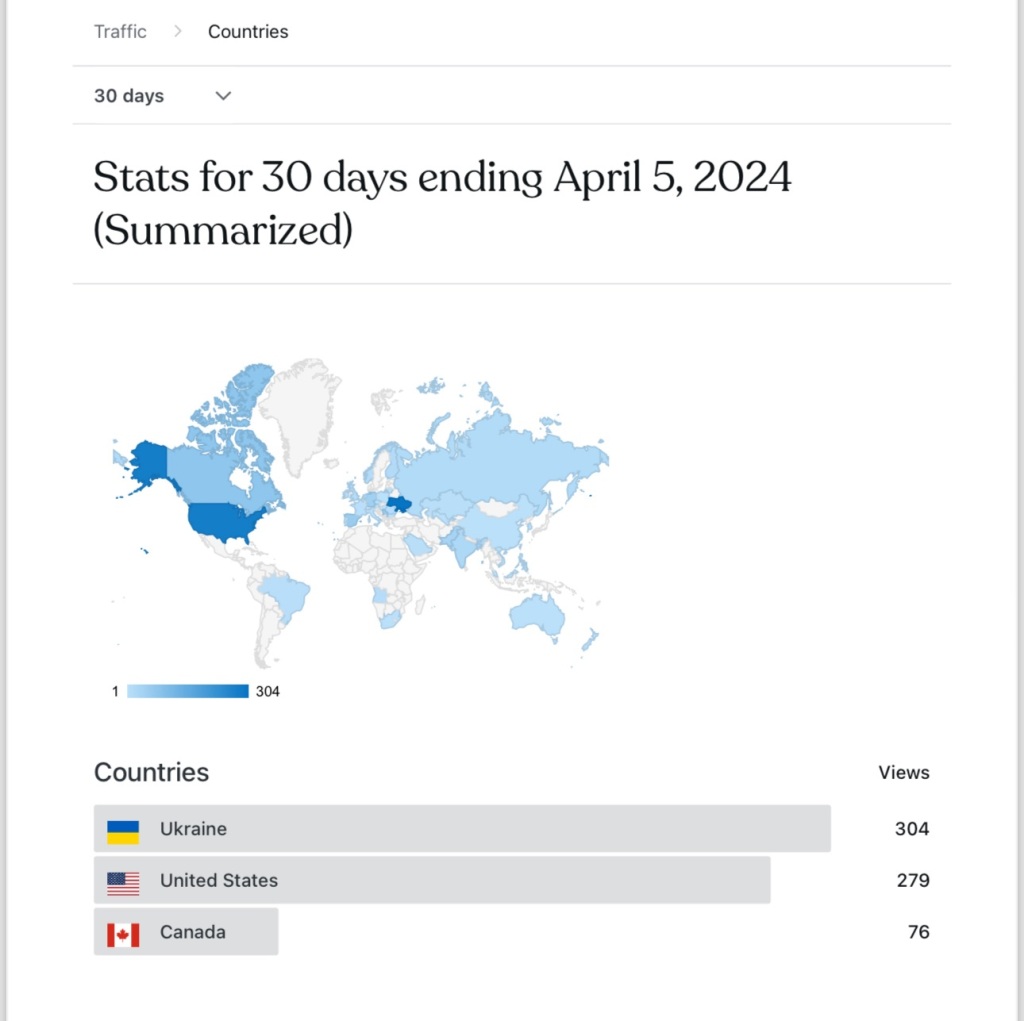
Yesterday, I was alerted by Netgear Armor that my device was under a DoS attack when I was trying to access my WordPress. I can only assume that someone has been attacking my site. This would explain why I haven’t been able to access my WordPress, yet I could access other WordPress sites.

I did some research into protecting my WordPress, from a denial-of-service attack, and there are a few ways to do it. One is with the use of plugins, but now you need at least a Creator account (which is $20 per month) to be able to use plugins with WordPress. Another is by using a content delivery network with DDoS mitigation capabilities. I chose to purchase an inexpensive web hosting plan (I’ve been planning on doing this anyway for the storage) with a CDN and DDoS mitigation.
If my assumption is correct and the cyberattacker(s) sees this, know that I have all of my research backed up. My web hosting service also backs up this blog.
I could just be paranoid, too. 🤷🏼♀️
THE PENTAGON – The lead ship in a new class of guided-missile frigates for the U.S. Navy may be up to three years late, USNI News has learned.
Constellation Frigate Delivery Delayed 3 Years, Says Navy
Constellation (FFG-62), under construction at Fincantieri Marinette Marine in Wisconsin, may not deliver to the fleet until 2029, three years later than the original 2026 delivery goal, according to a service shipbuilding review.




 Ms. Cat’s Chronicles
You must be logged in to post a comment.