Philippines aims to acquire Typhon missile launcher as regional arms race intensifies

Source

China is against the deployment of the Typhon in the Philippines, which has been used in joint military exercises involving US troops

Philippines aims to acquire Typhon missile launcher as regional arms race intensifies

Related:

Foreign Ministry Spokesperson Lin Jian’s Regular Press Conference on August 30, 2024:

Bloomberg: The Philippines’ top military official said that the deployment of the US missile system in the country was mainly for training. China has been in the past said that the weapon system could be destabilizing. Does the Foreign Ministry have any comments on the recent comments by the Philippines’ military chief?

Lin Jian: On the US deployment of Mid-Range Capability missile system in the Philippines, China has made clear our opposition more than once. This move by the US and the Philippines incites geopolitical confrontation, escalates tensions in the region, and harms regional peace and stability. It has aroused high vigilance and concerns of countries in the region. The Philippines needs to have a clear understanding of the real intention of the US, respond to the common concerns of regional countries, avoid acting as the cat’s paw for the US at the expense of its own security interest, and quickly pull out the missile system as publicly pledged.

US professor: I was censored, doxed and fired because of Gaza

A New York city academic explains why despite this setback, he’ll keep advocating for Palestinians and other oppressed people across the world.

US professor: I was censored, doxed and fired because of Gaza

How is the US Convincing the Philippines to Destroy Itself?

As China rises, Asia rises with it. The Southeast Asian state of the Philippines stood to rise alongside the rest of the region until relatively recently as the United States successfully convinces the Philippines to do otherwise. 

How is the US Convincing the Philippines to Destroy Itself? (archived)

Related:

PH’s PressONE is funded by several US front organizations:

The Philippine Fact-Checker Incubator was established with the financial backing of Facebook, in collaboration with VERA Files and Rappler. The incubated organizations include ABS-CBN News & Current Affairs, Manila Broadcasting Company, MindaNews, Philstar.com, PressONE.ph, and Probe Productions. They are accredited by the International Fact-Checking Network. – PFCIPoytner.

Poynter Institute has been funded by the Gates Foundation, the Koch Network, the National Endowment for Democracy, the Omidyar Network, and Open Society Foundations.  Other sponsors are CNN, the Scripps Howard Foundations, Craig Newmark Philanthropies, the Ethics and Excellence in Journalism Foundation, TEGNA Foundation, etc..

Front Organizations

Sabina shoal new US tension spot

Harry B. Harris Jr., former commander of INDOPACOM, explains that the United States doesn’t recognize anyone’s territorial claims. Full video.

While one side of the split personality of PBBM worked out with China a deesclation scheme for the Ayungin Shoal Rotation and Resupply (RORE) missions to the unrealizable U.S. Forward Operating Base (US-FOB) BRP Sierra Madre frustrating its “assertive transparency” strategy, the other lobotomized side of BBM’s brain taken over by the Americans thought up the Sabina Shoal BRP Sierra Teresa Magbanua US-FOB as a new locus for tension to propagandize.

Sabina shoal new US tension spot

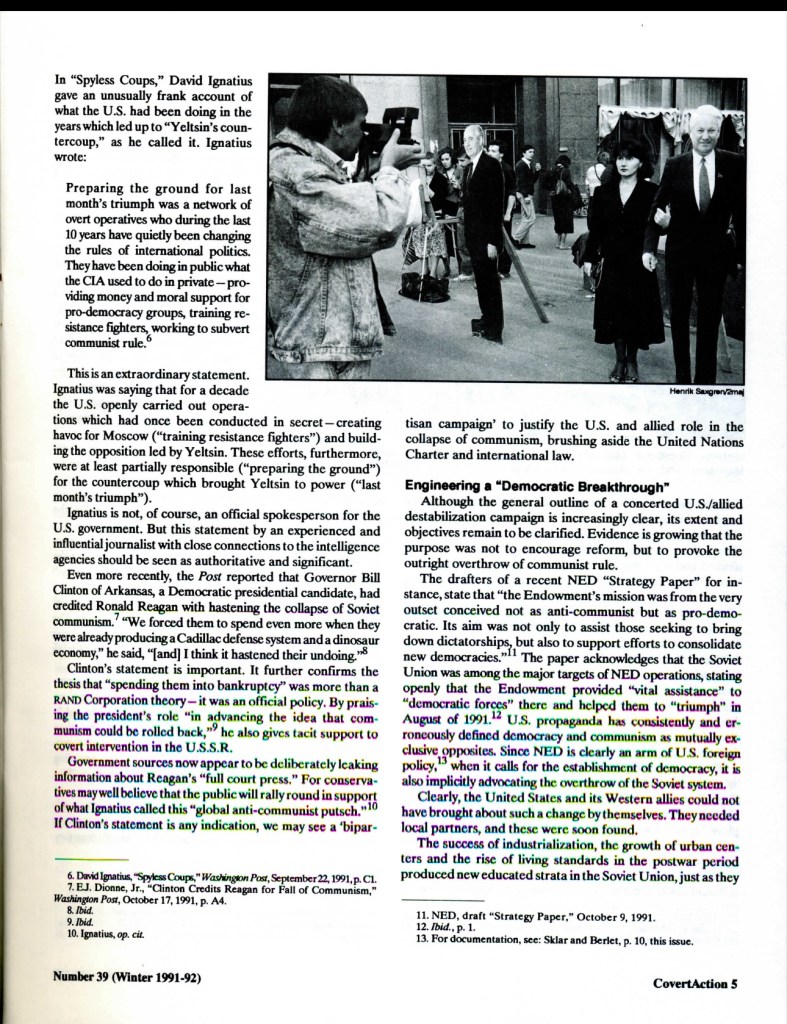
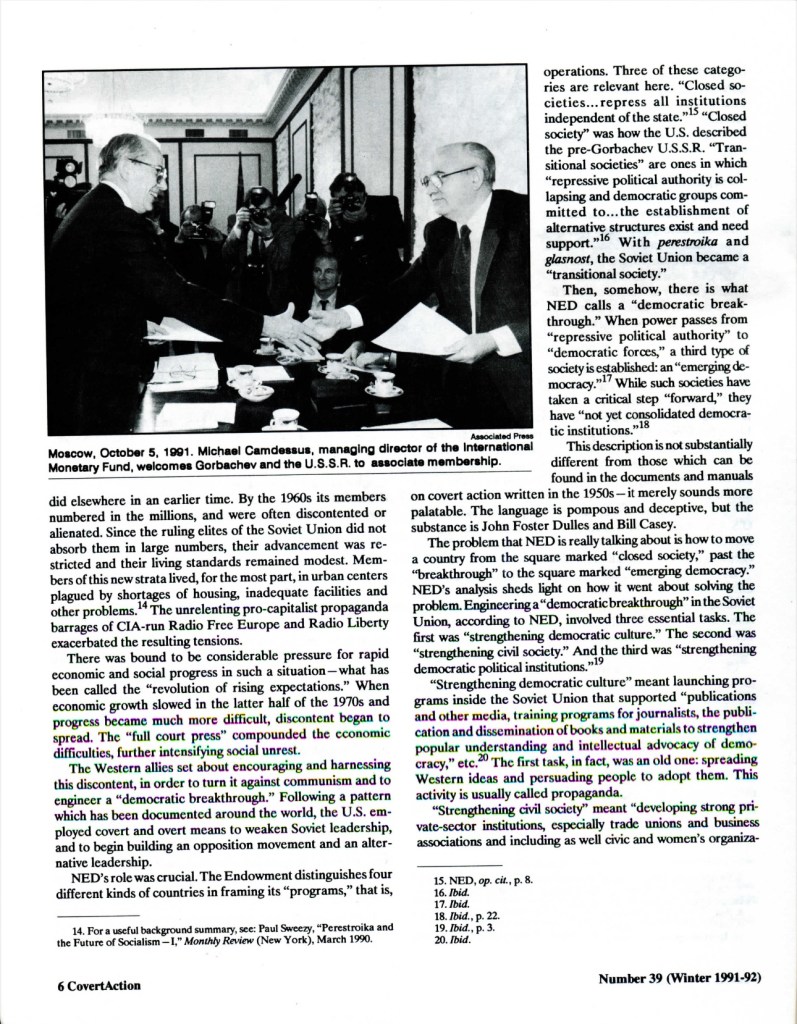
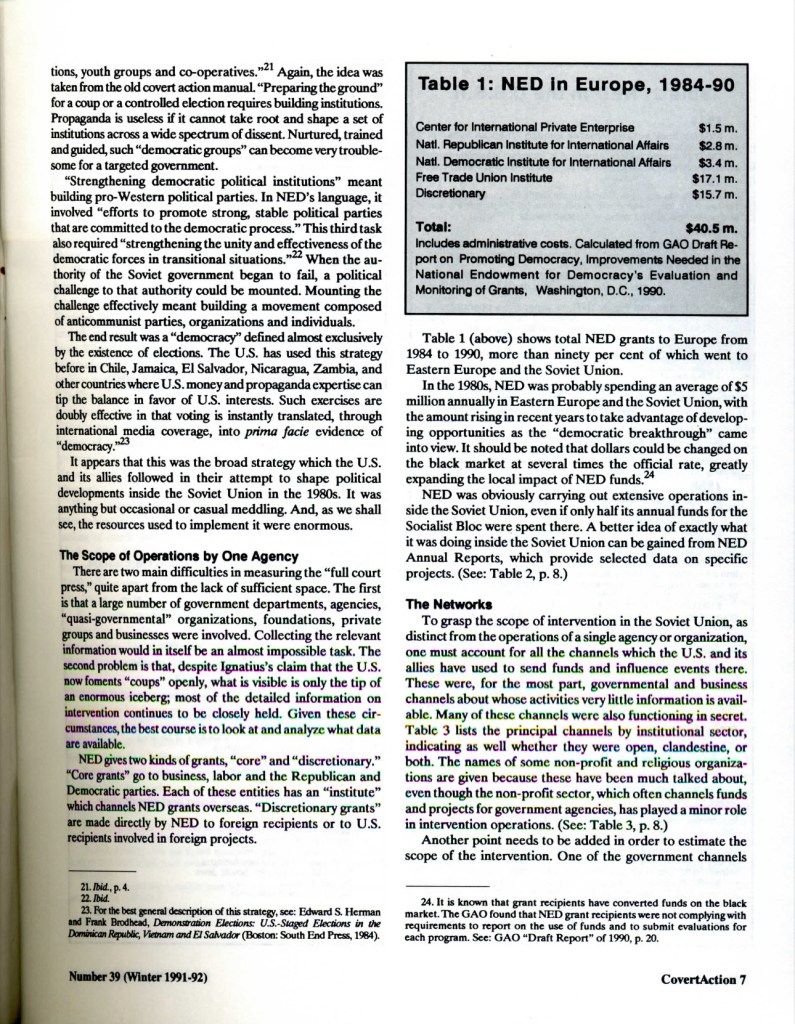
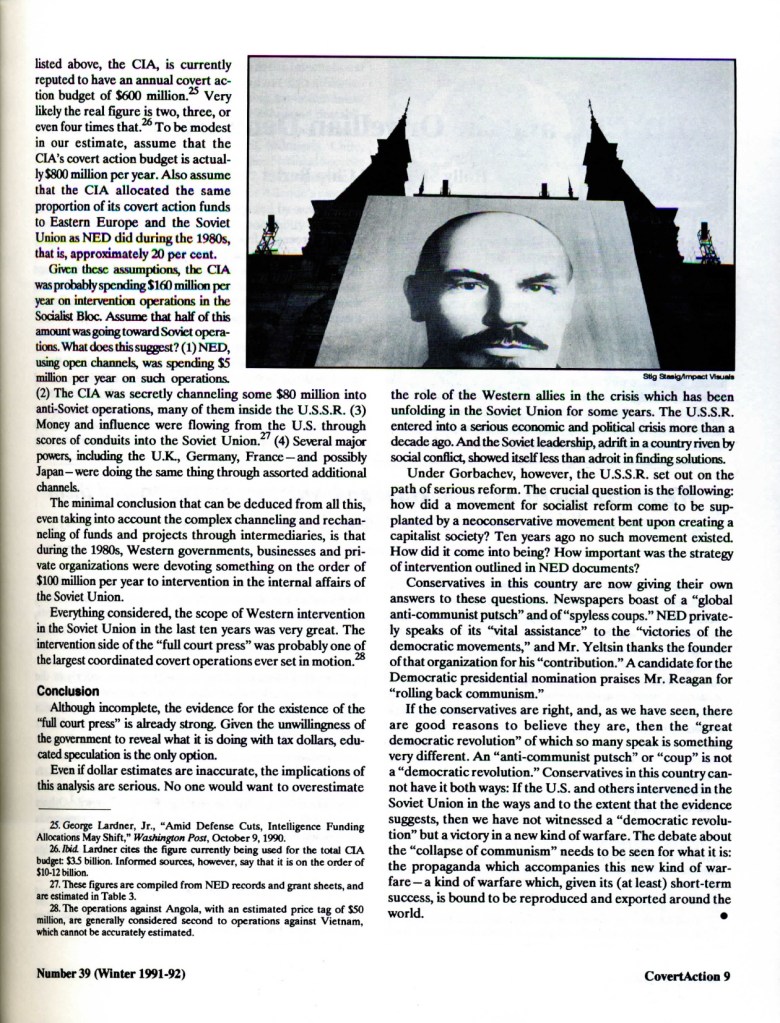
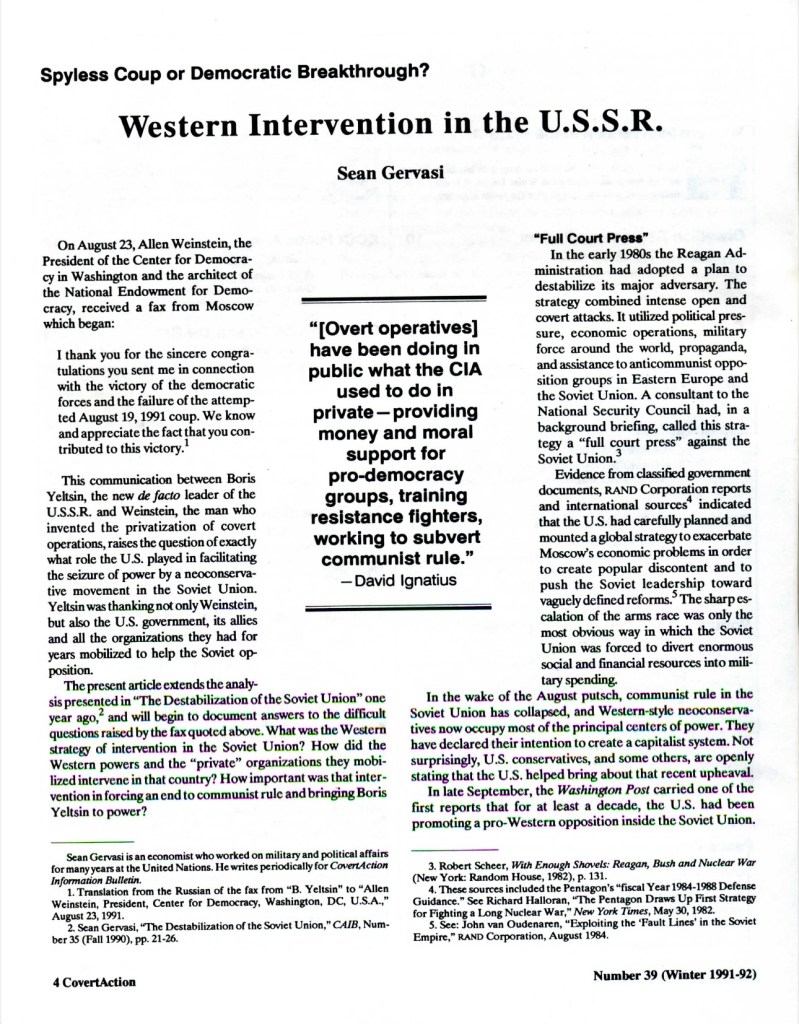
Western Intervention in the U.S.S.R.

Since the early 1980s the USA has waged and intense political and economic war against the Soviet Union. A former UN military and political analyst puts the pieces together.

Western Intervention in the U.S.S.R. by Sean Gervasi

Related:

Exploiting ‘fault lines’ in the Soviet empire: an overview

INNOCENCE ABROAD: THE NEW WORLD OF SPYLESS COUPS

Free Trade Union Institute

The 4 Key Strengths of China’s Economy — and What They Mean for Multinational Companies

China’s hybrid “state capitalist” system, driven by centralized planning and fierce competition, has led to dominance in critical technological fields and emerging markets. Western multinational corporations are advised to adopt a pragmatic approach to capitalize on four key strengths of China’s economy: its innovation ecosystem, its investment in the Global South, its ultra-competitive markets, and its vast consumer base. Those who fail to engage risk losing global revenue and strategic opportunities.

The 4 Key Strengths of China’s Economy — and What They Mean for Multinational Companies