
CATL and SMIC are two giant Chinese companies that are often singled out by Western think tanks as two firms who benefit from China’s subsidies, at the expense of foreign competition.
But all industrialized countries employ government subsidies, which help favored domestic industries grow. China, however, uniquely can invest in preferred sectors by channeling its massive trading surpluses, and providing low-cost access to its world-leading supply chains and logistics systems.
In contrast, North American and European companies who seek government incentives and subsidies are competing with other spending priorities, as all the funds come from taxpayers. This reality requires of companies seeking government help to do so through proxies, lobbying efforts, and through think-tanks who create research that can be published and used by lawmakers to justify the use of taxpayer funds.
China’s enormous subsidies come from trading profits. US and European subsidies come from taxpayers
Month: August 2024
Houthis undeterred despite US action to protect Red Sea shipping
August 08, 2024, Voice of America —
U.S.-led efforts to thwart attacks on international shipping by Iranian-backed Houthi militants in Yemen are nothing more than a “shock absorber” and are unlikely to lead to stability or safer seas, according to a senior U.S. commander.
Houthis undeterred despite US action to protect Red Sea shipping
I have an idea, end the slaughter in Gaza!
Reading Update 08-10-2024: Mao Zedong vs Elbridge Colby

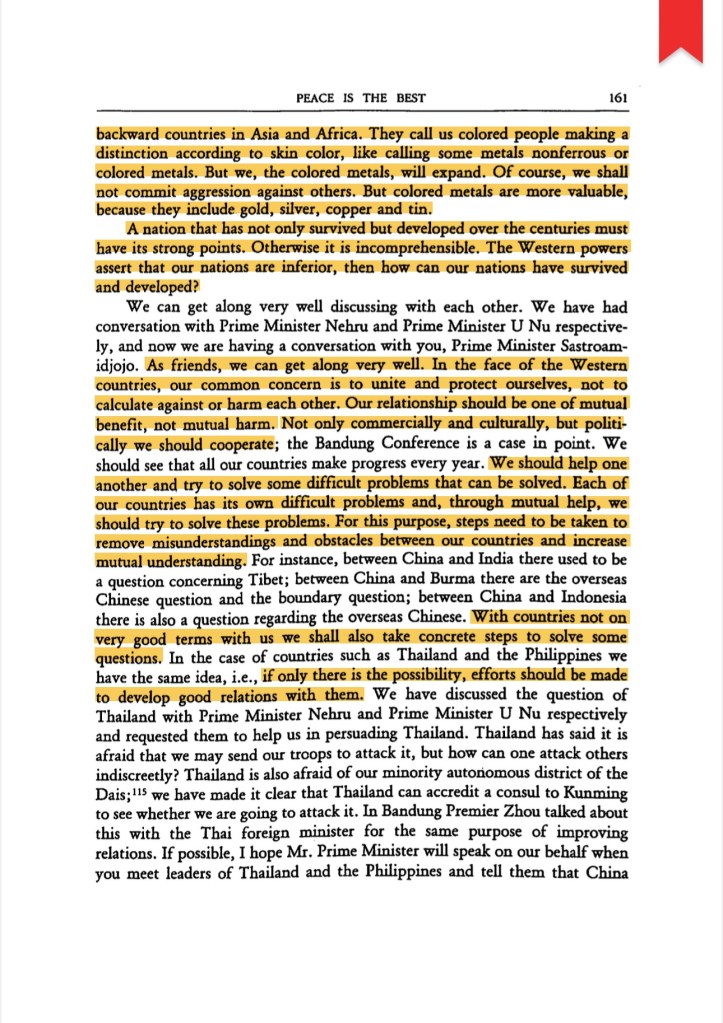
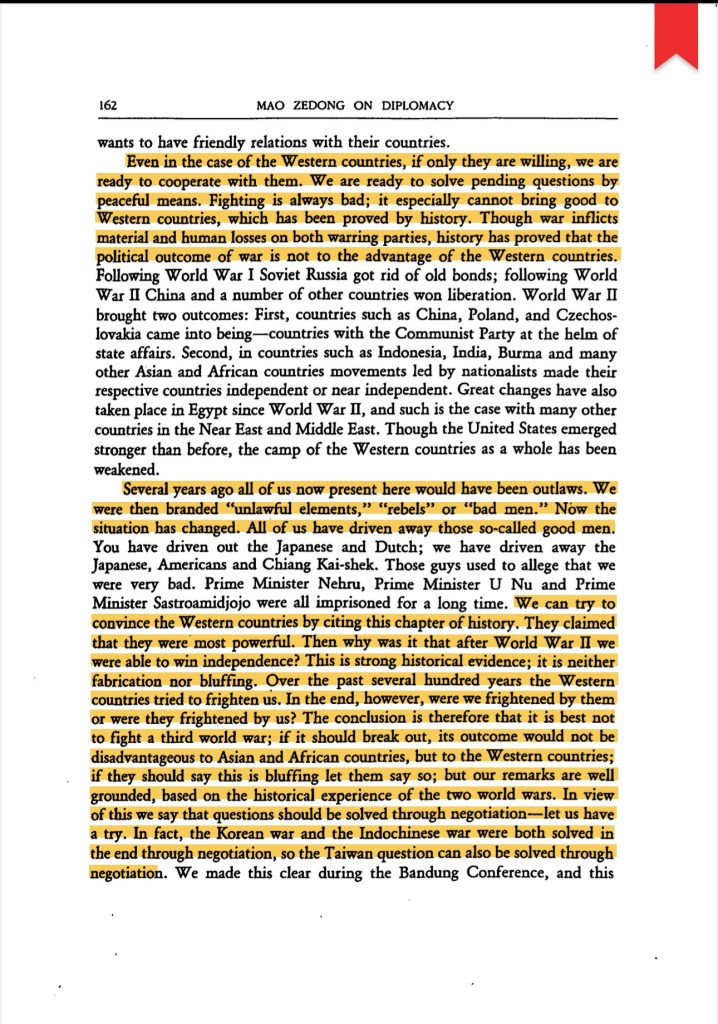

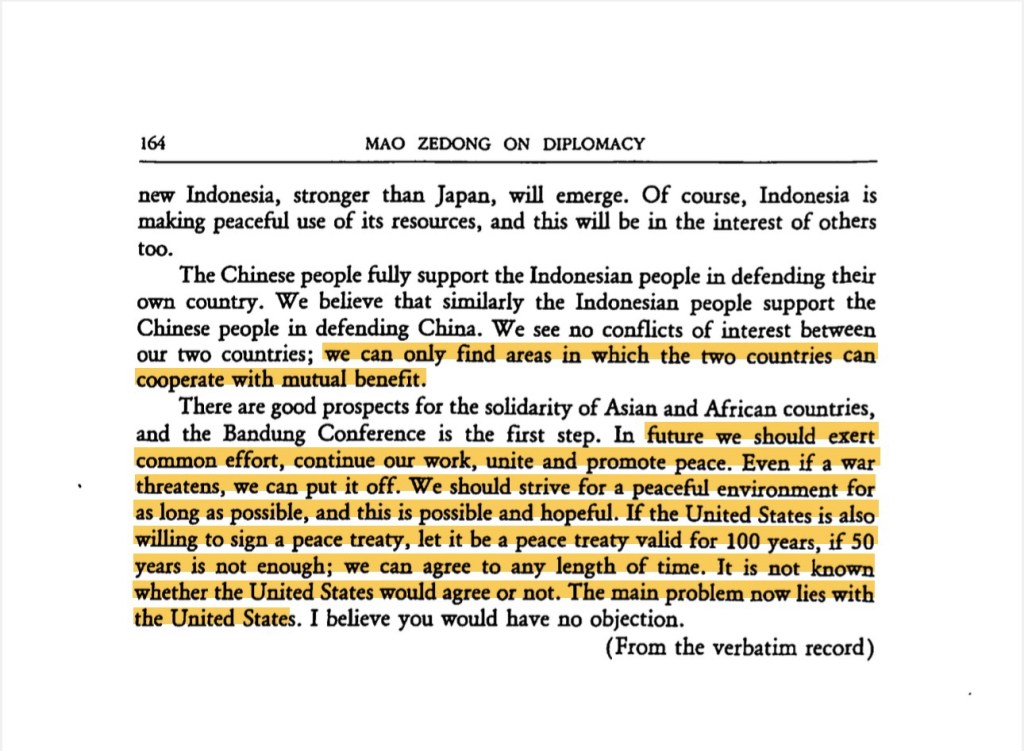
I’m alternating between reading ‘On Diplomacy’ and listening to ‘The Strategy of Denial’ on Audible.


MacArthur’s Last Stand Against a Winless War
If war breaks out in Asia, the U.S. won’t send ground troops. Take note, Philippines!
MacArthur’s Last Stand Against a Winless War
Never get involved in a land war in Asia, MacArthur had told Kennedy, because if you do, you will be repeating the same mistake the Japanese made in World War II—deploying millions of soldiers in a futile attempt to win a conflict that cannot be won.
…
Kennedy appreciated MacArthur’s soothing judgment on Cuba (and would soon change the military’s top leadership—perhaps in keeping with MacArthur’s views), but then shifted the subject to Laos and Vietnam, where communist insurgencies were gaining strength. The Congress, he added, was pressuring him to deploy U.S. troops in response. MacArthur disagreed vehemently: “Anyone wanting to commit ground troops to Asia should have his head examined,” he said. That same day, Kennedy memorialized what MacArthur told him: “MacArthur believes it would be a mistake to fight in Laos,” he wrote in a memorandum of the meeting, adding, “He thinks our line should be Japan, Formosa, and the Philippines.” MacArthur’s warning about fighting in Asia impressed Kennedy, who repeated it in the months ahead and especially whenever military leaders urged him to take action. “Well now,” the young president would say in his lilting New England twang, “you gentlemen, you go back and convince General MacArthur, then I’ll be convinced.” So it is that MacArthur’s warning (which has come down to us as “never get involved in a land war in Asia”), entered American lore as a kind of Nicene Creed of military wisdom—unquestioned, repeated, fundamental.
Japan-U.S. joint statement on war preparations forecasts doom
The United States has announced it will upgrade U.S. Forces Japan (USFJ) to a joint force headquarters (JFHQ) with expanded operational responsibilities. The new command will report to the US Indo-Pacific Command (USINDOPACOM). The revamped structure will assume the control of about 55,000 personnel stationed in Japan from the U.S. Indo-Pacific Command some 6,200 kilometers away in Honolulu, Hawaii. The move is intended to streamline communications between the US and Japan, especially during a crisis involving China.
Japan-U.S. joint statement on war preparations forecasts doom
Che Guevara: Socialism and man in Cuba

Dear compañero,
Though belatedly, I am completing these notes in the course of my trip through Africa, hoping in this way to keep my promise. I would like to do so by dealing with the theme set forth in the title above. I think it may be of interest to Uruguayan readers.
A common argument from the mouths of capitalist spokespeople, in the ideological struggle against socialism, is that socialism, or the period of building socialism into which we have entered, is characterized by the abolition of the individual for the sake of the state. I will not try to refute this argument solely on theoretical grounds but rather to establish the facts as they exist in Cuba and then add comments of a general nature. Let me begin by broadly sketching the history of our revolutionary struggle before and after the taking of power.
Why John Mearsheimer is wrong about realism, great power politics and history
On Diplomacy: The United States Though Frightful, Is Not So Frightful

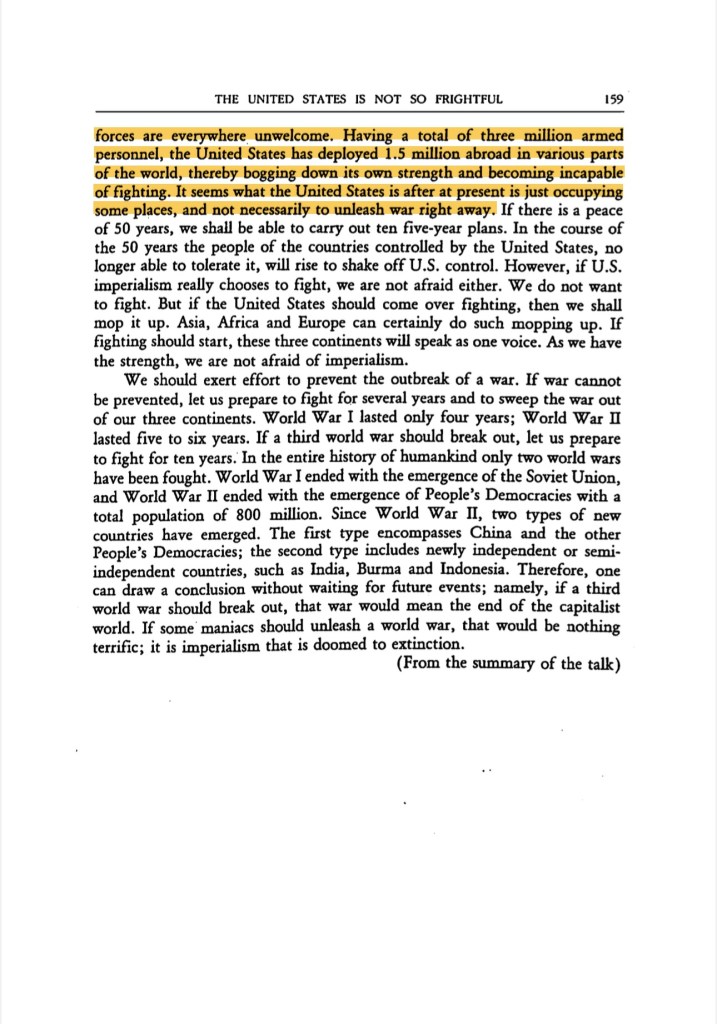
Twofer: Staind
Trump’s radical reforms could put a spanner in US supply chains
Trade could be about to hit the proverbial political fan as US election pressure is being brought to bear on institutions that regulate, including those that regulate commerce, by boosting shipping lines’ ability to challenge rules.
Trump’s radical reforms could put a spanner in US supply chains
Related:
 Ms. Cat’s Chronicles
You must be logged in to post a comment.