
Report to Congress on Navy Large Unmanned Surface and Undersea Vehicles
The Navy wants to use XLUUVs to, among other things, covertly deploy the Hammerhead mine, a planned mine that would be tethered to the seabed and armed with an antisubmarine torpedo, broadly similar to the Navy’s Cold War-era CAPTOR (encapsulated torpedo) mine.
It isn’t surprising that the USN would place offensive mining high on the list of priorities for the Orca. What is surprising, however, is that the vehicle’s development is being largely driven by it.
Unmanned Underwater Systems = Force Multiplier
Hammerhead can be surreptitiously and strategically placed at choke points, sea lanes, or near enemy submarine ports.
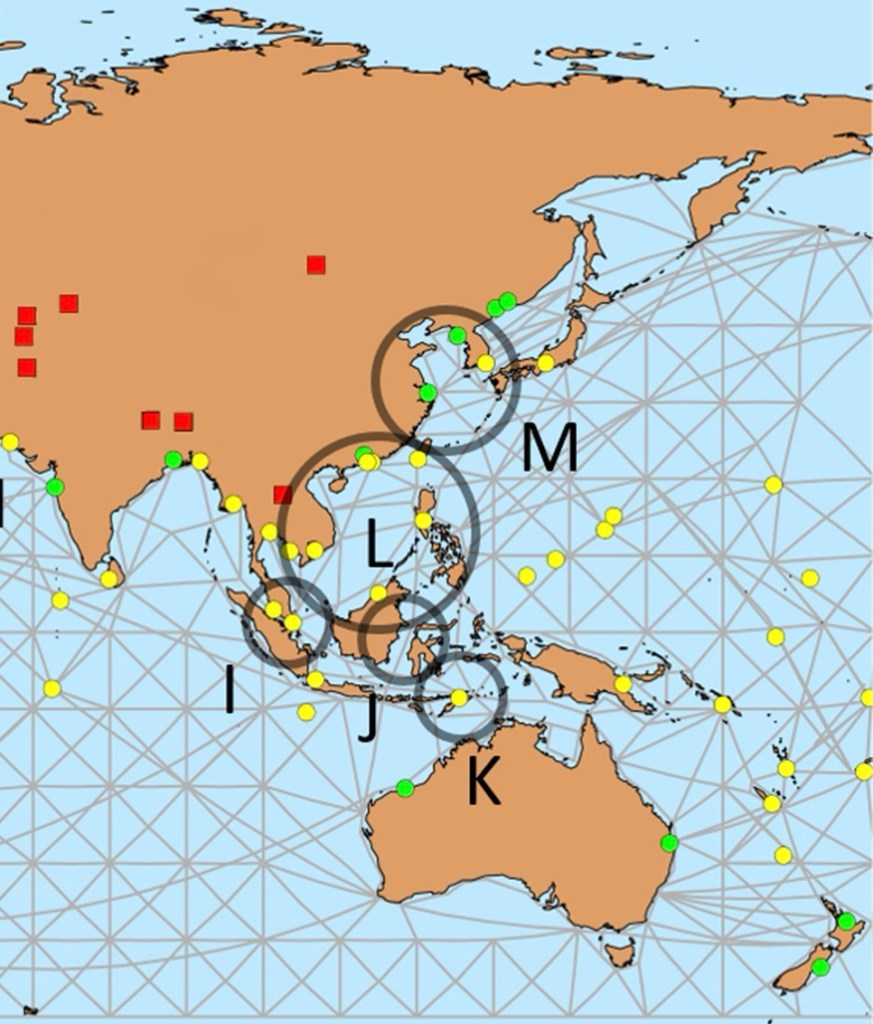
An Offensive Minelaying Campaign Against China
Use against Japan in World War II
The most extensive and successful minelaying campaign the United States has conducted was against Japan in World War II. Although overshadowed by the strategic bombing offensive, the submarine campaign, and amphibious assaults on Japanese-held islands, the 1945 offensive minelaying campaign succeeded in paralyzing Japanese shipping and crippling the Japanese economy.
Called Operation STARVATION, the campaign ran for only five months, from late March to early August 1945. But it entailed emplacing twelve thousand mines (mainly by B-29 bombers), and the resultant minefields sank or damaged two million tons of shipping. The most dramatic effect was that shipping in Japanese home waters effectively ceased. As the summary report noted, “[S]hip losses are but incidental to the primary objects of mining which are to delay and disrupt the enemy’s shipping, disorganize his maritime supply system, and thereby deprive him of essential military and economic materials.”
Previously:
From Tighten the Belt and Cut the Roads:
Harm and Hunger: Operation Starvation
Operation Starvation all but halted Japan’s import of critical raw materials and food. The combination of Naval blockades, the coastal mining and incendiary raids from the US Air Force over urban and industrial areas meant that Japan’s overall rate of production in 1945 sat at just one third of the figure for the year before. By 1945 the average Japanese citizen was living in starvation. One survey found that the average caloric intake for a Japanese citizen in 1945 was less than 80% of the minimum required for basic health and physical performance. It was predicted by experts of the time that by the end of 1946 the number of deaths by starvation would exceed seven million.
 Ms. Cat’s Chronicles
You must be logged in to post a comment.