
Hot spots where war may break out or escalate in 2025
Balochistan – Iran and Pakistan
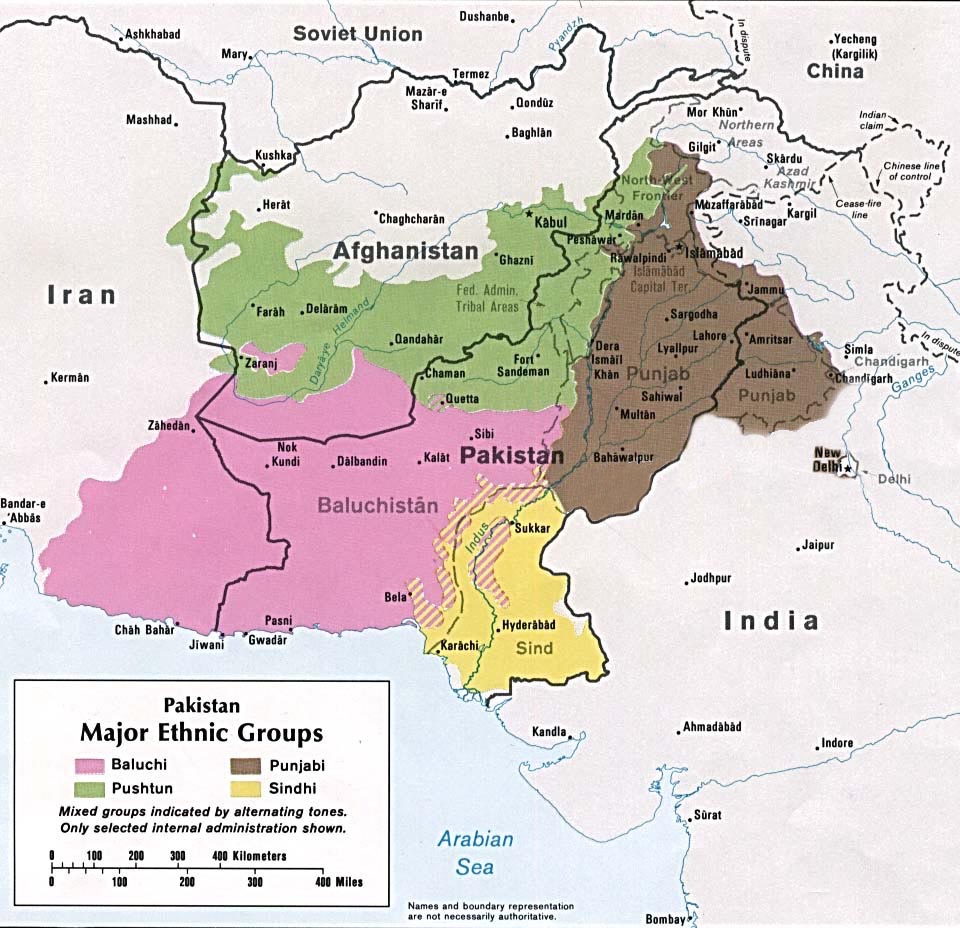
Balochistan is a little-known region spanning eastern Iran, western Pakistan, and southern Afghanistan. It is inhabited by the Baloch people, a unique nomadic ethno-linguistic group. Iran and Pakistan have struggled with insurgencies from the group for decades, embittered over a sense of disenfranchisement.
The insurgency has been led by the Balochistan Liberation Army, but the primarily Sunni Balochistan has also served as a stronghold for ISIS, al Qaeda, and other jihadist groups in recent years. Militants have targeted Iranian and Pakistani military personnel, civilian infrastructure, nonethnic Balochs living in the region, foreign diplomats, and Shiites, and in recent years, they have expanded to attacking Chinese contract workers. The attacks on Chinese contract workers were particularly alarming for the Pakistani government, as it threatened to demolish a $60 billion Chinese investment project.
Chatham House noted a distinct shift in the Balochistan insurgency in 2023, noting better organization and effectiveness. This can largely be credited to an influx of educated middle-class professionals, who have increased the popular appeal of the insurgency. It has also expanded beyond radical militants, with an accompanying civil society movement with even wider popular appeal.
The recent inclusion of women in the typically male-dominated movement has also increased its popularity. In April 2022, a Baloch woman with a graduate degree in medicine killed three Chinese students at the University of Karachi [Confucius Institute] in a suicide bombing attack.
The increased effectiveness of the insurgency has resulted in a change in strategy from the Iranian and Pakistani governments. Accusations of harboring Baloch militants to attack the other country peaked in January when the two countries exchanged missile and air strikes. Seemingly at the brink of war, the two countries suddenly reversed course to cooperate against the insurgency instead. The security forces of the two countries have begun conducting joint operations to fight Baloch militants.
Pakistan declared an anti-insurgency operation in June 2024. Fighting has continued throughout the year, but the increasing effectiveness of the insurgency, the participation of Iran, and the heavy-handedness of the military’s tactics could exacerbate the situation. Several factors point toward the likelihood that the Baloch insurgency in Pakistan and Iran could reach new levels of violence in 2025, causing further problems for the embattled governments of the two countries.
Related:
Chatham House: Why brute force will not end Pakistan’s Balochistan insurgency
The latest attacks have prompted concern about the risks posed to major infrastructure projects located in Balochistan, including the development of the Indian Ocean port of Gwadar, part of the China-Pakistan Economic Corridor (CPEC), and a planned mining operation at Reqo Dik in Chagai district. Such projects are targets of Baloch resentment and in recent years almost a dozen Chinese nationals have been killed by Baloch militants in Balochistan and elsewhere in Pakistan.
…
The most significant change is the involvement of a growing number of educated middle-class professionals who are transforming the insurgency from a movement dominated by traditional tribal chiefs to one with greater popular appeal. The BLA, in particular, is said to have become a magnet for such groups, who favour ‘modern and unconventional’ thinking.
…
There is also the rise of an increasingly vocal Baloch rights-based movement, the Baloch Yakjehti Committee (BYC or Baloch Unity Committee), comprising mainly of women activists and led by the charismatic young female doctor, Mahrang Baloch. Dedicated to non-violence, it aims to raise national awareness of extra-judicial killings and so-called ‘enforced disappearances’ involving ethnic Baloch. An estimated 5,000 Baloch are said to have gone missing since 2000.
…
But there were other signs before the attacks that the military was gearing up for confrontation with Baloch dissidents. In a veiled reference to the BYC, which staged an unprecedented wave of non-violent demonstrations across Balochistan in July, army chief General Asim Munir warned that action by ‘some elements’ to ‘destabilize Balochistan’ would not be allowed. In early August, a senior military spokesman denounced the BYC as a proxy of terrorist organizations.
Not enough being done against digital terrorism under law: DG ISPR
Meanwhile, the military spokesperson denounced the rights movement Baloch Yakjehti Committee and its “so-called leadership” as a “proxy of terrorist organisations and criminal mafias and nothing more than that”.
He alleged that the “proxy” was tasked to defame and spread propaganda against law enforcement agencies taking action against smugglers, criminals, and the “illegal spectrum”, as well as make development projects in the province controversial.
“The method of action is through gathering a mob through foreign funding and a foreign stance, persuade innocent citizens around that mob, challenge the state’s writ … and feign innocence when the state responds.”
He termed the Baloch National Gathering a “drama” that was concocted in the past few days in Gwadar.
The BYC kicked off a protest in Gwadar on July 28, following arrests and deadly clashes with security forces, against alleged human rights violations and exploitation of the province’s resources.
But Chatham House said that the demonstrations were non-violent. They must be referring to Gene Sharp’s neoliberal non-violence.
RFE/RL: After Decades Of Mistrust, Iran And Pakistan Join Forces Against Militancy
Pakistan’s Balochistan is a resource-rich province that is home to dozens of multibillion-dollar Chinese-funded development projects.
Militants have killed at least seven Chinese workers in Pakistan this year, threatening to derail the $60 billion China-Pakistan Economic Corridor.
Meanwhile, Beijing is a top importer of Iranian oil and a leading investor in its freefalling economy. The Chabahar Port in Sistan-Baluchistan is a key hub for imports and exports to neighboring Afghanistan.
BLA among main perpetrators of terror in 2024
WikiSpooks: Chatham House
WikiSpooks: Radio Free Europe/Radio Liberty
BLA, BYC, Mahrang Baloch: US Proxies in Balochistan document
[11-26-2024] Sources for the Indian Ocean: Bay of Bengal & Strait of Malacca
 Ms. Cat’s Chronicles
You must be logged in to post a comment.