
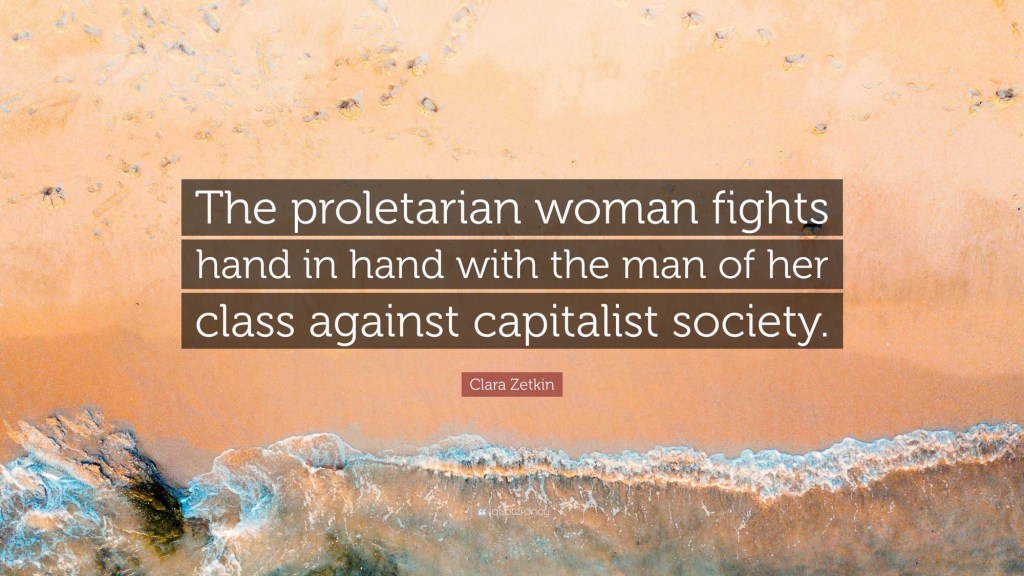
Clara Zetkin: Only in Conjunction With the Proletarian Woman Will Socialism Be Victorious
Related:
August Bebel: Woman and Socialism
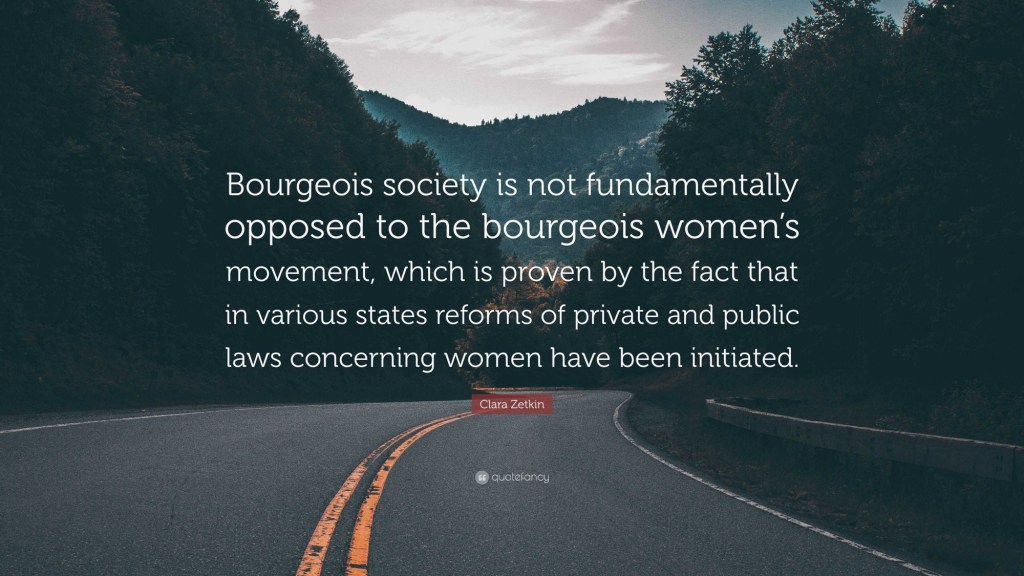
Second-wave feminism (bourgeois feminism) and Clara Zetkin:
In Western democracies, the protest movements of the late 1960s created a conducive environment for the rise of what became known as second-wave feminism in the United States (Women’s Liberation Movement) and Western Europe. This movement went beyond the pursuit of formal equal rights, focusing instead on achieving substantive equality—encompassing the “private” spheres of family, marriage, and sexuality—as well as the material and cultural liberation of women. A defining feature of many women’s groups and collectives during this period was the exclusion of men, which was seen as essential for women’s emancipation. [1]
This approach stood in contrast to the perspective of Clara Zetkin, who emphasized the necessity of collaboration between working-class men and women to achieve women’s liberation. Zetkin consistently maintained that the root cause of women’s oppression was capitalism and that its overthrow was the only path to true liberation. She argued that this goal required the unity of the entire working class—women and men alike—within internationally coordinated revolutionary parties. Their shared objective would be to dismantle the political dominance of the bourgeoisie and establish a new social order based on equality and justice. [2]
Sources:
[1] Feminisms and Feminist Movements in Europe
[2] Clara Zetkin Was a Marxist Champion of the Struggle Against Women’s Oppression
 Ms. Cat’s Chronicles
You must be logged in to post a comment.