


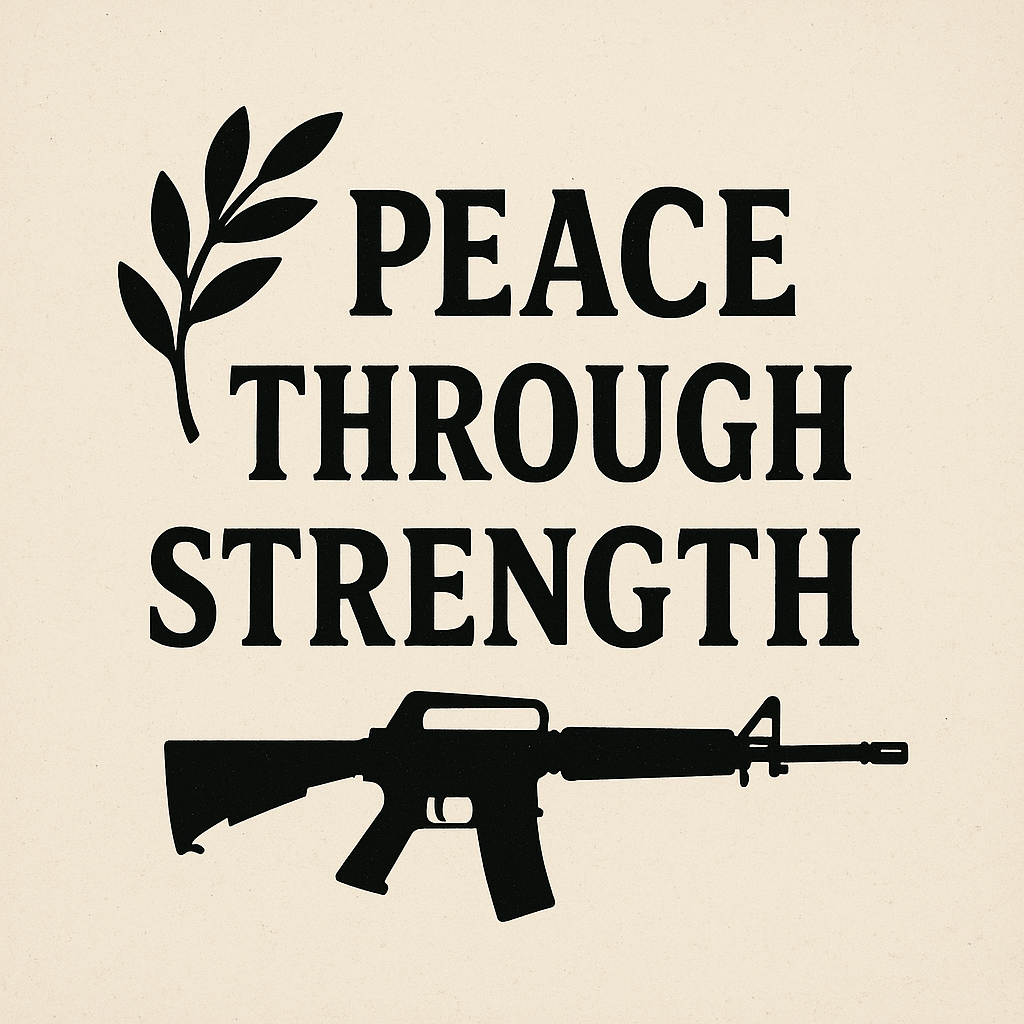
The phrase “peace through strength” has echoed through history, serving as both a philosophy of deterrence and a justification for militarization. Though commonly attributed to Roman Emperor Hadrian (reigned CE 117–138), the concept stretches far beyond his era.
In the Indian epic Ramayana (7th to 4th centuries BCE), Lord Rama is quoted saying, “Bhay Bin Hoye na Preet,” which translates to: Once prayers for peace fail, fear must be instilled to bring stability. This early expression captures a fundamental truth—strength is often positioned as a necessary tool for maintaining peace.
Fast forward to 1943, in the depths of World War II, political philosopher Richard von Coudenhove-Kalergi, founder of the Paneuropean Union, argued that the postwar world would demand a redefinition of peace itself. In his vision, the United States was destined to take “command of the skies” to secure global stability. He envisioned a new Angel of Peace—not a passive figure holding an olive branch, but something far more forceful.
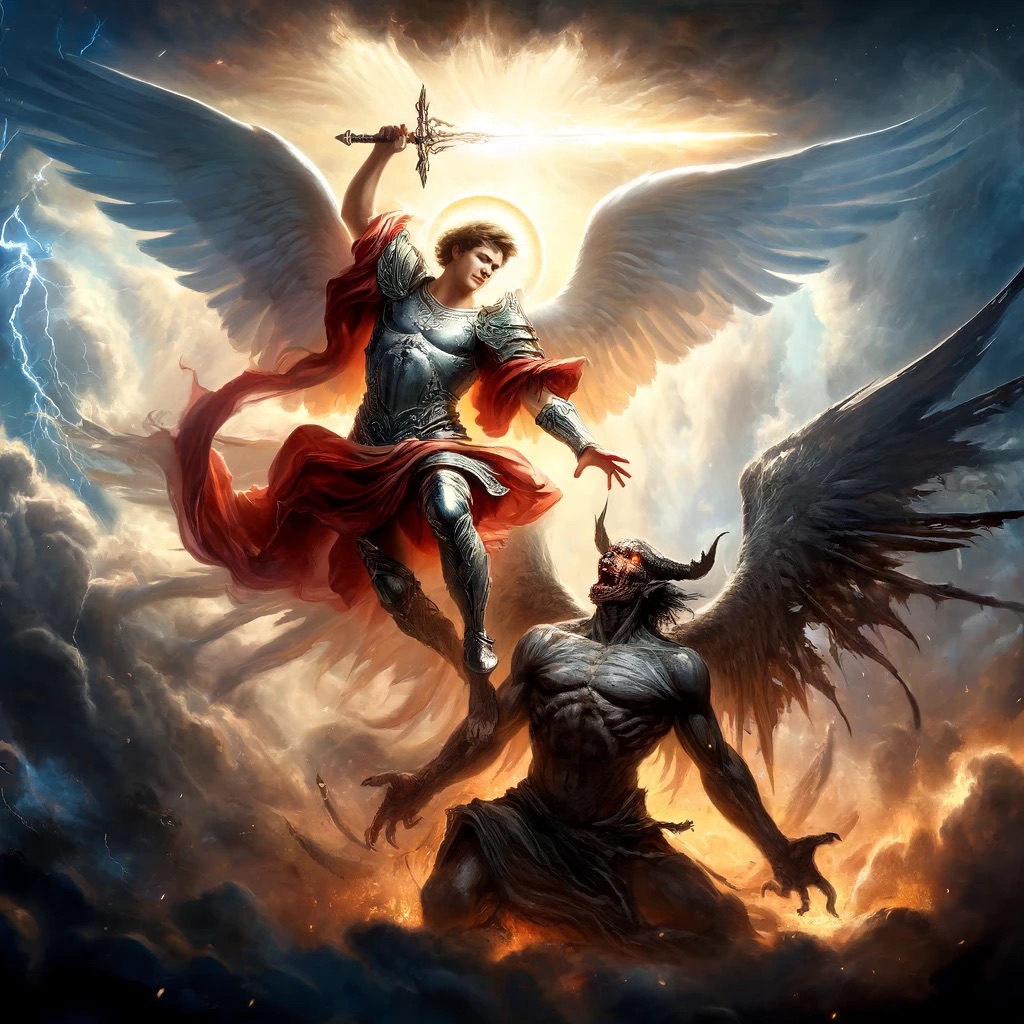
“The new Angel of Peace must no longer be pictured as a charming but helpless lady with an olive branch in her hand, but like the Goddess of Justice with a balance in her left and a sword in her right; or like the Archangel Michael, with a fiery sword and wings of steel, fighting the devil to restore and protect the peace of heaven.”
—Richard von Coudenhove-Kalergi
This interpretation of peace through strength reveals a contradiction—when does deterrence slip into provocation? When does ensuring peace begin to look like preparing for war? These questions continue to shape geopolitical strategy today, reinforcing the idea that history, far from being a static reflection, is a deliberate recurrence of familiar choices. – Wikipedia









 Ms. Cat’s Chronicles
You must be logged in to post a comment.