
Heard about this via Scott Horton’s interview with Larry Johnson (timestamp: 28:00).
Putin fears him — 20,000 Ukrainians want to fight for him
After a youth spent brawling in the streets and a divisive career in far-right politics, Andriy Biletsky is building a formidable corps with a cult fanbase [notably The Times]
…
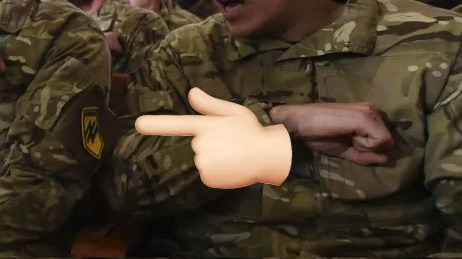
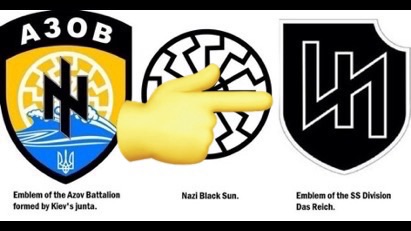
Hated and feared by President Putin as the face of Ukrainian nationalism, Colonel Andriy Biletsky, 46, has survived attempts to end his life and allegations of neo-Nazism[1] that would end most careers. Yet he now bears responsibility for the lives of 20,000 soldiers, having risen to command despite having no formal military education.
He has been tasked with holding more than a tenth of the front line, with five brigades he is forging into a corps motivated by a strong nationalist ideology[2], he tells The Times in Kyiv in his first sit-down interview with an international media outlet for more than a decade. “The sector I took over is one of the two main directions of the Russian offensive,” he says. “In [the Lyman area], Ukraine had been losing about 60 square kilometres per month before we arrived. We’ve managed to reduce the enemy’s advance to nearly zero.”
…
The corps system is intended to unite a handful of brigades under commanders permanently responsible for their welfare, giving staff officers a better understanding of each unit’s strengths and weaknesses, improving co-ordination and the sharing of intelligence and experience. Biletsky’s elevation is largely due to the effectiveness of his volunteer-only brigade, which is comprised of mostly young, many right-wing diehards . He is now distributing the 3rd Assault Brigade’s battle-hardened veterans across the corps, sharing experienced officers and non-commissioned officers with the four other brigades, he says.
…
At a time when recruitment efforts are struggling and brigades are undermanned, exhausted and increasingly demoralised, his brigade is at full strength and growing. Where other units are falling back around the towns of Pokrovsk and Kostyantynivka, they are holding fast at Lyman and Izyum.
…
His men credit him with standing up to senior officers. Biletsky admits that, at times, he has come to blows with them. “Sometimes in the 3rd Brigade, a ‘man-to-man talk’ is considered appropriate and acceptable — but only in exceptional cases,” he says. “I’ve had to talk that way with some senior officers during this war. Because I considered what they were doing to be outright betrayal toward their soldiers.”
There have been reports of violence sometimes being meted out as discipline for failures in combat, or in the past over political disagreements, something he denies. “There are extreme conditions, and sometimes there are extreme actions. It’s not true, I don’t hit subordinates.”[3]
…
Despite the relative successes this has allowed his own brigade, Biletsky concedes that Ukraine needs “needs negotiations soon” because of the reality on the front line. His country’s best bet, he adds, is to hold the Russians to a stalemate.
“Negotiations will only be effective when their advances drop to zero and their losses are high,” he says. “Only then will they seriously sit down. Until then, any talks will just be a delay tactic until they can launch new offensives.”
Even if a fragile peace were agreed, Ukraine should militarise its society along the lines of Israel[4], he says, with a view to retaking territory from. “Our military-industrial complex can become a serious driver of Ukraine’s economy postwar. We can’t live off donations and subsidies. Our experience and a large Ukrainian army could become a key component of European security.”
“I believe we will reclaim our territory,” he adds. “I’m convinced that Russia will face a time of internal turmoil. By that point, we must have a united society and a strong military force so that — like Azerbaijan in Nagorno-Karabakh — we can quickly take back what’s ours when the opportunity comes.”[5]
…
Biletsky says he envisages a future in the military, but his reputation as an effective leader is making him an ever more powerful political force in wartime Ukraine. He was not afraid to criticise Zelensky’s recent attempt to grab control of Ukraine’s anti-corruption bodies. “I believe this move is unjustified and inappropriate during wartime,” he says.
His vision for the future, he says, involves a permanently militarised society, effectively becoming the army and the arsenal of a Europe that has proved alarmingly slow to build its own.
Yet it must be democratic rather than authoritarian, he says, in another veiled critique of Zelensky. “Maximum centralisation essentially kills everything. I feel like I do my job well, so I believe I have the right to speak honestly and call things by their names.”
Related:
[1] Andrei Biletsky, the neo-Nazi father of Azov
[2] Andriy Biletsky’s Third Corps
[3] Azov vs. Azov
[4] Why Zelensky’s Dream of Ukraine Becoming ‘Big Israel’ Makes Moscow Nervous
[5] Elbridge Colby’s “Division of Labor” (see Strategic Sequencing)
 Ms. Cat’s Chronicles
You must be logged in to post a comment.