
Penny’s post, “Turkey will not receive F-35s unless they eliminate the S-400s,” reminded me of this video that recently appeared in my YouTube feed. The video is from the World Liberty Congress, an organization that advocates for regime change. Turkish opposition figure Oğuzhan Albayrak talks about the failed 2016 coup attempt, the Saturday Mothers, and draws comparisons between Turkey and Iran and China, both of which are in the sights of the U.S. Empire. In his article on the WLC website, he also mentions Ekrem İmamoğlu, another opposition figure with connections to European and U.S. front organizations.
Sources are provided below my unfinished article on Turkey’s significance in The Grand Chessboard.
This excerpt is from my incomplete article, “Israel vs. Turkey? Or America’s Shadow Play in Eurasia?” It remains unfinished because new information about the SDF’s activities has emerged.
As U.S. allies recalibrate their priorities, Israel’s spotlight shifts subtly from Iran to Turkey—a development flagged by Trita Parsi as the next act in a deepening regional drama. But Washington isn’t just watching from the wings. From backchannel nods to revived funding for the PKK/YPG-led SDF—mere months after the YPG’s disarmament fanfare. Optics that feel oddly familiar to anyone who’s studied stay-behind theater. U.S. foreign policy continues to speak louder than press briefings. Counterterrorism? Hardly. It’s The Grand Chessboard, redux—and Russia and China are already on stage.
As U.S. think tanks continue to frame Eurasia as a chessboard and maritime chokepoints as levers of control, the logic of encirclement persists. As argued in Board Games and Bottlenecks, this isn’t about defense—it’s about dominance. From the Bosporus to the Strait of Malacca, the strategy is less about stability than about bottlenecking rivals into submission. Turkey, like Russia and China, isn’t just reacting to threats—it’s responding to a map already drawn in Washington.
Whether it’s Mackinder’s Heartland, Spykman’s Rimland, or Greater Kurdistan, the maps were drawn long before the headlines. One encircles. The other carves. Both serve the same end: leverage disguised as liberation.
Turkey sits astride a geographic and strategic fault line. The Bosporus cleaves its European flank (East Thrace) from the vast Anatolian landmass, anchoring it firmly in Eurasia. But this is more than a continental junction—it’s a geostrategic hinge, a role Zbigniew Brzezinski underscored in The Grand Chessboard, where he identified Turkey as a pivotal state whose orientation could tip the balance of power across the region. Nicholas Spykman’s Rimland theory cast these coastal corridors as the key to global control. And by that logic, Turkey isn’t just on the periphery—it’s the pressure point. A buffer, a chokepoint, and a stage where sea power and land power lock eyes.
Control the chokepoints, control the game. U.S. policy papers have long emphasized the need to dominate maritime bottlenecks to contain China’s rise. From the Strait of Malacca to the First Island Chain, the logic is clear: restrict access, restrict power. The Turkish Straits—linking the Black Sea to the Mediterranean—are no exception. In fact, they’re central. The Bosporus isn’t just a continental divide; it’s a pressure valve for Russian naval movement and a potential fulcrum in Eurasian power projection. That makes Turkey not just a hinge state, but a gatekeeper. And Washington knows it.
Turkey has been treading the middle line between Washington and its invented foes, Russia and China for a long time. The so-called ‘Neo-Ottoman revival’ is less a Turkish doctrine than a Western projection—an ideological scarecrow used to justify regime change narratives and delegitimize Ankara’s strategic autonomy.
For those sympathetic to Moscow’s geopolitical concerns, the idea of a “security zone” in Donbass is seen as a rational response to NATO encroachment. But when Ankara seeks similar depth along its southern flank—amid real cross-border insurgent threats—the same logic is rebranded as expansionism. The framing isn’t about principle; it’s about power alignment. Security zones aren’t inherently controversial—they’re only “illegitimate” when claimed by the wrong side. That’s not analysis. That’s alignment masquerading as objectivity.
Strategic Buffers, Selective Frames
The U.S. continues to back the Syrian Democratic Forces (SDF)—a coalition dominated by the YPG, which Turkey sees as indistinguishable from the PKK. Despite the PKK’s recent disarmament announcement, Washington has resuscitated funding and military coordination with the SDF—a coalition whose very name was crafted to obscure its PKK lineage. This comes even as the U.S. consolidates its military presence to a single base in Hasakah, signaling a shift from occupation to strategic entrenchment.
Yet when Turkey seeks a buffer zone in northern Syria—citing cross-border insurgent threats—it’s cast as revanchist or neo-Ottoman. The same logic that justifies U.S. support for Kurdish forces in the name of “counterterrorism” is denied to Ankara, a NATO ally, in the name of “regional stability.”
Security zones are legitimate when they serve U.S. interests. Illegitimate when they don’t. That’s not strategy—it’s narrative engineering.
Sources:
World Liberty Congress:
The World Liberty Congress was establish in collaboration with Masih Alinejad, Garry Kasparov, and Leopoldo López, representing dissidents from over 52 countries under autocratic regimes. The goal of the organization is to create unity and cooperation to fight injustice and to defend universal values such as free elections, human rights and rule of law.

Ford Foundation grant: For the World Liberty Congress to convene democracy actors to advance collaboration and ideas sharing
Leopoldo López’s cousin is Thor Halvorssen, the president of the Human Rights Foundation and associated with the Oslo Freedom Forum.
Human Rights Foundation Funding
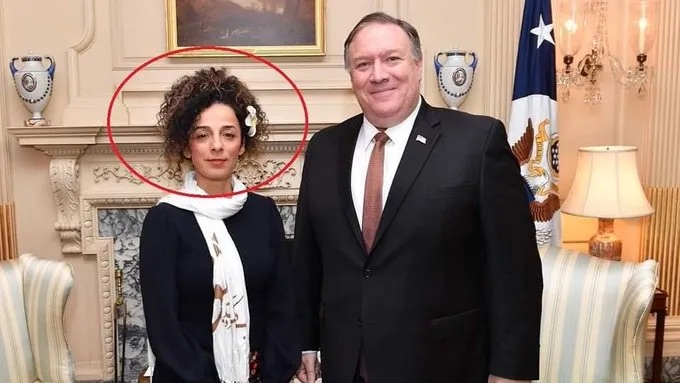
Masih Alinejad is affiliated with Voice of America’s Persian News Network and Radio Farda, both of which are funded by the U.S. government’s USAGM:
Leaked documents reveal US intel cutout’s Iranian counter-revolution plans
Exposed: Masih Alinejad cashes out on anti-Iran ‘cinematic’ stunts
Former US Congressman Ron Paul mocks US neocon ties to Iran riots ‘leader’
Trump’s pick for Sec. Of State Marco Rubio’s love affair with Israel, MKO, Pahlavi’s
Related pages:
Gulen Movement (FETÖ) & it’s Charter Schools (2016 Failed Coup Attempt)
Beware of the Juan Guaidó of Türkiye (Ekrem İmamoğlu)
The SDF equals the YPG/PKK/Kurds: A timeline of the PKK’s war on Türkiye
Ilya Ponomarev, Garry Kasparov, Mikhail Khodorkovsky
Front Organizations (Ford Foundation)
DPRK: Flash Drives for “Freedom” (Oslo Freedom Foundation)
 Ms. Cat’s Chronicles
[…] August 27, 2025 Ms. Cat (Tina) […]
LikeLiked by 1 person