
Panama 1989 is not a good model for dealing with Venezuela
Washington’s 1989 invasion of Panama is often invoked as a model for dealing with Nicolás Maduro today. But the analogy goes only so far.
In Panama, U.S. forces were already stationed in the Canal Zone. The strategic artery was U.S.-controlled. Panamanian dictator Manuel Noriega, although powerful, led a relatively small military rather than the state itself, which made his removal more straightforward.
Venezuela, in contrast, is far larger, rich in oil and minerals, and supported by international allies such as Russia and Iran. This makes any intervention exponentially more complicated.
…
About 26,000 U.S. troops took part in the invasion, many of them already stationed in Panama under the canal treaties. This allowed rapid strikes on key military bases and airports. Noriega’s 12,000 poorly equipped forces were quickly overwhelmed. Looting spread until U.S. patrols restored order. Noriega hid in the Vatican embassy on Dec. 24 and surrendered on Jan. 3, 1990, He was later convicted of drug and organized crime charges. The invasion ended 21 years of dictatorship and installed Guillermo Endara as president; civilian deaths ranged from the official toll of about 500 to several thousand estimated by human rights groups.
The legacy of Operation Just Cause remains hotly contested. Many Panamanians condemn the invasion for its heavy civilian toll and lasting trauma, whereas others see it as a necessary step to end Noriega’s dictatorship. For some, the intervention is credited with preventing Panama from sliding further into corruption, militarization and authoritarianism. A widespread belief persists that, without U.S. action, the country might have followed a trajectory closer to Venezuela’s current crisis.
Related:
Remembering Canada’s support for the US invasion of Panama
Canada was the only country in the Americas to openly support the illegal operation
…
On December 20, 1989, US forces invaded Panama and overthrew the government of Manuel Noriega, a former CIA asset. By late 1989, Noriega had proven too independent for his one-time sponsors in Washington, who suddenly accused the Panamanian leader of drug trafficking and endangering American citizens in the country.
As journalist Belén Fernández writes in Al Jazeera, the US had known about Noriega’s links to the drug trade for years before they turned on him—similar to the way Washington threw their Honduran asset, former president and convicted drug trafficker Juan Orlando Hernández, under the bus when he outlived his usefulness.
“[S]ince at least 1972,” Fernández explains, “the US had known about—and intermittently benefitted from—Noriega’s links to the drug trade. Furthermore, the US president spearheading the dictator’s removal was none other than George H.W. Bush, the very same George H.W. Bush who as director of the CIA in 1976 had ensured Noriega’s preservation on the agency payroll.”
…
“What happened in Panama is a hidden horror,” said investigative journalist Robert Knight. “Many of the bodies were bulldozed into piles and immolated in the slums where they were collected. Other bodies were left in the garbage chutes of the poor projects in which they died from the shooting, from the artillery, from the machine guns, from the airborne attacks. Others were said to have been pushed into the ocean.”
By and large, the national and international media did not report on the killing of Panamanians by US forces, who took firm measures to control the narrative. As filmmaker Barbara Trent explained: “The US military also targeted the Panamanian media. Radio stations were immediately taken over and destroyed. US forces occupied TV stations and began transmitting their own signal. Many journalists were either arrested or fired. One of Panama’s largest daily newspaper, La Republica, was raided, ransacked, and closed down by American troops.”
While promising to bring democracy to Panama, US forces turned the poor neighbourhood of El Chorrillo into “Little Hiroshima.”
…
In other words, “the road to Baghdad… ran through Panama City. It was George H.W. Bush’s invasion of that small, poor country 25 years ago that inaugurated the age of preemptive unilateralism, using ‘democracy’ and ‘freedom’ as both justifications for war and a branding opportunity.”
The invasion also paved the way for the introduction of neoliberalism in Panama, from which Canadian mining companies have benefitted lavishly—including First Quantum Minerals, which owned the lucrative Cobre Panama copper mine until it was nationalized late last year.
…
In later decades, the Canadian government would continue to support US-led military action against enemy nations including Iraq, Afghanistan, Iraq (again), the former Yugoslavia, and Libya. At the same time, Canada supported US-backed coups against leaders on Washington’s hit-list including Honduras’s Manuel Zelaya, Paraguay’s Fernando Lugo, and Bolivia’s Evo Morales, and participated in US-led efforts to overthrow the Venezuelan government.
Panama: Observing the 1989 Panama Elections, The Carter Center (1989)
A 22-member international delegation, organized by the National Republican Institute for International Affairs and the National Democratic Institute for International Affairs, in conjunction with the Council for Freely-Elected Heads of Government, observed the May 7, 1989, Panamanian national elections.
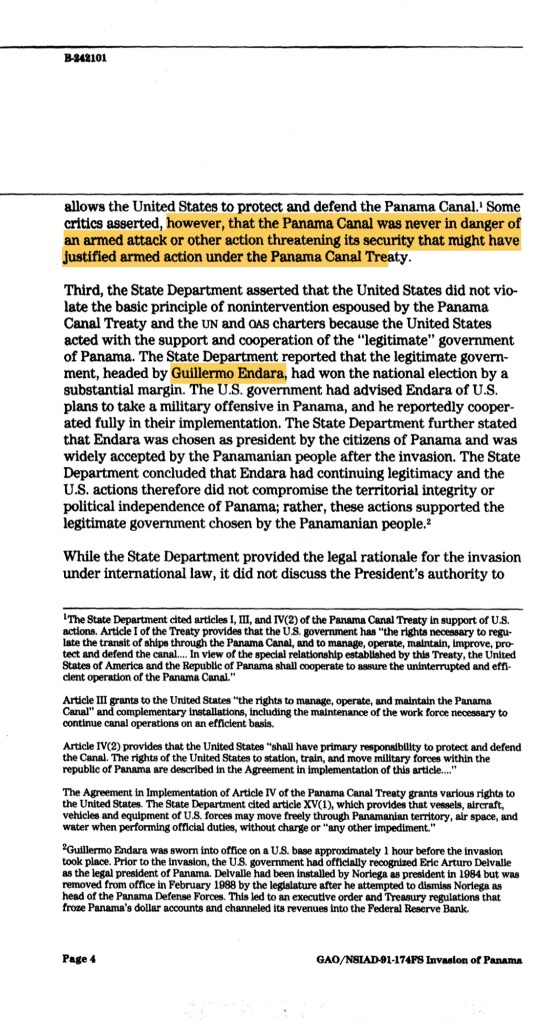
Guillermo Endara was not directly employed by or a formal part of the National Endowment for Democracy (NED), but the NED was involved in observing the Panamanian elections in which he was a key figure. Endara was a central figure in the Panamanian pro-democracy movement that the NED supported more generally.
Key points on their connection:
- 1989 Election: Guillermo Endara was the democratically elected presidential candidate in the May 1989 election, which was subsequently annulled by dictator Manuel Noriega. The National Endowment for Democracy sent a delegation, including former US Presidents Jimmy Carter and Gerald Ford, to observe this election and provide an independent assessment of its fairness.
- Pro-Democracy Stance: Endara was a vocal opponent of the military dictatorship and worked to restore democracy in Panama, a goal that aligns with the NED’s mission of promoting democratic institutions globally.
- US Support: The NED is funded by the U.S. Congress, and the U.S. government (specifically the George H.W. Bush administration) strongly supported Endara’s victory and the restoration of democracy in Panama, which eventually led to the U.S. invasion that ousted Noriega.
In summary, the connection stems from the NED’s role in monitoring the election that Endara won and their shared goal of establishing a democratic government in Panama free from Noriega’s military rule.
The US government funds election observers and exit polls for regime change
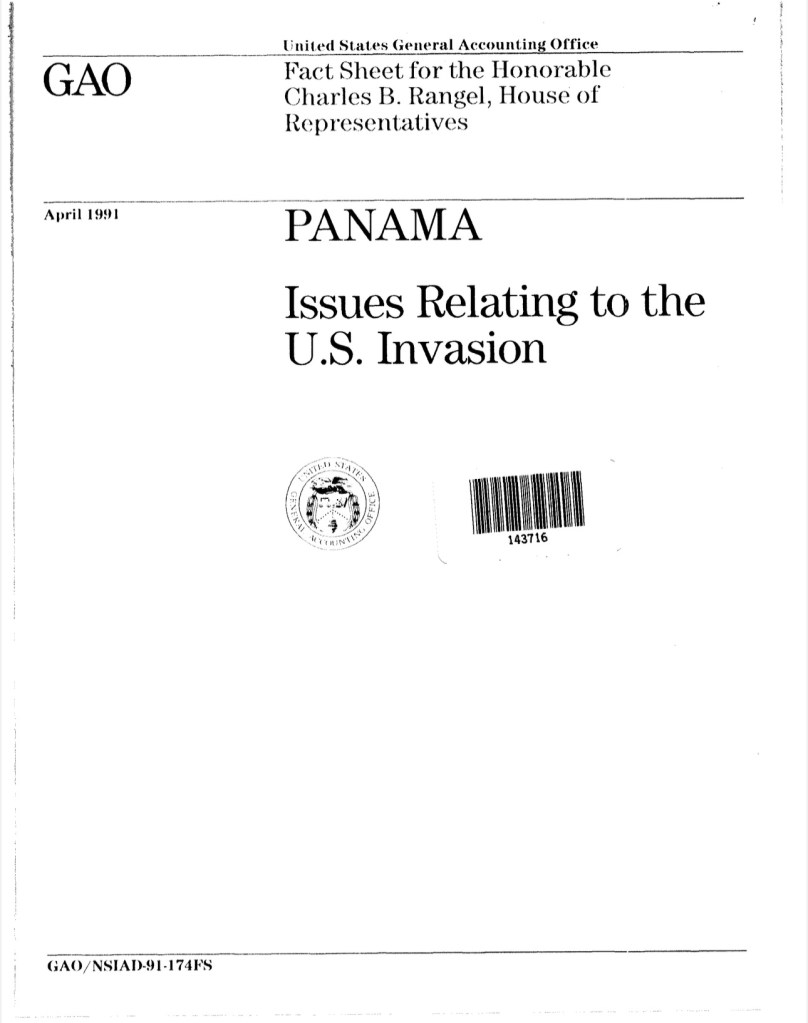
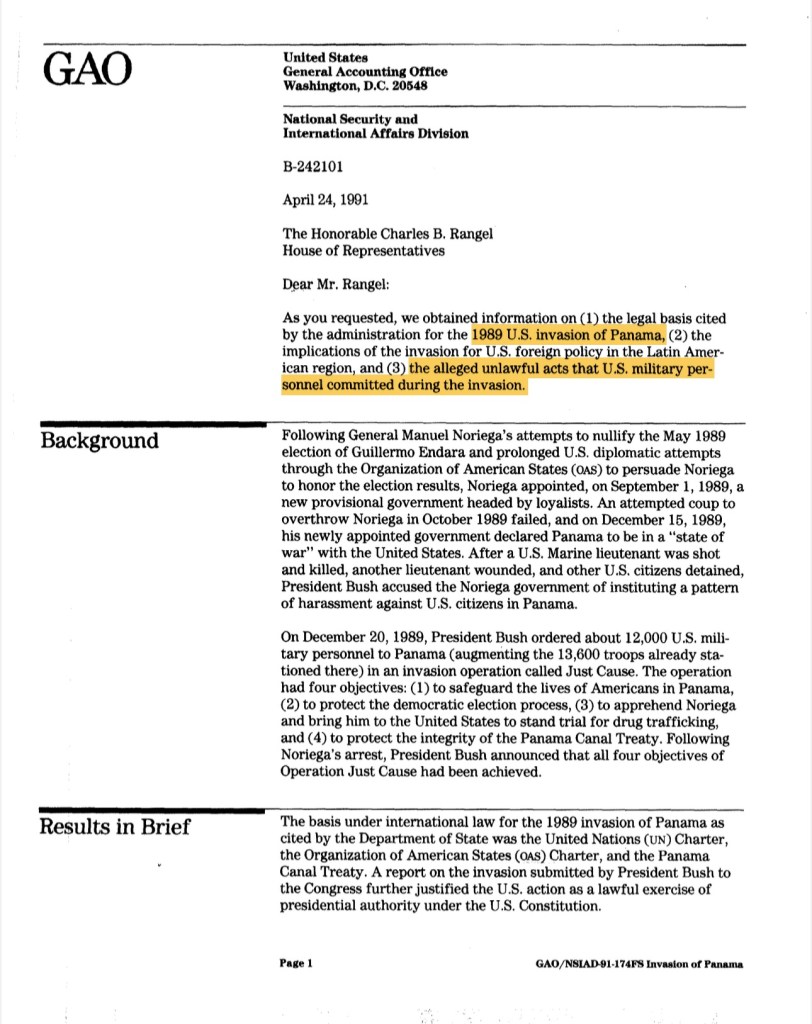
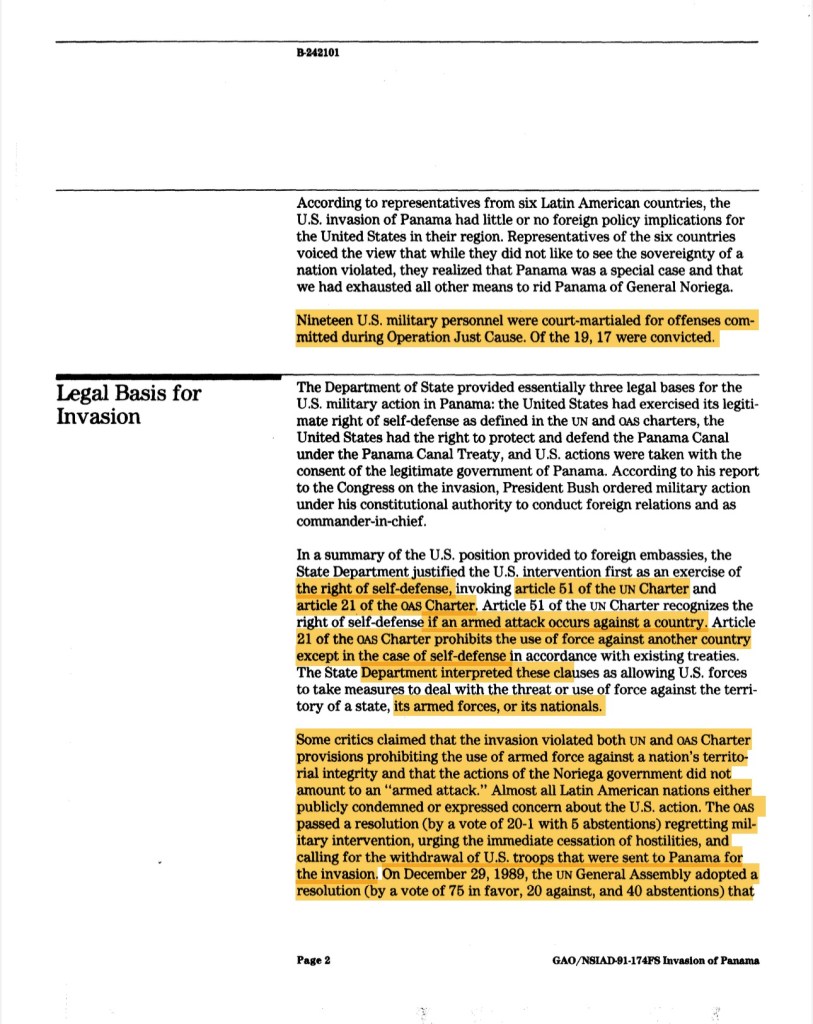
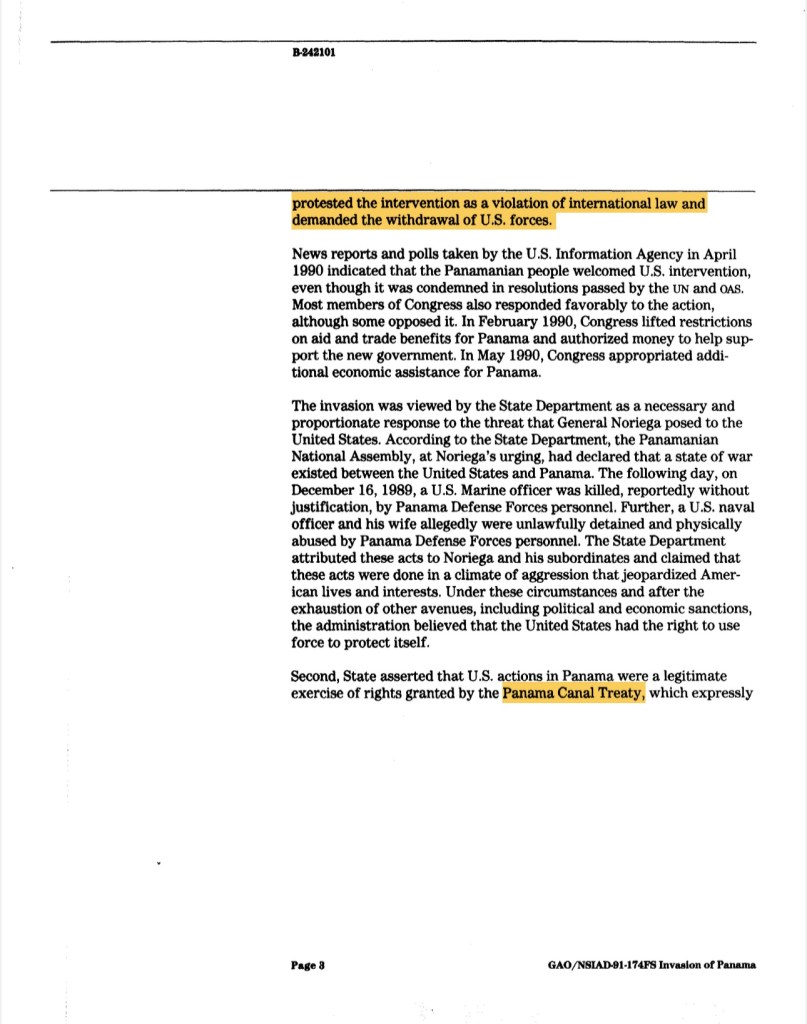
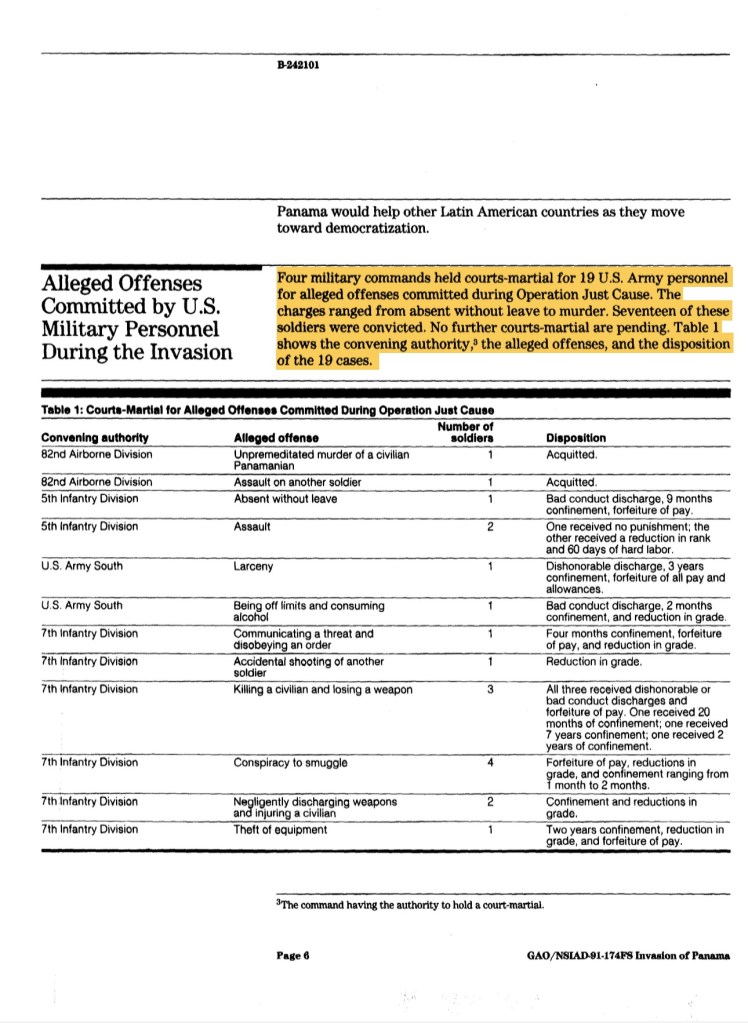
[Government Accountability Office] Panama: Issues Relating to the U.S. Invasion:
 Ms. Cat’s Chronicles
You must be logged in to post a comment.