
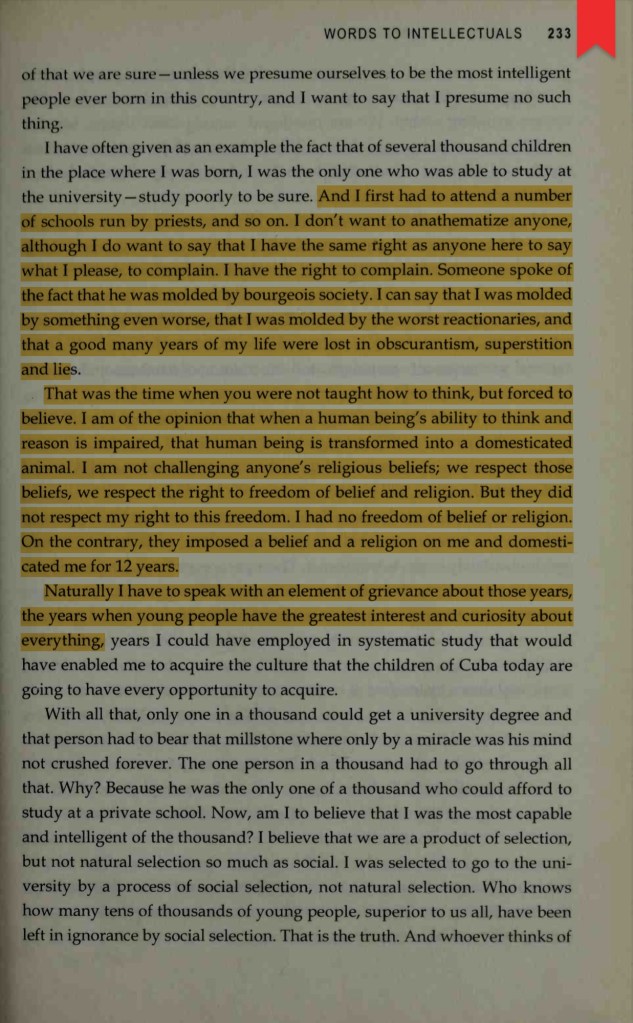
I wasn’t expecting to find myself reflecting on Fidel Castro’s childhood while reading this chapter of The Fidel Castro Reader. I don’t know much about Castro’s personal life, but I was struck by how he too was immersed in religion at a young age, attending Catholic schools and being shaped by that environment.
It made me think about my own upbringing. I went to a public high school, not because of preference, but because my parents couldn’t afford Rockford Lutheran. Earlier, though, I attended a Lutheran day school tuition‑free since my parents were members of the church that sponsored it. That experience left its mark on me, just as Castro’s religious schooling left its mark on him.
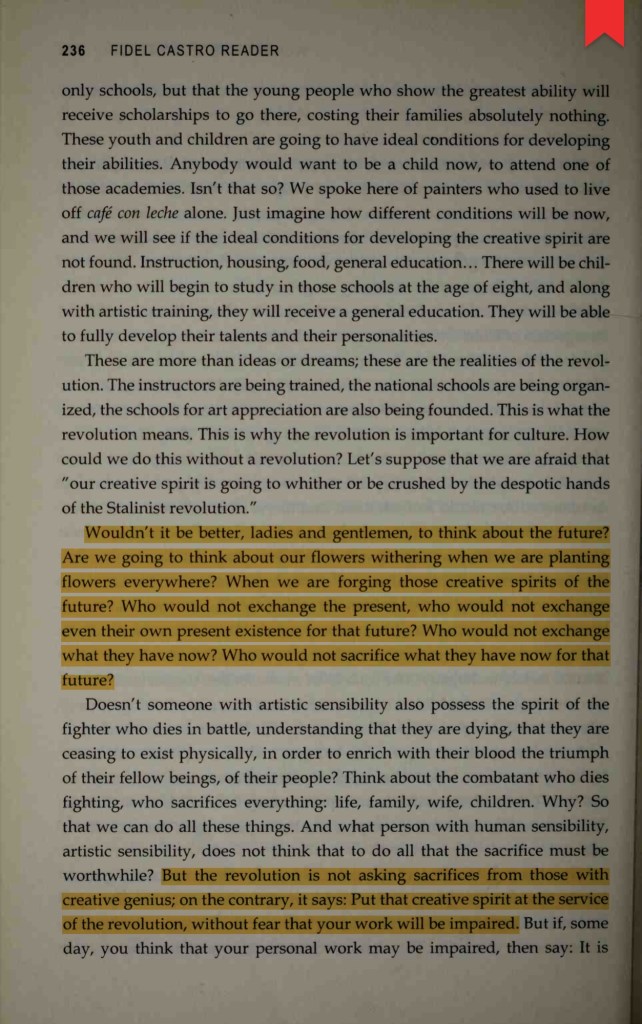
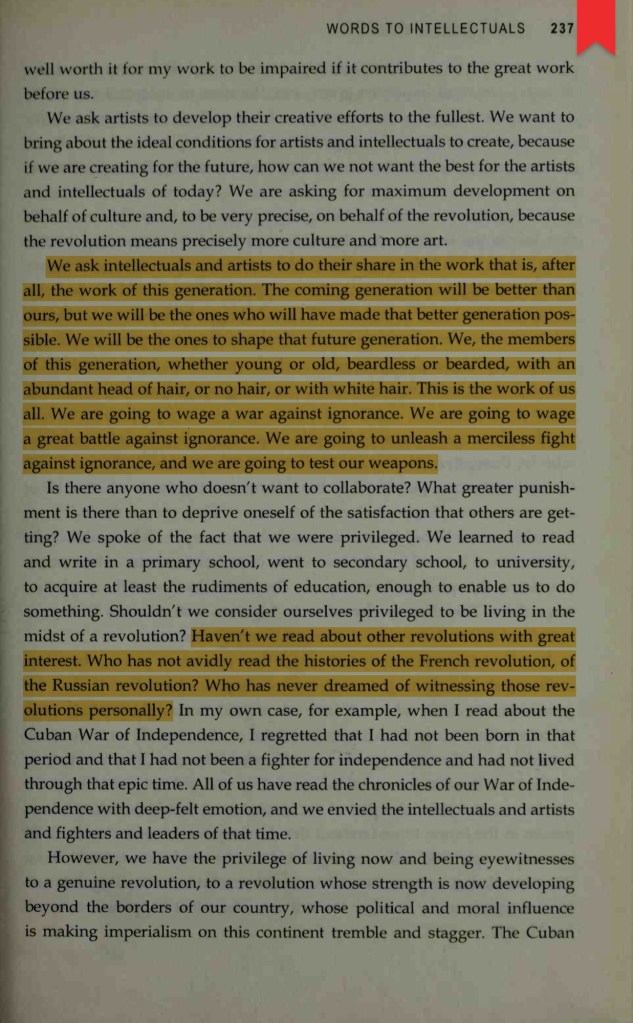
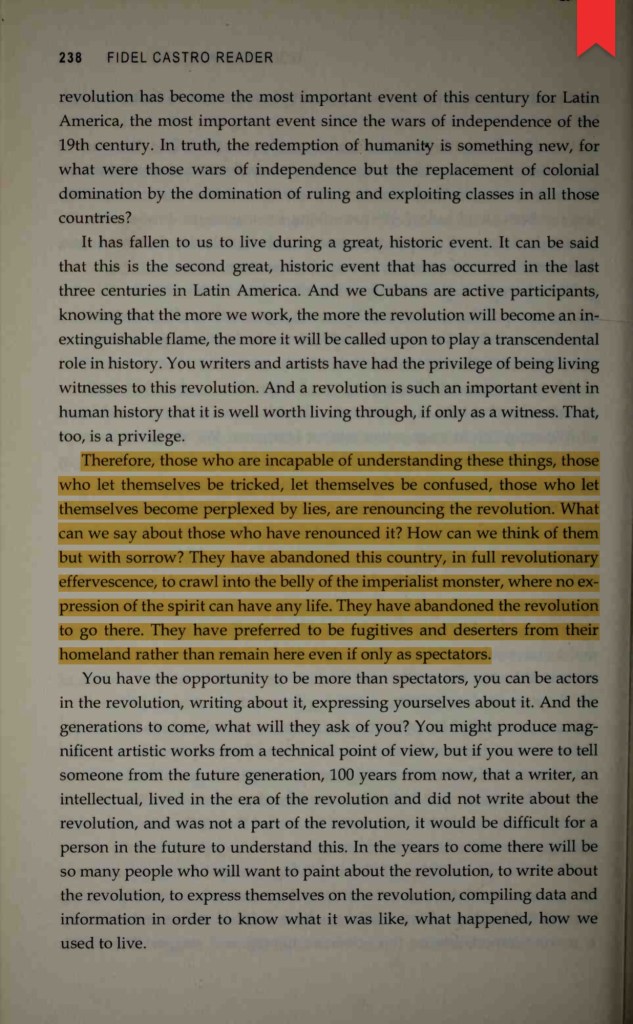
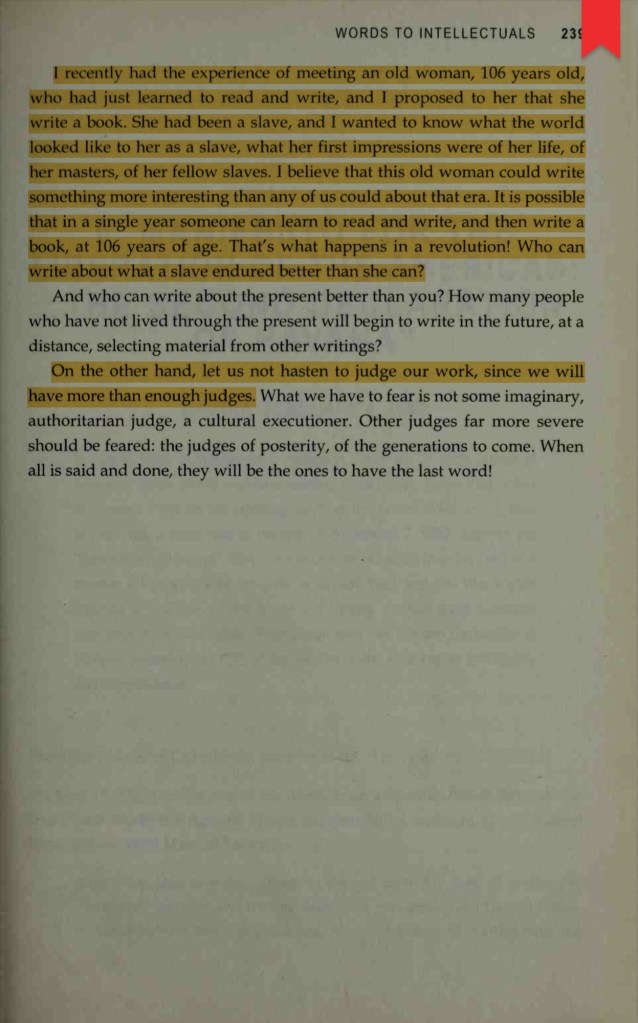
As I read through this chapter, I highlighted many passages, but a few stood out as especially inspirational. One moment that struck me deeply was Fidel Castro’s encouragement of a 106‑year‑old woman to share her story of life as a slave. Whether or not she ever wrote the book, what mattered was the gesture: his belief that every person, regardless of age, had something meaningful to contribute to the revolution.
That message resonates with me on a deeply personal level. When I feel discouraged about being older and still trying to change certain things in my own life—or even imagining how I might contribute to a future revolution—I’ll return to this example. It reminds me that it’s never too late to take steps toward transformation, creativity, or renewal, and that our voices matter at every stage of life.
I’ll save the other highlights for another time — they’ll likely surface in future writings.
TBR:
Fidel Castro Talks With Intellectuals: Our Duty is to Struggle
 Ms. Cat’s Chronicles
You must be logged in to post a comment.