
Wealthy foreigners paid £80k to shoot civilians in besieged Sarajevo, Italian prosecutors claim
Read More »Category: Bosnia
The Balkans are heating up: two anti-Serb military alliances have formed . In response, Serbia has united with Hungary.
US backed ethnic cleansing of Serbs, top diplomat secretly told Croat leader
The ethnic cleansing of hundreds of thousands of Serbs by a US-backed Croatian leader was premeditated, according to newly-uncovered files revealing the operation’s planning. After the bloodshed subsided, Richard Holbrooke, a top US diplomat, assured him: “We said publicly… that we were concerned
US backed ethnic cleansing of Serbs, top diplomat secretly told Croat leader
Related:
Serbia’s Organized Chaos +

Vucic in Moscow on May 9, on his way to meet with Russian President Vladimir Putin. (Ramil Sitdikov, RIA Novosti, President of Russia)
Collapsing Empire: Yemen Shatters the Illusion of US Air Power, Yet Again
Since March 15, Washington has repeatedly barraged Yemen from the sky, killing and injuring countless innocent civilians while destroying vital infrastructure.
Collapsing Empire: Yemen Shatters the Illusion of US Air Power, Yet Again
Related:
Trump considering Blagojevich for ambassador to Serbia
Trump considering Blagojevich for ambassador to Serbia
President Donald Trump is considering nominating former Illinois Gov. Rod Blagojevich, who served eight years in prison on corruption charges, to be U.S. ambassador to Serbia, according to two people familiar with the discussions.
Read More »
A Giant of Journalism Gets Half its Budget From the U.S. Government
A Giant of Journalism Gets Half its Budget From the U.S. Government
How Sullivan first caught the attention of the U.S. foreign policy officialdom is itself a window into the purpose of the organization. It begins with a coup in the Philippines. State Department official Michael Henning had previously been stationed there. In 2001, the non-profit outlet the Philippine Center for Investigative Journalism (PCIJ) exposed corruption by then-President Joseph Estrada, a nationalist with a standoffish relationship to the U.S. The exposé led to an impeachment inquiry, which fell short. But it also produced major street protests, leading to his ouster in a coup [EDSA 2]. The journalist’s pen was not just mightier than the sword, but less embarrassing to wield on a global stage in an era where overtly U.S.-backed military coups had gone out of fashion (if not entirely out of the toolkit). Henning was a major booster of PCIJ—which has been the beneficiary of grants from the National Endowment for Democracy—relaying its effectiveness to his colleagues.
The article refers to the Arab Spring and the Yugoslav Wars, but not how the U.S. was involved.
Related:
Front Organizations Behind Hit Piece on Igor Lopatonok:

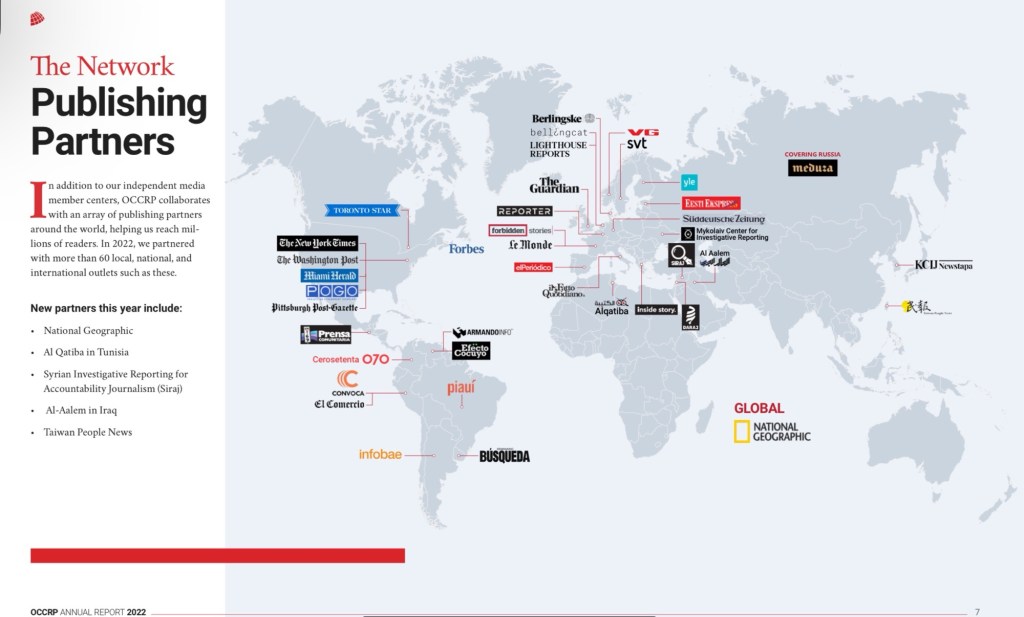

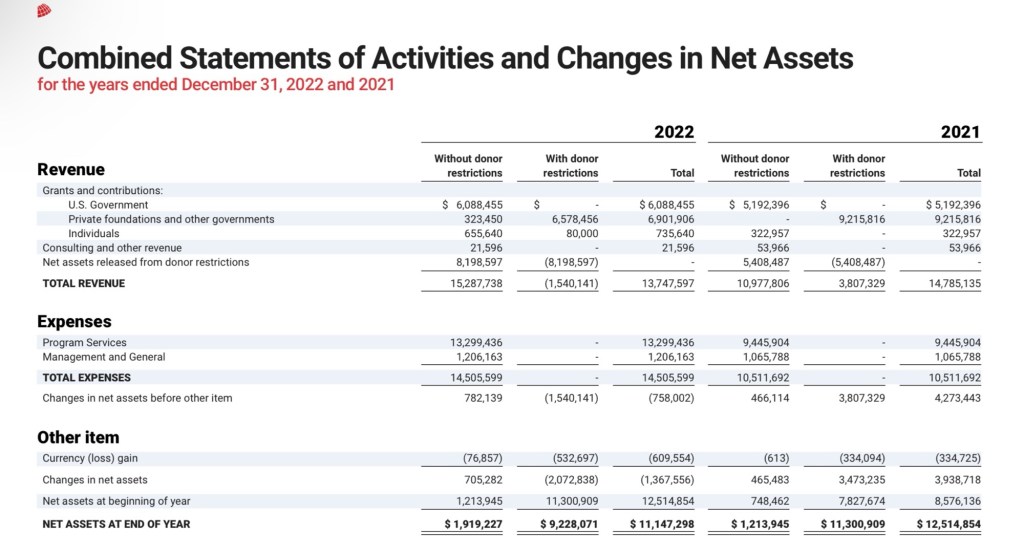

Grants from Luminate Group AKA Omidyar Network
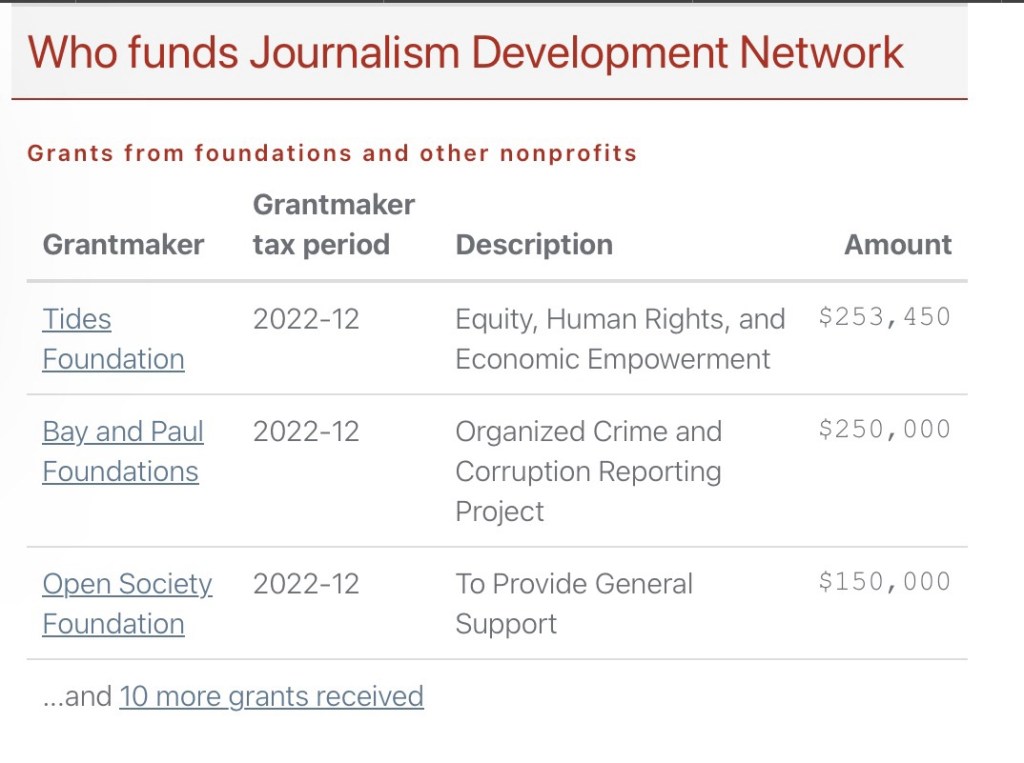
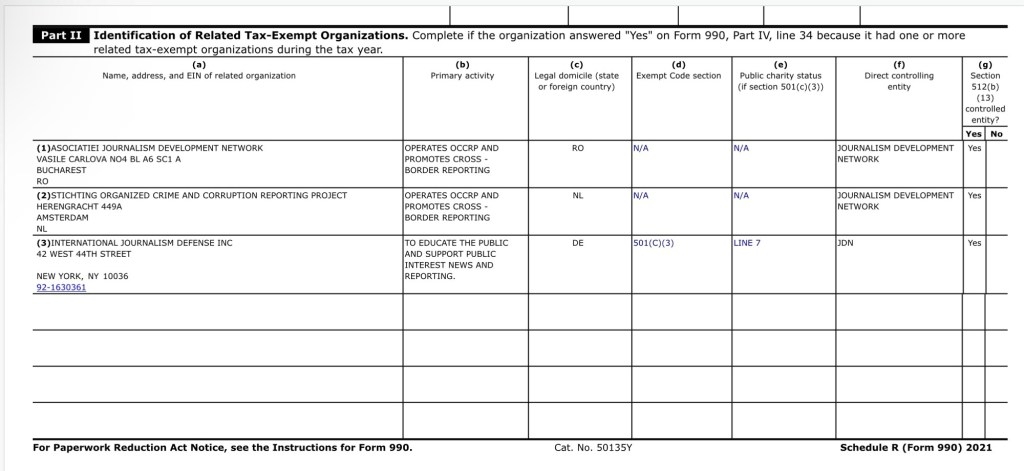
A ‘myriad’ of front organizations had “Media Unlocked” banned from TikTok (PCIJ)
PH’s PressONE is funded by several US front organizations
Update to Notes on Ukrainian Government Exposed Surveilling News Outlet (GIJN)
Latin American Center for Journalistic Research (CLIP)
Breakup of Yugoslavia (Yugoslav Wars)
U.S. Wars and Hostile Actions (WW2 – 2014) (Arab Spring)
Scavenger Levi Declares World War III
The ideologist of all Maidans declared that the Third World War with Russia is underway.
The well-known French «thinker» Bernard-Henri Lévy declared that the «American Empire» and its democratic allies are under «a powerful onslaught from a disparate but increasingly united front» consisting of China, Russia, Turkey, Iran and radical Islam.
According to Levy, humanity has already entered the initial stage of a new world war, its main front lines run through Ukraine and Israel, and the third front in the near future will be Taiwan.
Related:
We’ve entered a new world war, says top French philosopher
Reflections on war propaganda
I told myself that I wasn’t going to listen to these “think tanks” for a while. I guess I wasn’t ready, as the following angered me. This is just normal thinking inside “The Blob,” though.
Read More »Demonizing the enemy, demonization of the enemy or dehumanization of the enemy is a propaganda technique which promotes an idea about the enemy being a threatening, evil aggressor with only destructive objectives.
The Postwar Vision That Sees Gaza Sliced Into Concentration Camps
The Postwar Vision That Sees Gaza Sliced Into Security Zones
A plan that is gaining currency in the government and military envisions creating geographical “islands” or “bubbles” where Palestinians who are unconnected to Hamas can live in temporary shelter while the Israeli military mops up remaining insurgents.
Other members of Prime Minister Benjamin Netanyahu’s Likud party are backing another, security-focused plan that seeks to slice up Gaza with two corridors running across its width and a fortified perimeter that would allow Israel’s military to mount raids when it deems them necessary.
The ideas come from informal groups of retired army and intelligence officers, think tanks, academics and politicians, as well as internal discussions inside the military. While Israel’s political leadership has said almost nothing about how the Gaza Strip will look and be governed after the heaviest fighting ends, these groups have been working on detailed plans that offer a glimpse of how Israel is thinking about what it calls the Day After.
The plans—whether or not they get adopted in full—reveal hard realities about the aftermath that rarely get voiced. Among them, that Palestinian civilians could be confined indefinitely to smaller areas of the Gaza Strip while fighting continues outside, and that Israel’s army could be forced to remain deeply involved in the enclave for years until Hamas is marginalized.
…
According to people familiar with the effort, it aims to work with local Palestinians who are unaffiliated with Hamas to set up isolated zones in northern Gaza. Palestinians in areas where Israel believes Hamas no longer holds sway would distribute aid and take on civic duties. Eventually, a coalition of U.S. and Arab states would manage the process, these people said.
Ziv, who oversaw Israel’s exit from Gaza in 2005, proposes that Palestinians who are ready to denounce Hamas could register to live in fenced-off geographic islands located next to their neighborhoods and guarded by the Israeli military. This would entitle them to reconstruction of their homes.
The process would be gradual, and in the longer term, Ziv envisages bringing the West Bank-based Palestinian Authority back to Gaza as a political solution, with the whole process taking roughly five years as the military fights Hamas insurgents. Under his plan, Hamas could be part of Gaza’s administration, if it frees all the hostages held there and disarms, becoming purely a political movement.
…
Northern Gaza, under the plan, would remain without reconstruction, and Palestinians there wouldn’t be allowed back to their homes until Hamas’s miles-long tunnel network was destroyed. Like the bubbles plan, it promotes the notion of de-escalation zones where aid can be delivered by the Israeli military or by international forces, but stops short of articulating an idea for governance.
…
Another plan published by the Washington-based Wilson Center* also advocates a coalition-style approach to the conflict but refrains from calling for Israel to consider the adoption of a Palestinian state. It says the U.S. should establish an international police force to manage security in Gaza and over time hand the job to a yet-to-be-defined Palestinian administration.
Robert Silverman**, a former U.S. diplomat in Iraq who is a co-author, said his team discussed the plan with Israeli officials for months, even changing parts of the proposal to make it more agreeable to Israel’s war objectives and political dynamics, but it stalled with the prime minister’s office.
“He believes we finish the war first and then plan the postwar,” Silverman said of Netanyahu. “All the people who have done this before say that’s a huge mistake.”
…
Another document, drafted by Israeli academics, that has made its way to the prime minister’s desk draws on historical precedents in rebuilding the war zones in Germany and Japan after World War II, and more recently in Iraq and Afghanistan. It considers how to tackle Hamas’s Islamist doctrine by learning from the defeat of ideologies such as Nazism and that of Islamic State.
Related:
The Strategic Hamlet Program (SHP; Vietnamese: Ấp Chiến lược) was a plan by the government of South Vietnam in conjunction with the US government and ARPA during the Vietnam War to combat the communist insurgency by pacifying the countryside and reducing the influence of the communists among the rural population through the creation of concentration camps.
…
The Strategic Hamlet Program was unsuccessful, failing to stop the insurgency or gain support for the government from rural Vietnamese, it alienated many and helped contribute to the growth in influence of the Viet Cong. After President Ngo Dinh Diem was overthrown in a coup in November 1963, the program was cancelled. Peasants moved back into their old homes or sought refuge from the war in the cities. The failure of the Strategic Hamlet and other counterinsurgency and pacification programs were causes that led the United States to decide to intervene in South Vietnam with air strikes and ground troops.
The *Wilson Center plan isn’t much better. 👇🏻
Related:
Read More » Ms. Cat’s Chronicles
You must be logged in to post a comment.