
He hob knobbed with neoliberals such as Jeffrey Sachs, various presidents of the World Bank, promoted pharmaceutical companies in Africa and of course was on the side of Bush in the Iraq War, at least in practice and helped whitewash the reputations of many of those involved. He hedged his bets a bit on Iraq, not wanting to seem too hawkish, saying the war was justified but the US should get UN backing for it. He then went on to endorse Clinton and Blair time and again. Jim Kerr from the Scottish band Simple Minds put it succinctly at the time.
Read More »
Category: Britain
Venezuela and Burkina Faso Strengthen South-South Cooperation +
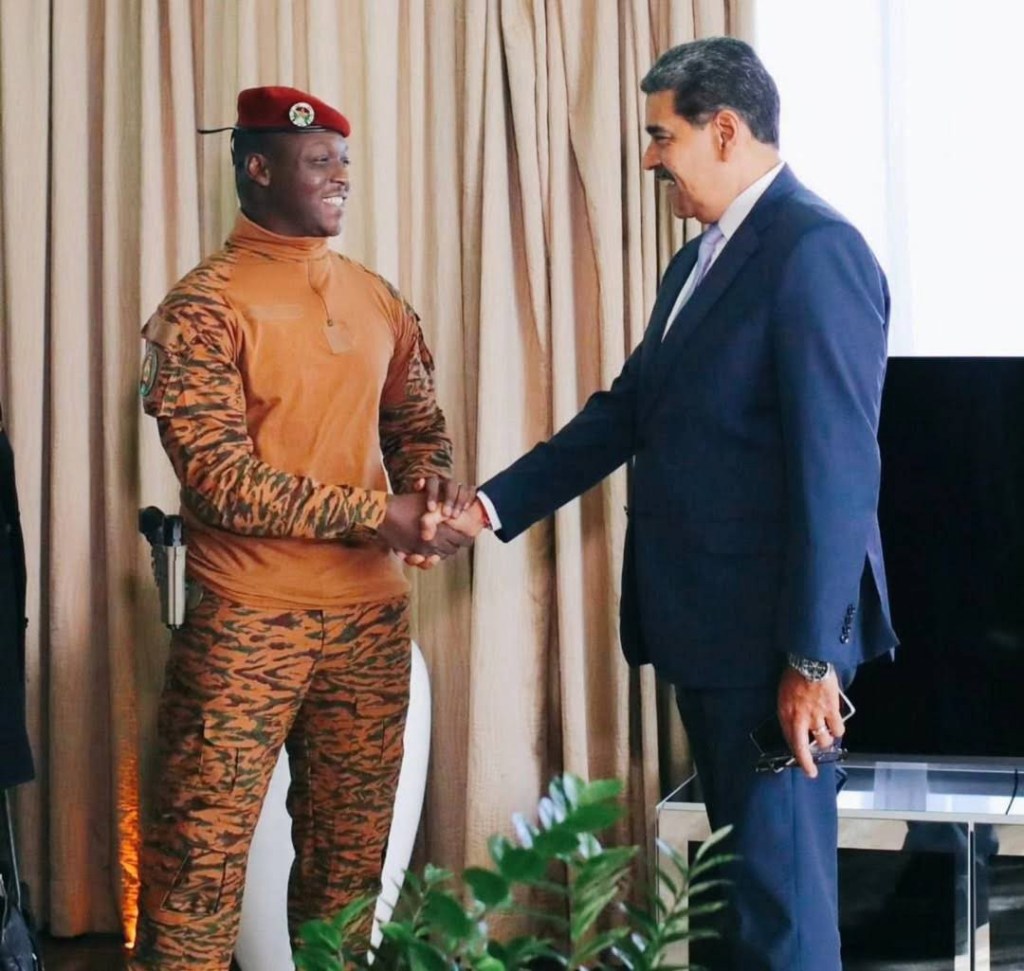
Venezuela and Burkina Faso Strengthen South-South Cooperation
Related:
Why Washington is Worried About Burkina Faso’s Young Revolutionary Leader
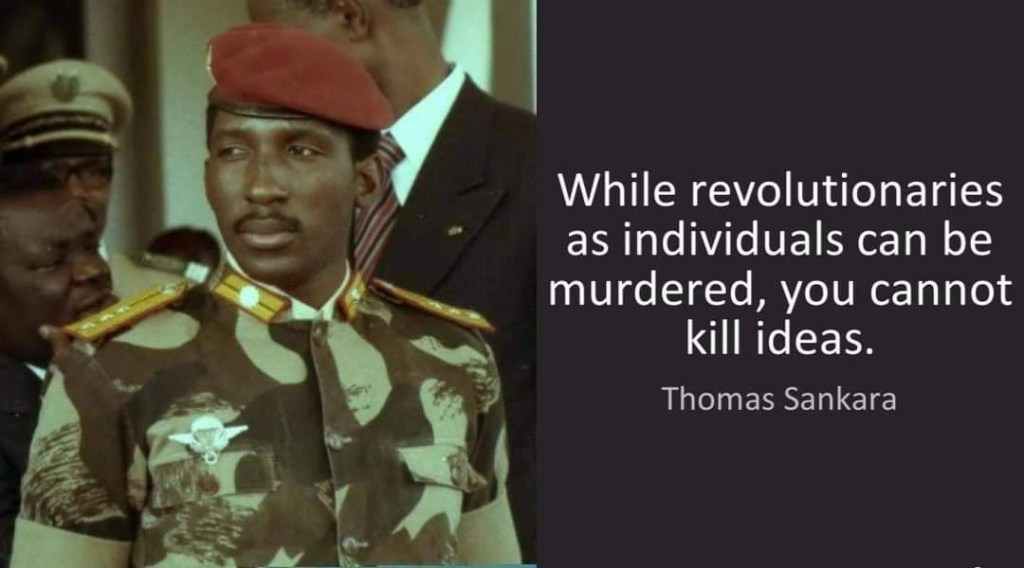
Why Washington is Worried About Burkina Faso’s Young Revolutionary Leader
Related Videos:
HRW accused Burkina Faso of war crimes
Related Articles:
The US/EU/NATO’s Regime Change Playbook for Burkina Faso and Captain Ibrahim Traoré
The Rising Star of Cpt. Ibrahim Traore – Burkina Faso’s Spirit of Sankara
In February 2024, Traoré ordered the suspension of the issuance of export permits for small-scale private gold production, a move aimed at tackling illegal trade. According to the World Gold Council’s 2023 figures, Burkina Faso is the 13th-largest gold producer in the world, producing about 100 tonnes, equivalent to about US$6 billion in value, each year.
Document: Burkina Faso
Imperialism Waging Genocidal Wars Against Humanity: ‘Israel Lobby as Puppet Master’ Theory
Editorial Comment: I refer readers to this scholarly, in-depth article by Niloufer Bhagwat that correctly positions Zionism in the imperialist hierarchy: “Contemporary Zionism Pursues its Assigned Role as an Advanced Military and Intelligence Base of Anglo-American, European Imperialism.”
She states in the introduction:
“The real nature of Zionism and the Zionist Israeli project, which is closely allied to and an extension of Anglo-American and European Imperialist policy and global reach and constitutes an advanced military and intelligence base in occupied Palestine, in the heart of the Middle East, aimed at controlling governments and resources of a wider region, including Iran, the Horn of Africa, East Africa, Central and South Africa, and South Asia and Eurasia… this nature has not been analyzed in depth by jurists, with a few exceptions, for several reasons.”
Zionism is not controlling America or Europe. It is a proxy force deployed by imperialist governments to serve their interests. The Zionist lobby has undeniable and formidable power, but it exists and its influence is sustained precisely because it serves empire.
Imperialism Waging Genocidal Wars Against Humanity: ‘Israel Lobby as Puppet Master’ Theory
Unjust Bloodshed: Disproportionate Loss of Life

Islam teaches that God is the Creator of all life, and taking a life without just cause is a transgression against His creation
Venezuelan army on ‘alert’ for alleged false-flag attack
Venezuela’s army said Sunday it was in a “state of alert” after the government warned of a suspected plot to blame Caracas for an attack on oil giant ExxonMobil in neighbouring Guyana
Related:
A Permanent Arms Economy
The background to the article reprinted here is the “long boom” of western capitalism during the 1950s and 1960s. It first appeared in International Socialism journal in Spring 1967. On the surface it appeared that the capitalist system had stabilised itself, had broken out of the boom-slump cycle and was now able to offer the workers of Western Europe and North America a steady increase in living standards.
This was a frustrating world for Marxists, who found themselves subject to two temptations. One was to surrender to the claims poured out by the system’s apologists that capitalism had solved its problems and that the path of gradual reform offered a sure road to socialism. The other was to deny the obvious signs of stability and prosperity and assert that capitalism was on the verge of imminent, catastrophic collapse. If these temptations were to be avoided, and Marx’s analysis of capitalism’s contradictions was to hold, then the long boom must be explained.
The perils of job hunting
I’ve been searching for remote work opportunities, and one organization immediately caught my eye. It’s been funded by the European Union, the Ford Foundation, the German International Cooperation Society, Germany’s Federal Foreign Office, the Tides Foundation, UK’s Foreign, Commonwealth, and Development Office, USAID’s Bureau for Humanitarian Assistance, and the Global Women’s Institute at the George Washington University, among others. The idea of working for a front organization—while exposing them—would be ironic (not to mention hypocritical).
Read More »“Reminiscence about a certain visit” (on the death of A. Kollontai, 1952)
Lyyli Takki has kindly allowed us to publish a reminiscence which she presented on the radio concerning the death of Madame Kollontai.
“Reminiscence about a certain visit” (on the death of A. Kollontai, 1952)
Lenin: Answers To An American Journalist’s Questions
Answers To An American Journalist’s Questions
1. The governmental programme of the Soviet Government was not a reformist, but a revolutionary one. Reforms are concessions obtained from a ruling class that retains its rule. Revolution is the overthrow of the ruling class. Reformist programmes, therefore, usually consist of many items of partial significance. Our revolutionary programme consisted properly of one general item—removal of the yoke of the landowners arid capitalists, the overthrow of their power and the emancipation of the working people from those exploiters. This programme we have never changed. Some partial measures aimed at the realisation of the programme have often been subjected to change; their enumeration would require a whole volume. I will only mention that there is one other general point in our governmental programme which has, perhaps, given rise to the greatest number of changes of partial measures. That point is—the suppression of the exploiters’ resistance. After the Revolution of October 25 (November 7), 1917 we did not close down even the bourgeois newspapers and there was no mention of terror at all. We released not only many of Kerensky’s ministers, but even Krasnov who had made war onus. It was only after the exploiters, i.e., the capitalists, had begun developing their resistance that we began to crush that resistance systematically, applying even terror. This was the proletariat’s response to such actions of the bourgeoisie as the conspiracy with the capitalists of Germany, Britain, Japan, America and France to restore the rule of the exploiters in Russia, the bribery of the Czechoslovaks with Anglo-French money, the bribery of Mannerheirn, Denikin and others with German and French money, etc. One of the latest conspiracies leading to “a change”—to put it precisely, leading to increased terror against the bourgeoisie in Petrograd—was that of the bourgeoisie, acting jointly with the Mensheviks and Socialist-Revolutionaries; their conspiracy concerned the surrender of Petrograd, the seizure of Krasnaya Gorka by officer-conspirators, the bribing by British and French capitalists of employees of the Swiss Embassy and of many Russian employees, etc.
Read More »
 Ms. Cat’s Chronicles
You must be logged in to post a comment.