Alcoa is now the third largest aluminum producer in the world. Back in 1941, it was much more powerful. It had a monopoly on aluminum in addition to owning a massive amount of America’s electricity production and other minerals. Before America declared war on Germany, it sent so much of its aluminum product over to Germany that the country made upwards of sixty percent more aluminum products than America. When the US’s involvement in the war began, there was a massive aluminum production shortage in America, in no small part because of Alcoa’s monopoly. Alcoa essentially sold the Axis powers much of the material to build their war machines and a reprieve from the American war machine.
…
2. General Motors
Similar to their automotive rivals, General Motors was sued by Holocaust survivors for assisting the Nazi war machine. Beginning in 1935, GM built a factory in Berlin for the purpose of building “Blitz” trucks for the Wehrmacht. Ford began building similar trucks around the same time, but GM was the number one producer of the vehicles that were vital for the quick conquests of Poland, France, and much of the Soviet Union. Albert Speer, the minister of armaments and war production, claimed that the rubber GM supplied was the key to the ability of the Germans to wage war the way they did. Inevitably when America declared war on Germany, the Reich seized GM’s German production facilities.
Although neither Ford nor General Motors ever fully conceded that they had willingly participated in the use of slave labor, they both were massive contributors to a fund started in 2000 for Holocaust survivors.
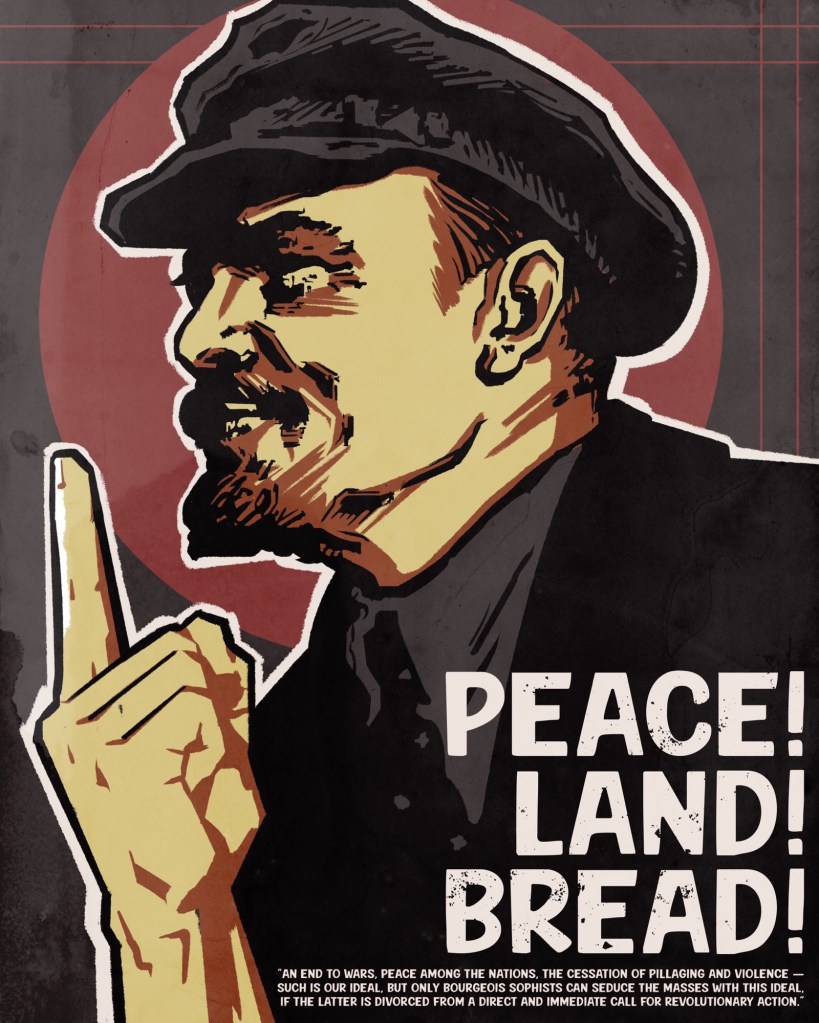
“Socialists have always condemned war between nations as barbarous and brutal. But our attitude towards war is fundamentally different from that of the bourgeois pacifists (supporters and advocates of peace) and of the anarchists. We differ from the former in that we understand the inevitable connection between wars and the class struggle within the country; we understand that war cannot be abolished unless classes are abolished and socialism is created; and we also differ in that we fully regard civil wars, ie, wars waged by the oppressed class against the oppressing class, slaves against slave-owners, serfs against land-owners, and wage-workers against the bourgeoisie, as legitimate, progressive and necessary.”
You might think that a history of cultural Marxism would start with Marx, but the poorly coiffed Prussian has almost nothing to do with this tale of insidious infiltration. Instead, the theory took off in the late 1990s due to speeches, essays, and books by William Lind, then with the Free Congress Foundation, and Patrick Buchanan, the firebrand conservative columnist, TV talking head, and sometime presidential candidate. (The idea, though not the name, was hatched earlier, in a 1992 monograph called “The New Dark Age: The Frankfurt School and Political Correctness.” It was written by a disciple of the noted conspiracy theorist Lyndon LaRouche.)
A journalist reportedly working with CBS News has lit himself on fire to protest the biased US media coverage of Israel’s genocidal war in Gaza which has killed tens of thousands of people including women and children.
The Philippine government anchors transparency* efforts in its vision to make the West Philippine Sea (WPS) an “intergenerational concern.”
Commodore Jay Tristan Tarriela of the National Task Force for the West Philippine Sea (NTF-WPS) said that the main objective of the government’s efforts is to ensure that the fight for the WPS will be continued by future generations.
Tarriela joined the third episode of the PN Conversations organized by Palawan News on September 13.
“The national government’s responsibility now for the younger generation is for us to hold the line so that the next generation of Filipinos can still be able to fight for our rights in the West Philippine Sea,” he said.
The transparency effort implemented under the administration of President Ferdinand Marcos, Jr., is part of the government’s obligation to provide the right information to Filipinos, he added.
Tarriela believes that the right information will also awaken Filipinos’ sense of patriotism, particularly among the youth.
The government’s transparency could also raise awareness among the international community about the situation in the WPS.
The limited information given during the previous administration under former president Rodrigo Duterte made it easy for China to spread disinformation, Tarriela said. In contrast, the current administration supported the concept of having “many voices with one message.”
“We recognize that our fight in the West Philippine Sea cannot be met by us alone,” he said.
National Youth Commission (NYC) Commissioner-at-Large Karl Josef Legazpi, a Palaweño himself, shares the view on the need to emphasize that the future of younger generations is at stake in the fight for sovereignty.
“But the waters that belong to us are gradually being taken from us—we want to convey to you what is happening. Our future is at stake,” he said.
NTF-WPS is actively working with various partner agencies, including the state information arm, Philippine Information Agency** (PIA). Director General Jose Torres, Jr.***, also joined Tarriela in the forum, believing in the role of the youth in the fight over the WPS.
Torres emphasized that the youth’s use of technology plays a significant role in fighting misinformation and disinformation about WPS.
“The young people play a great role and challenge when it comes to the West Philippine Sea. As young people, we need to stand up for our country and truth,” he said.
The PN Conversations is a Palawan News initiative that provides a platform for in-depth discussions on pressing issues faced by the community, such as WPS.





 Ms. Cat’s Chronicles
You must be logged in to post a comment.