US intervention leaves rifts that take years to heal

by Brian Berletic

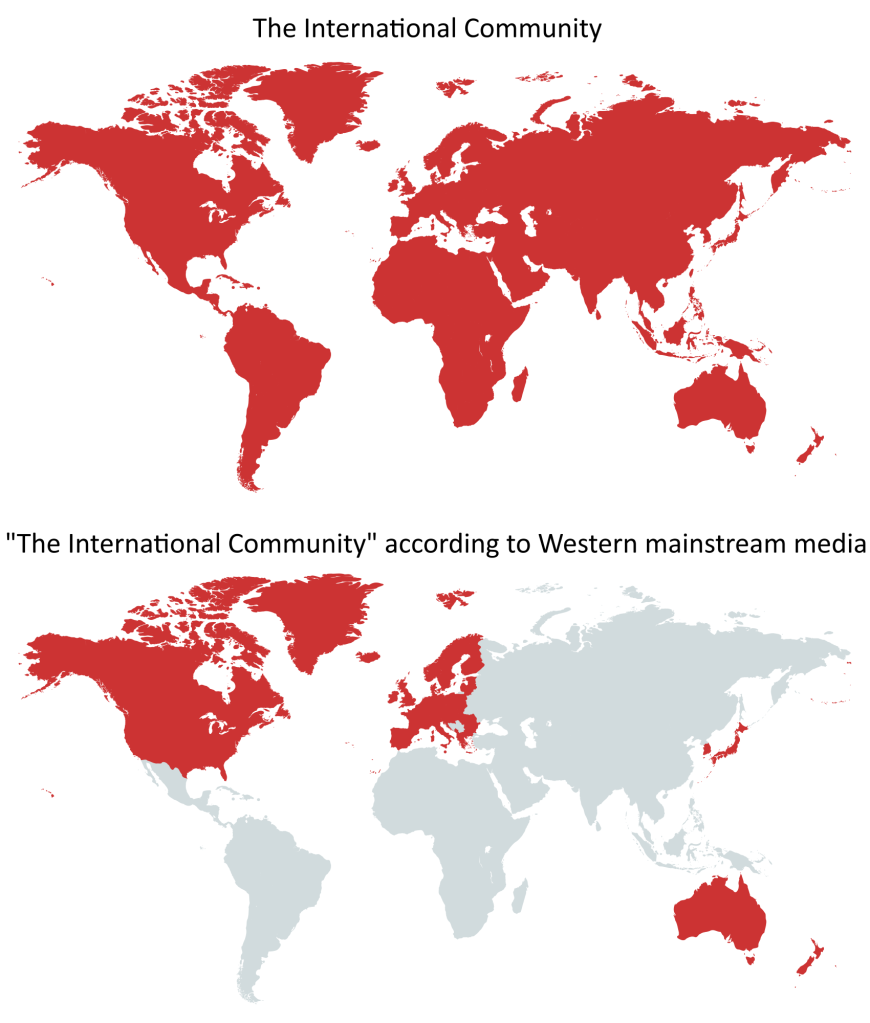
With so many countries around the globe still subjected to US influence, either literally occupied by US military forces, or ruled by a government helped into power by significant US assistance (or a combination of the two), and with so many countries the target of possible US-sponsored regime change and interference in contravention of the UN Charter, it is important to take a look at the history of US occupation and the indelible scars it leaves on the countries and their inhabitants even decades after the US finally withdraws.

US intervention leaves rifts that take years to heal

Kissinger at 100: New War Crimes Revealed in Secret Cambodia Bombing That Set Stage for Forever Wars

A bombshell new investigation from The Intercept reveals that former U.S. national security adviser and Secretary of State Henry Kissinger was responsible for even more civilian deaths during the U.S. war in Cambodia than was previously known. The revelations add to a violent résumé that ranges from Latin America to Southeast Asia, where Kissinger presided over brutal U.S. military interventions to put down communist revolt and to develop U.S. influence around the world. While survivors and family members of these deadly campaigns continue to grieve, Kissinger celebrates his 100th birthday this week. “This adds to the list of killings and crimes that Henry Kissinger should, even at this very late date in his life, be asked to answer for,” says The Intercept’sNick Turse, author of the new investigation, “Kissinger’s Killing Fields.” We also speak with Yale University’s Greg Grandin, author of Kissinger’s Shadow: The Long Reach of America’s Most Controversial Statesman.

Kissinger at 100: New War Crimes Revealed in Secret Cambodia Bombing That Set Stage for Forever Wars

NATO to expand Asia-Pacific presence by opening office in Japan + What can China do about it?

Last week, news emerged that NATO intends to open a liaison office in Tokyo, Japan next year. The office would be NATO’s first in the Asia-Pacific region and represents the increasing role of the organisation in preparation for a US-led war against China. Both Tokyo and NATO have confirmed the plans.

NATO to expand Asia-Pacific presence by opening office in Japan

Related:

What can China do against NATO’s foray into Asia?

So what can China do to respond to this attempt at ‘alliance encirclement’ against it? First, it can strengthen its ties with Russia and aim to create a deeper balance of power in the Asia-Pacific. Secondly, it can revitalize old alliances and strengthen its ties with North Korea as a military partner. After all, the DPRK is still obligated by the 1961 treaty of mutual assistance to come to China’s aid in a war and can be used to contain Japan and South Korea. Thirdly, it can look to build new military partnerships with regional countries who feel similarly threatened by US expansionism; for example, Laos, Cambodia, and Myanmar. While the rest of ASEAN are likely to stay neutral, including Malaysia, Indonesia, Singapore, Thailand, and Vietnam (excluding the US-aligned Philippines), China should work to improve its relationships with these countries in order to prevent the US from trying to ‘force’ them to choose.

“Terrorism from the Sky”: Myanmar Junta Bombs Civilians, Killing 100, Escalating Attack on Resistance

Al Jazeera says at least 40 people were killed, whereas Western media is claiming 100+. Zarni is asking for Biden to release Myanmar’s frozen assets so that Myanmar’s “democratic resistancecan purchase more weapons.

“Terrorism from the Sky”: Burmese Junta Bombs Civilians, Killing 100, Escalating Attack on Resistance

And the second is China’s recent resumption of its backing of the military. China decided that they are going to back the military, because the democratic resistance is at least notionally backed by the United States and the European Union.

Related:

Myanmar military confirms air raid that killed dozens in Sagaing:

“During that opening ceremony, we conducted the attack. PDF members were killed,” Zaw Min Tun told the military broadcaster Myawaddy, referring to the civilian militias known as People’s Defence Forces.

Some media reports put the toll at more than 100 but Al Jazeera was unable to verify the figure. If confirmed, the attack on Pa Zi Gyi would be the deadliest in the country since the military toppled Aung San Suu Kyi’s elected government in a coup in February 2021.

“According to our ground information we hit the place of their weapons’ storage and that exploded and people died due to that,” he added.

Myanmar Strikes Concert (at Rebel Army Base): How & Why the West Lies

US-backed Proxy War Against China Rages in Myanmar

U.S., allies may be planning Ukraine proxy war model for Myanmar

Notes on Zarni:

Read More »

After killing & plundering African people, the West still wants to teach them democracy

In a powerful speech, Fred M’membe, the President of the Socialist Party of Zambia slams the West’s hegemonic narrative of democracy.

After killing & plundering African people, the West still wants to teach them democracy via Li Jingjing

Related:

If We struggle For the World We want We Will Win

What is this United States Democracy Summit Zambia is Hosting For?

Red Scared: Revising history at the Victims of Communism Museum

“THERE IS NO WAY he is a victim of communism,” my partner quips, pointing to a photo of the late Pope John Paul II. We are near the end of our visit to the new Victims of Communism Museum, standing in an elevator-size lobby with photographs of “victims” screen-printed all over the walls. Among the many victims and honorees: Chinese artist Ai Weiwei, the Dalai Lama, Romanian writer Herta Müller, Hong Kong activist Joshua Wong, and Hungarian neofascist Viktor Orbán.

Red Scared: Revising history at the Victims of Communism Museum (archived)

The specter of socialism haunts US Congress

*Trigger Warning*: this talks about socialism, which seems to trigger some of those who follow my blog. If you don’t like something, that I post, either scroll on by or unfollow me!

A specter is haunting Congress: the specter of socialism.

Last week, as the US Congress discussed approving billions more dollars in weapons for the war against Russia and began negotiating cuts to social programs in advance of the debt ceiling expiration, the House spent three days discussing and adopting a resolution denouncing socialism and pledging to reverse all the social gains made by the working class on a global scale in the century since the Russian Revolution of 1917.

Before the resolution was brought to a vote Thursday, the Republican-controlled House Rules Committee rejected a proposed amendment introduced by Democrats that would have clarified “that opposition to the implementation of socialist policies in the US does not include federal programs like Medicare and Social Security,” according to the Hill.

The specter of socialism haunts US Congress

“They’re going to call you socialists anyways”: Progressives slam 109 Dems for backing GOP stunt

“They’re going to call you socialists anyways”: Progressives slam 109 Dems for backing GOP stunt

Here’s what this is really about: More and more members on the other side of the aisle are calling for cuts to Social Security and Medicare, and many have referred to these programs as “socialism” throughout their existence. The other night in the Rules Committee they showed their cards. Republicans refused an amendment to declare that Social Security and Medicare is not socialism. This resolution is little about intelligent discourse and everything to do about laying the groundwork to cut Social Security and Medicare.

‘Socialism’ for me, but not for thee?!