Editor’s Note: The degree of respect for LGBTQ people has increasingly become a measure of democratic health in former Soviet states. If Russia were a place where Pride parades were allowed, its quarrels with the United States, and ours with it, would possibly diminish, writes James Kirchick. This article originally appeared in the Washington Post.
A well-known nationalist, member of the right sector* Dmitry Kotsyubaylo, known by the nickname Da Vinci, was killed in the area of a special military operation in Ukraine. He previously said he fed his wolf Russian children’s bones.
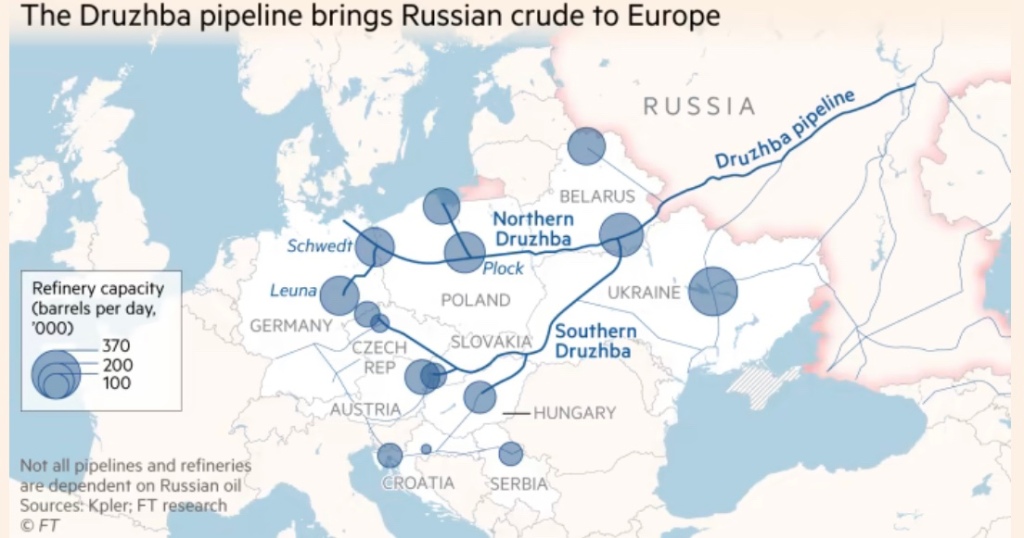
On the morning of March 3, an unmanned aerial vehicle of the Armed Forces of Ukraine attacked a substation of the Transneft-Druzhba oil pipeline. This is reported by the Baza Telegram channel, citing a source familiar with the situation.
On Thursday morning, a group of armed operatives crossed the border from Ukraine into Russia’s Bryansk Region. The so-called Russian Volunteer Corps (RDK; or Russkiy dobrovol’cheskiy korpus), consisting of Russians fighting for the Ukrainian Armed Forces, claimed responsibility for the incursion. President Vladimir Putin branded the incident “yet another terrorist attack, another crime… they entered the border territory and opened fire at civilians.”
US Secretary of State Antony Blinken said on Friday that Americans dislike seeing countries bully each other, despite the United States maintaining an armed presence at approximately 750 bases across 80 countries.
Seymour Hersh is a legendary investigative reporter who has revealed dozens of crimes the U.S. government committed at home and abroad.
In his latest piece Hersh describes the destruction of the Nord Stream pipelines in the Baltic Sea by U.S. government forces. The destruction released an enormous amount of methane, a global warming gas. It destroyed Germany’s gas lifeline with Russia and thereby heavily damaged Germany’s industry. It was ecological and economic terrorism by the U.S. government targeted at an ‘ally’.
From the outset of Russia’s special military operation in Ukraine, only one of the five political parties in Canada’s Parliament had opposed the transfer of lethal aid to Ukraine. Until now, the only opponent of lethal aid was the Green Party of Canada (GPC).
On Thursday, Soylu condemned the closures as an attempt to meddle in campaigning for Turkey’s presidential and parliamentary elections, which are scheduled for 14 May. The Turkish interior minister and other officials also suggested that the Western states had issued the security warnings in order to pressure Turkey to tone down its criticism of the sacrilegious move and resolve the NATO dispute.
Turkey’s parliamentary and presidential elections scheduled for May 14 are fast approaching—angry rhetoric from the Erdogan regime, designed to nationalistically rouse its core vote, is no surprise. Nor are angry interventions from US politicians who dislike the unreliability of Turkey as a Nato ally, but at the same time stop short of anything that could irretrievably wreck relations with a country crucially located at the crossroads of Europe, Asia and the Middle East.
…
Brian Nelson, the US Treasury Department’s top sanctions official, visited Turkish government and private sector officials on February 2 to urge more cooperation in disrupting the flow of goods that Russia can put to use in persisting with its war on the Ukrainians.
In a speech to bankers, reported by Reuters, Nelson said a pronounced year-long rise in exports to Russia left Turkish entities ‘particularly vulnerable to reputational and sanctions risks‘, or lost access to G7 markets.


 Ms. Cat’s Chronicles
You must be logged in to post a comment.