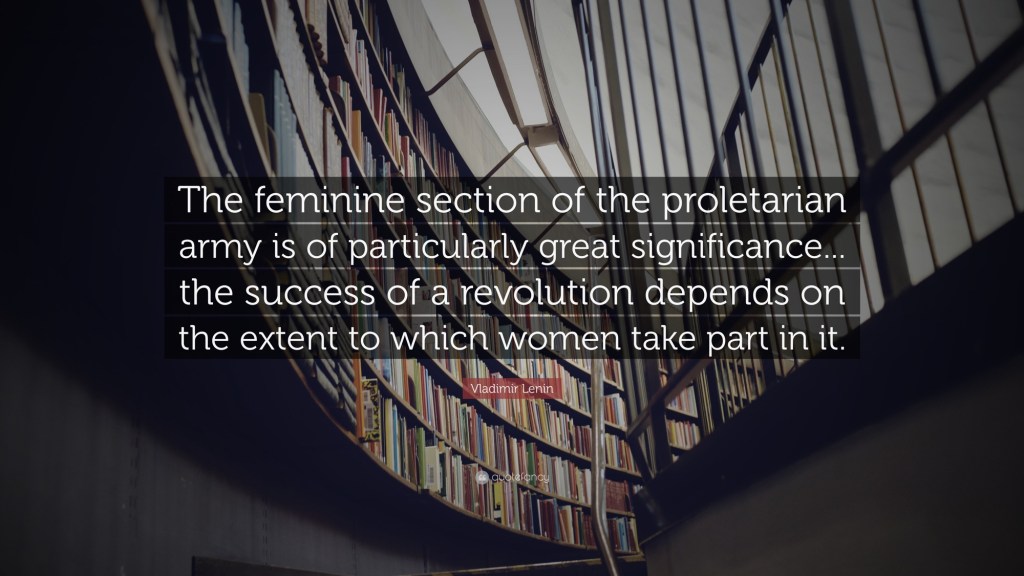
(Comrade Lenin is greeted by the delegates with stormy applause.) Comrades, in a certain sense this Congress of the women’s section of the workers’ army has a special significance, because one of the hardest things in every country has been to stir the women into action. There can be no socialist revolution unless very many working women take a big part in it.
Like in Trump’s first term, different factions are set to compete to influence the Republican’s foreign policy. More traditionally minded allies such as Mike Pompeo, the former secretary of state now in contention to lead the Pentagon, are likely to push for a settlement that doesn’t appear to give a major win to Moscow. Other advisers, particularly Richard Grenell, a top candidate to lead the State Department or serve as national-security adviser, could give priority to Trump’s desire to end the war as soon as possible, even if it means forcing Kyiv into significant concessions.
As anti-Palestinian provocations by notoriously racist Israeli football hooligans triggered riots in central Amsterdam on Thursday night, Israel and the far-right government of the Netherland along with other Western leaders are rushing to portray the violence as ‘anti-Semitic pogroms’ even as the Dutch police said investigations are ongoing and refused to comment on the ethnicity of the Dutch citizens arrested overnight.
If the 3rd-tier HOUTHIS, who have NO NAVY, can prevent a NATO naval vessel from transiting the Red Sea, what does it say about NATO's naval survivability in a sea war vs. Iran, Russia, China, or all three? https://t.co/ECnc3XlJYt
by John Konrad (gCaptain) The Red Sea, one of the world’s busiest and most strategically vital waterways, has become so hazardous that even the German Navy is steering clear. Defense Minister Boris Pistorius’s decision to redirect the frigate Baden-Württemberg and support vessel Frankfurt am Main around the Cape of Good Hope on their return from an Indo-Pacific deployment speaks volumes. The Red Sea is now deemed too perilous, underscoring just how ineffective current U.S. and EU naval protections are in this region.
…
The broader question is even more stark: If NATO cannot send warships to face the Houthis, how will it possibly survive in a war against a larger adversary like China?
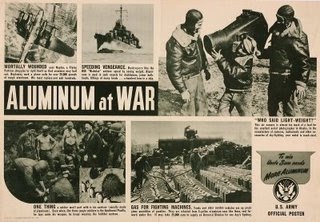
Alcoa is now the third largest aluminum producer in the world. Back in 1941, it was much more powerful. It had a monopoly on aluminum in addition to owning a massive amount of America’s electricity production and other minerals. Before America declared war on Germany, it sent so much of its aluminum product over to Germany that the country made upwards of sixty percent more aluminum products than America. When the US’s involvement in the war began, there was a massive aluminum production shortage in America, in no small part because of Alcoa’s monopoly. Alcoa essentially sold the Axis powers much of the material to build their war machines and a reprieve from the American war machine.
…
2. General Motors
Similar to their automotive rivals, General Motors was sued by Holocaust survivors for assisting the Nazi war machine. Beginning in 1935, GM built a factory in Berlin for the purpose of building “Blitz” trucks for the Wehrmacht. Ford began building similar trucks around the same time, but GM was the number one producer of the vehicles that were vital for the quick conquests of Poland, France, and much of the Soviet Union. Albert Speer, the minister of armaments and war production, claimed that the rubber GM supplied was the key to the ability of the Germans to wage war the way they did. Inevitably when America declared war on Germany, the Reich seized GM’s German production facilities.
Although neither Ford nor General Motors ever fully conceded that they had willingly participated in the use of slave labor, they both were massive contributors to a fund started in 2000 for Holocaust survivors.
The tiny European state of Moldova is increasingly being drawn into the maelstrom of NATO’s war against Russia. On Monday, the US-allied government of Maia Sandu claimed victory in a referendum held the day before over whether the country should join the European Union. According to the Central Election Commission, 50.39 percent of voters supported and 49.61 percent opposed EU ascension. Slightly more than half of those eligible to cast a ballot did so.
The International Republican Institute is affiliated with the National Endowment for Democracy (NED). See my “front organizations” page regarding NED and Amnesty International.
U.S. shipments of ammunition to Ukraine were delayed for at least two months last year because of problems with a U.S. military contract with Germany’s Deutsche Bahn railways, according to a Defense Department Inspector General report.
With less than two weeks to go until the US presidential election, and with polls showing a tie that will make the result depend on a small number of swing states, states that could fall to one side or the other and change the course of events, the electoral issue marks the global political agenda and represents a special element of uncertainty in the case of Ukraine. All the certainties that have existed until now under the leadership of Joe Biden, who has managed relations with Kyiv for two terms, since he was in charge of the White House during the years of the Obama administration, will disappear the moment it is announced who will come to power next January. Although, without a doubt, a victory for Trump would be more worrying for Zelensky, who apparently did not get the desired support from the Republican candidate at the meeting held during the Ukrainian president’s last visit to the United States, neither would a victory for Kamala Harris mean the end of concerns. The scant presence of the war in Ukraine in the campaign is compounded by speculation about the candidate’s cold relationship with Zelensky, despite the fact that it was Harris who attended the peace summit in Switzerland representing the White House. However, beyond slogans such as “support Ukraine as long as necessary,” the candidate has not at any time suggested what specific policy she would pursue with regard to the war or the relationship with Russia. Electoral needs are marked by issues of national policy and neither the Republican nor the Democrat candidate are making long speeches detailing their proposals.
“Socialists have always condemned war between nations as barbarous and brutal. But our attitude towards war is fundamentally different from that of the bourgeois pacifists (supporters and advocates of peace) and of the anarchists. We differ from the former in that we understand the inevitable connection between wars and the class struggle within the country; we understand that war cannot be abolished unless classes are abolished and socialism is created; and we also differ in that we fully regard civil wars, ie, wars waged by the oppressed class against the oppressing class, slaves against slave-owners, serfs against land-owners, and wage-workers against the bourgeoisie, as legitimate, progressive and necessary.”



 Ms. Cat’s Chronicles
You must be logged in to post a comment.