Philippines aims to acquire Typhon missile launcher as regional arms race intensifies

Source

China is against the deployment of the Typhon in the Philippines, which has been used in joint military exercises involving US troops

Philippines aims to acquire Typhon missile launcher as regional arms race intensifies

Related:

Foreign Ministry Spokesperson Lin Jian’s Regular Press Conference on August 30, 2024:

Bloomberg: The Philippines’ top military official said that the deployment of the US missile system in the country was mainly for training. China has been in the past said that the weapon system could be destabilizing. Does the Foreign Ministry have any comments on the recent comments by the Philippines’ military chief?

Lin Jian: On the US deployment of Mid-Range Capability missile system in the Philippines, China has made clear our opposition more than once. This move by the US and the Philippines incites geopolitical confrontation, escalates tensions in the region, and harms regional peace and stability. It has aroused high vigilance and concerns of countries in the region. The Philippines needs to have a clear understanding of the real intention of the US, respond to the common concerns of regional countries, avoid acting as the cat’s paw for the US at the expense of its own security interest, and quickly pull out the missile system as publicly pledged.
How is the US Convincing the Philippines to Destroy Itself?

As China rises, Asia rises with it. The Southeast Asian state of the Philippines stood to rise alongside the rest of the region until relatively recently as the United States successfully convinces the Philippines to do otherwise. 

How is the US Convincing the Philippines to Destroy Itself? (archived)

Related:

PH’s PressONE is funded by several US front organizations:

The Philippine Fact-Checker Incubator was established with the financial backing of Facebook, in collaboration with VERA Files and Rappler. The incubated organizations include ABS-CBN News & Current Affairs, Manila Broadcasting Company, MindaNews, Philstar.com, PressONE.ph, and Probe Productions. They are accredited by the International Fact-Checking Network. – PFCIPoytner.

Poynter Institute has been funded by the Gates Foundation, the Koch Network, the National Endowment for Democracy, the Omidyar Network, and Open Society Foundations.  Other sponsors are CNN, the Scripps Howard Foundations, Craig Newmark Philanthropies, the Ethics and Excellence in Journalism Foundation, TEGNA Foundation, etc..

Front Organizations

The 4 Key Strengths of China’s Economy — and What They Mean for Multinational Companies

China’s hybrid “state capitalist” system, driven by centralized planning and fierce competition, has led to dominance in critical technological fields and emerging markets. Western multinational corporations are advised to adopt a pragmatic approach to capitalize on four key strengths of China’s economy: its innovation ecosystem, its investment in the Global South, its ultra-competitive markets, and its vast consumer base. Those who fail to engage risk losing global revenue and strategic opportunities.

The 4 Key Strengths of China’s Economy — and What They Mean for Multinational Companies

Couple euthanasia is a modern sati.

Couple euthanasia is a modern sati.

The article titled: Duo-euthanasia: To avoid facing life alone, focuses on how the spouse of a person who dies by euthanasia will often experience complicated grief and will have a higher potential rate of premature death. The article states:

For some individuals, euthanasia or physician-assisted dying (aka PAD or EAS) presents an option to end one’s life with some control and dignity while minimizing pain and suffering. Whether they are experiencing severe chronic pain, mobility challenges, or serious illness such as cancer, these people may be intrigued by the possibility of euthanasia or physician-assisted dying.

But for the surviving spouses, facing the future without their lifelong partner can feel overwhelming, and their quality of life may plummet.

Related:

Couple choose to die together in ‘duo-euthanasia’ after being married for nearly five decades

The couple left behind their only child when they chose to pass away

If you or someone you know is struggling or in a mental health crisis, help is available through Mental Health America. Call or text 988 or chat 988lifeline.org. You can also reach Crisis Text Line by texting MHA to 741741

What’s Behind Regime Change in Bangladesh

Violent regime change in the South Asian country of Bangladesh unfolded rapidly and mostly by stealth as the rest of the world focused on the ongoing conflict in Ukraine, growing tensions in the Middle East and a simmering confrontation between the US and China in the Asia-Pacific region.

What’s Behind Regime Change in Bangladesh (archived)

Related:

The Partition of South Asia Strikes Again

There is a problem, fundamentally, in viewing the regime change in Bangladesh as a ‘stand-alone’ event. The caveat must be added right at the outset that when it comes to processing situations, nothing happens for no reason at all. There is very little awareness in India, especially in the media, about what has been going on. Mostly, it’s ‘cut-and-paste’ job culled out from the jaundiced western accounts from a new Cold War angle.

Clear signs of US trying to topple Sheikh Hasina govt: Regime change operation underway in Bangladesh and why India should be alert

The Genocide the U.S. Can’t Remember, But Bangladesh Can’t Forget

MacArthur’s Last Stand Against a Winless War

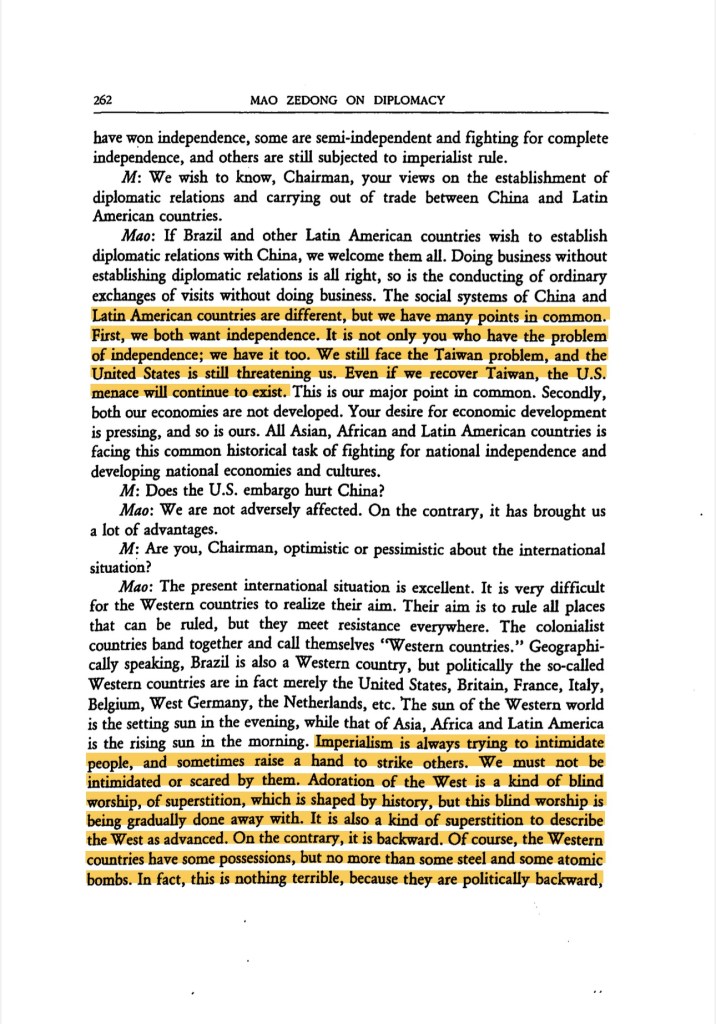
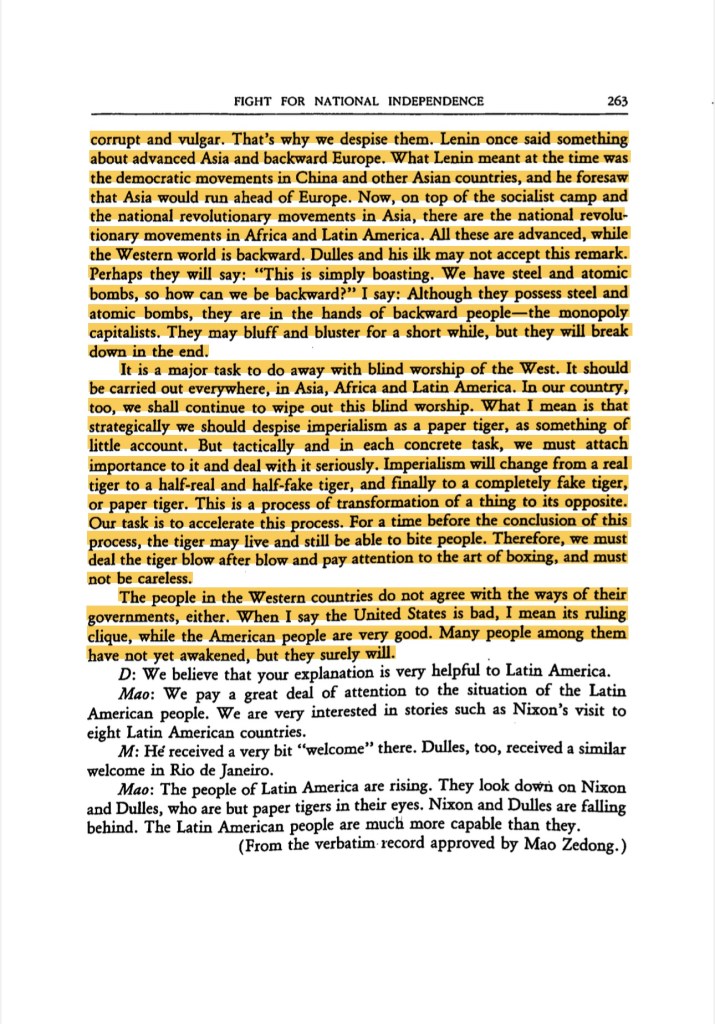
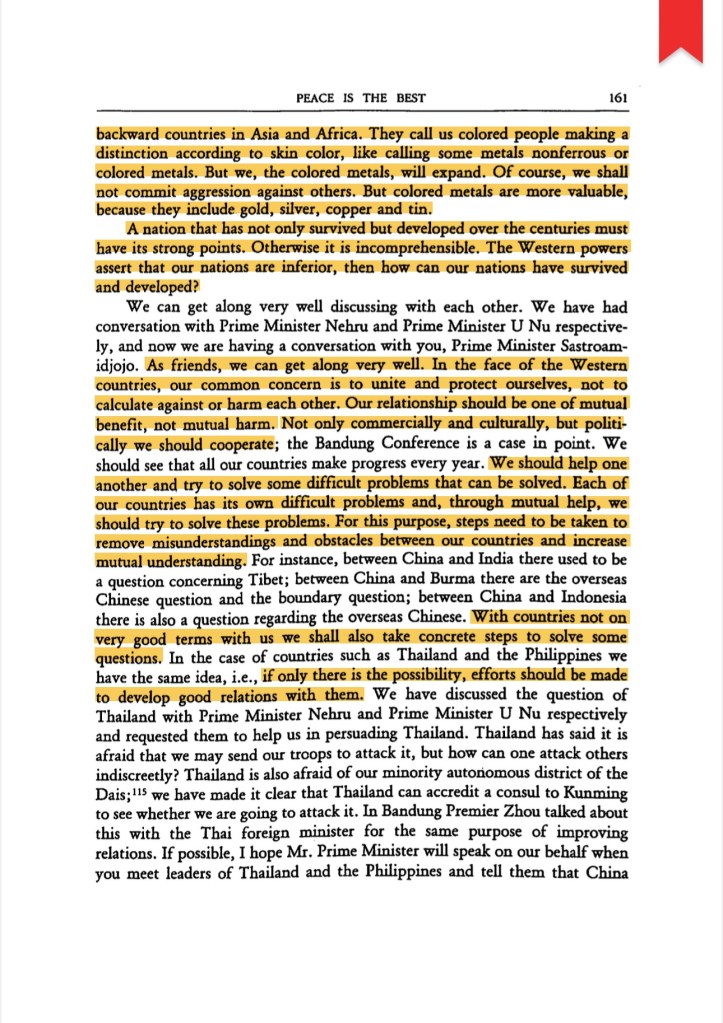
If war breaks out in Asia, the U.S. won’t send ground troops. Take note, Philippines!

The Strategy of Denial, pp 117-118

MacArthur’s Last Stand Against a Winless War

Never get involved in a land war in Asia, MacArthur had told Kennedy, because if you do, you will be repeating the same mistake the Japanese made in World War II—deploying millions of soldiers in a futile attempt to win a conflict that cannot be won.

Kennedy appreciated MacArthur’s soothing judgment on Cuba (and would soon change the military’s top leadership—perhaps in keeping with MacArthur’s views), but then shifted the subject to Laos and Vietnam, where communist insurgencies were gaining strength. The Congress, he added, was pressuring him to deploy U.S. troops in response. MacArthur disagreed vehemently: “Anyone wanting to commit ground troops to Asia should have his head examined,” he said. That same day, Kennedy memorialized what MacArthur told him: “MacArthur believes it would be a mistake to fight in Laos,” he wrote in a memorandum of the meeting, adding, “He thinks our line should be Japan, Formosa, and the Philippines.” MacArthur’s warning about fighting in Asia impressed Kennedy, who repeated it in the months ahead and especially whenever military leaders urged him to take action. “Well now,” the young president would say in his lilting New England twang, “you gentlemen, you go back and convince General MacArthur, then I’ll be convinced.” So it is that MacArthur’s warning (which has come down to us as “never get involved in a land war in Asia”), entered American lore as a kind of Nicene Creed of military wisdom—unquestioned, repeated, fundamental.  

Full video