
The question of women’s liberation is central to any revolutionary project, and thus so is the question of “sex work.” Esperanza Fonseca’s contribution, although coming from a Maoist political orientation with which we often have differences, [1] makes the stakes of this debate crystal clear, as she combines personal experience, public policy research, and historical materialism to argue that Marxists cannot uphold what she calls “sex-trade-expansionary feminism.”
Content Warning: Descriptions of rape.
…
The right of the subordinated classes of men to buy access to women’s bodies has been used historically to break class solidarity in order to maintain the dominant social relations of the time. This was true in feudal Europe and remains true today: when proletarian and petit bourgeois men get to buy women too, they develop a false consciousness and build solidarity with bourgeois men of their own gender rather than aligning with women of their own class. And because the overthrow of capitalism is only possible by the overthrowing of the bourgeoisie, prostitution serves two great purposes: (1) allows bourgeois men access to a reserve army of women for their pleasure, and (2) prevent class consciousness and thus helps stop the proletariat from organizing as a class.
A Socialist, Feminist, and Transgender Analysis of “Sex Work” (2020)
Category: India
Chinese Military Might vs Washington’s Asymmetrical Tools of Empire
China continues to strengthen its military capabilities, combining rapid growth in conventional power with readiness to counter U.S. asymmetrical strategies.
Chinese Military Might vs Washington’s Asymmetrical Tools of Empire (archived)
Previously:
US proxy groups capture Rakhine State in Myanmar
US Greenland-Panama Ambitions Aimed at War with Russia-China
Hot spots where war may break out or escalate in 2025: Balochistan
India’s navy expands fleet with eyes on Indian Ocean rivalry
New Delhi launches three domestically built vessels as it seeks to compete with China for influence across Asia Pacific.
India’s navy expands fleet with eyes on Indian Ocean rivalry
Related:
A Tale of Two Ports: A Potential Shift in Indian Ocean Maritime Politics?
Sources for the Indian Ocean: Bay of Bengal & Strait of Malacca
US proxy groups capture Rakhine State in Myanmar
Arakan Army’s Victory 2.0 in Myanmar: A New Order for Rakhine?
The Arakan Army’s recent victories in Rakhine have significant implications for the state and the country.
Read More »
A Tale of Two Ports: A Potential Shift in Indian Ocean Maritime Politics?
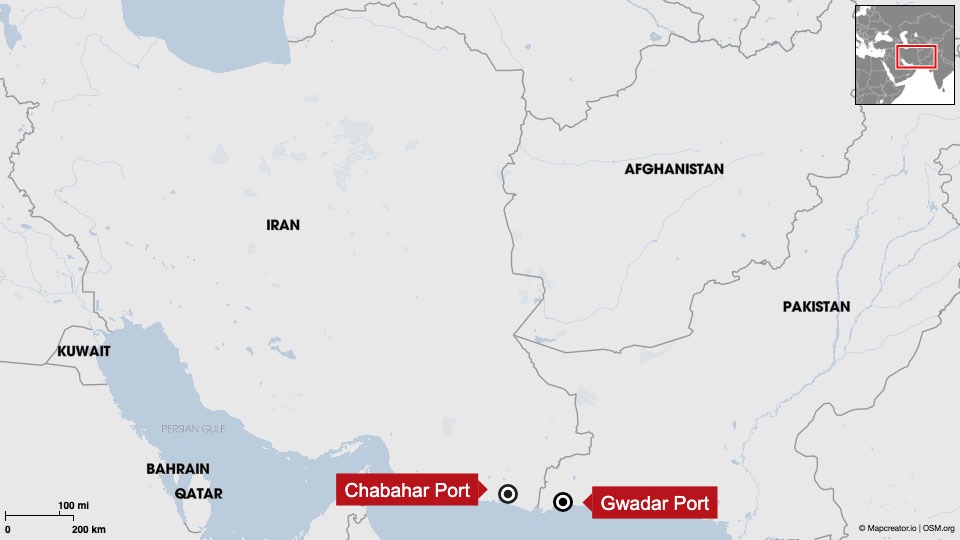
A Tale of Two Ports: A Potential Shift in Indian Ocean Maritime Politics? (archived)
Read More »2021 Colby: Could we win a war in China? Forcing Beijing to escalate could be in our interests

2014: Palestinian Holocaust in Gaza
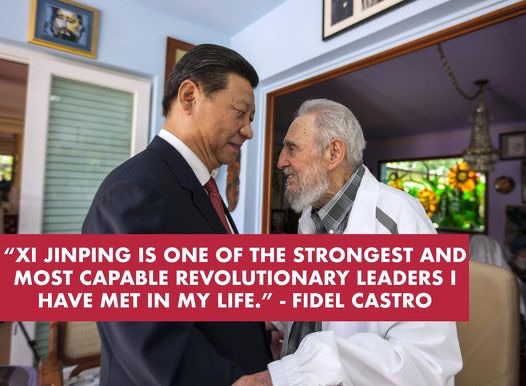
Twenty-six million Russians died in the defense of their homeland against the Nazis. Chinese combatants, men and women, inheritors of a millennial culture, are people of uncommon intelligence and an invincible spirit of struggle. Xi Jinping is one of the strongest and most capable revolutionary leaders I have met in my life.
Fidel Castro Ruz
PH: SCS Reconnaissance, Typhon, CADC, Oil wars
West PH Sea: US Navy ship spotted near Scarborough amid China ‘patrol’
MANILA, Philippines — A United States Naval Ship (USNS) was spotted near the country’s landmass while China Coast Guard (CCG) was conducting what it considers as a patrol around Panatag (Scarborough) Shoal on Sunday morning, a West Philippine Sea monitor said.
Read More »
The Scramble for Media in the Global South?
Washington’s Unstoppable Superweapon
As geopolitical tensions escalate, the U.S. wields its most formidable weapon—not military might, but a sophisticated network of political and informational control that reshapes nations and regions to serve its interests
 Ms. Cat’s Chronicles
You must be logged in to post a comment.