
China’s hybrid “state capitalist” system, driven by centralized planning and fierce competition, has led to dominance in critical technological fields and emerging markets. Western multinational corporations are advised to adopt a pragmatic approach to capitalize on four key strengths of China’s economy: its innovation ecosystem, its investment in the Global South, its ultra-competitive markets, and its vast consumer base. Those who fail to engage risk losing global revenue and strategic opportunities.
The 4 Key Strengths of China’s Economy — and What They Mean for Multinational Companies
Category: Japan
The future of critical raw materials: How Ukraine plays a strategic role in global supply chains
The future of critical raw materials: How Ukraine plays a strategic role in global supply chains
Ukraine is a key potential supplier of rare earth metals, including titanium, lithium, beryllium, manganese, gallium, uranium, zirconium, graphite, apatite, fluorite, and nickel. Despite the war, Ukraine holds the largest titanium reserves in Europe (7% of the world’s reserves). It is one of the few countries that mine titanium ores, crucial for the aerospace, medical, automotive and marine industries.
Before February 2022, Ukraine was a key titanium supplier for the military sector. It also has one of Europe’s largest confirmed lithium reserves (estimated at 500,000 tons), vital for batteries, ceramics, and glass. Ukraine is the world’s 5th largest gallium producer, essential for semiconductors and LEDs, and has been a major producer of neon gas, supplying 90% of the highly purified, semiconductor-grade neon for the US chip industry.
Related:
Australia becomes a “central base of operations” for US war plans against China
Australia’s current Labor government is intensifying the transformation of Australia into a crucial platform for a US war against China across the Indo-Pacific region, effectively placing the population in the firing line of a potential nuclear war.
Australia becomes a “central base of operations” for US war plans against China
Navy SEALs dropped in on a nuclear-powered submarine in the Pacific, drilling for a higher-end fight
In the event of a conflict with China or Russia, the Naval Special Warfare community is expected to have an even larger role than it had during the counterterrorism and counterinsurgency campaigns of the Global War on Terror (GWOT).
Navy SEALs dropped in on a nuclear-powered submarine in the Pacific, drilling for a higher-end fight
US-South Korea drills ramp up amid North Korean nuclear threats
Tensions are mounting on the Korean Peninsula as South Korea and the United States prepare for key annual joint military drills amid increasing nuclear threats from North Korea. The exercises, scheduled for Aug. 19-29, are designed to improve defenses against missile strikes, GPS jamming and cyber threats.
US-South Korea drills ramp up amid North Korean nuclear threats
08-11 Reading Update: Elbridge Colby

Reading Update 08-10-2024: Mao Zedong vs Elbridge Colby

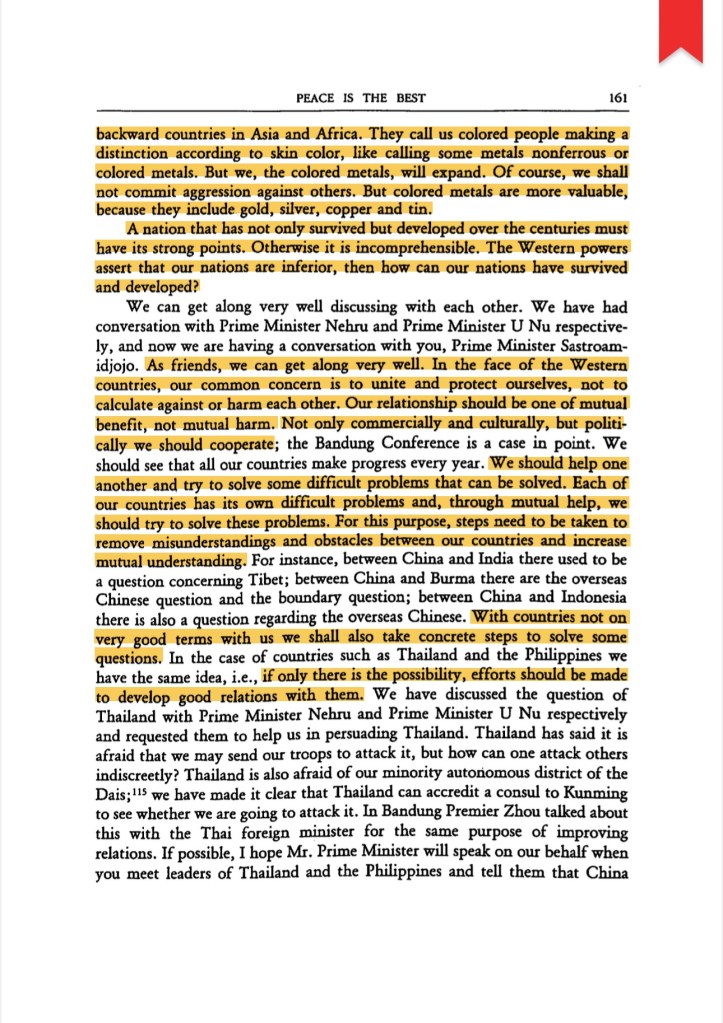
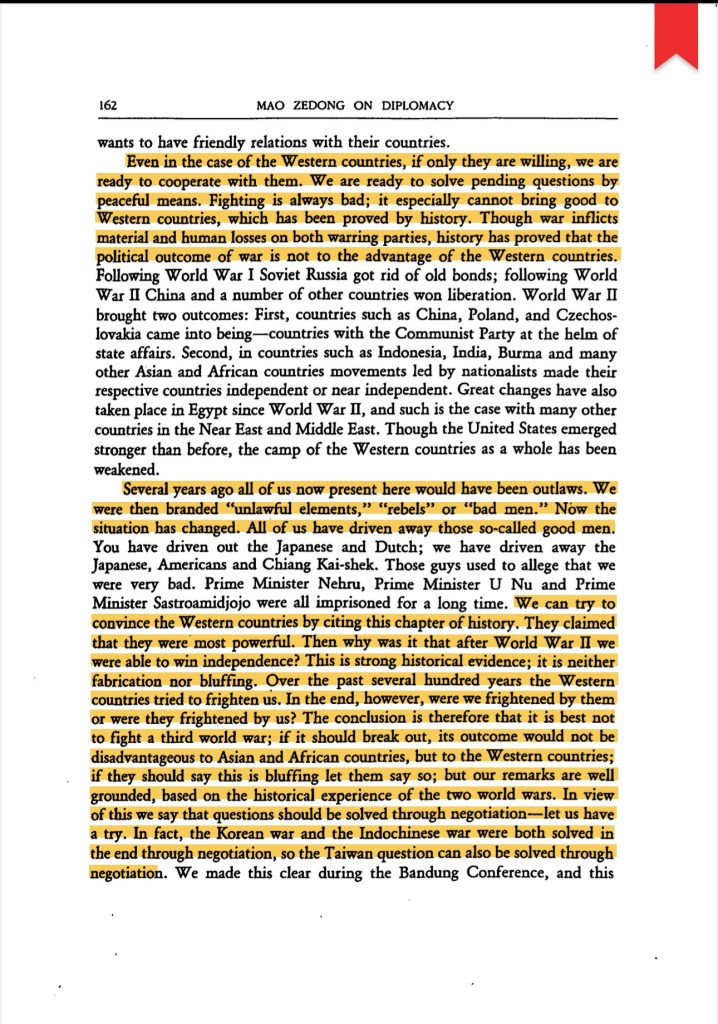

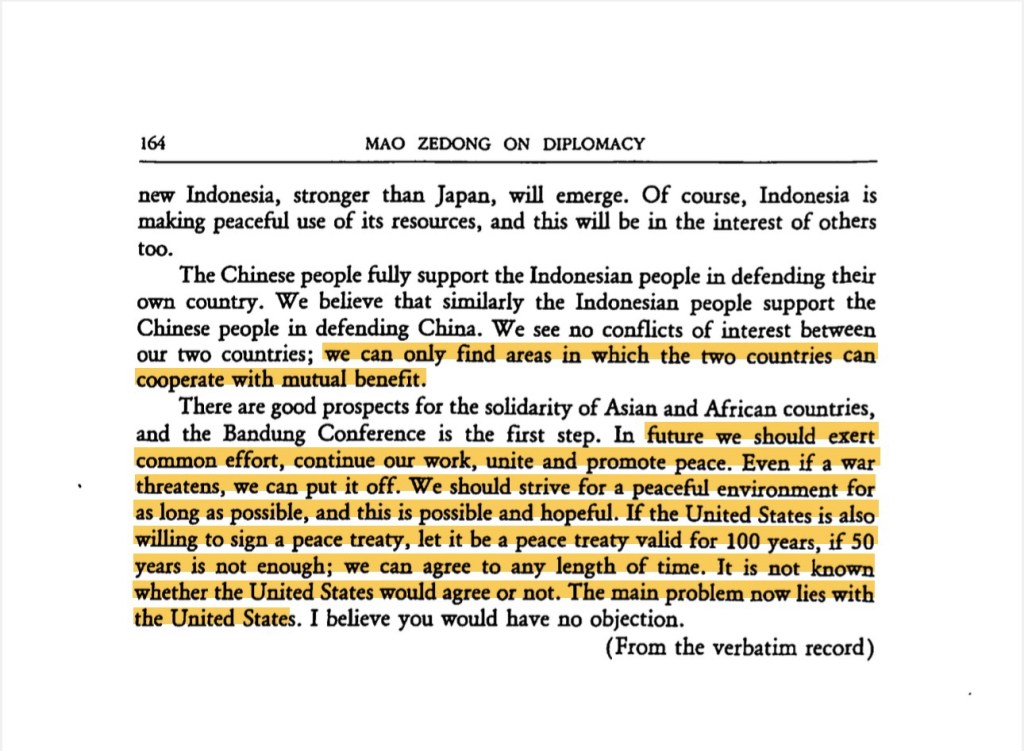
I’m alternating between reading ‘On Diplomacy’ and listening to ‘The Strategy of Denial’ on Audible.


MacArthur’s Last Stand Against a Winless War
If war breaks out in Asia, the U.S. won’t send ground troops. Take note, Philippines!
MacArthur’s Last Stand Against a Winless War
Never get involved in a land war in Asia, MacArthur had told Kennedy, because if you do, you will be repeating the same mistake the Japanese made in World War II—deploying millions of soldiers in a futile attempt to win a conflict that cannot be won.
…
Kennedy appreciated MacArthur’s soothing judgment on Cuba (and would soon change the military’s top leadership—perhaps in keeping with MacArthur’s views), but then shifted the subject to Laos and Vietnam, where communist insurgencies were gaining strength. The Congress, he added, was pressuring him to deploy U.S. troops in response. MacArthur disagreed vehemently: “Anyone wanting to commit ground troops to Asia should have his head examined,” he said. That same day, Kennedy memorialized what MacArthur told him: “MacArthur believes it would be a mistake to fight in Laos,” he wrote in a memorandum of the meeting, adding, “He thinks our line should be Japan, Formosa, and the Philippines.” MacArthur’s warning about fighting in Asia impressed Kennedy, who repeated it in the months ahead and especially whenever military leaders urged him to take action. “Well now,” the young president would say in his lilting New England twang, “you gentlemen, you go back and convince General MacArthur, then I’ll be convinced.” So it is that MacArthur’s warning (which has come down to us as “never get involved in a land war in Asia”), entered American lore as a kind of Nicene Creed of military wisdom—unquestioned, repeated, fundamental.
Japan-U.S. joint statement on war preparations forecasts doom
The United States has announced it will upgrade U.S. Forces Japan (USFJ) to a joint force headquarters (JFHQ) with expanded operational responsibilities. The new command will report to the US Indo-Pacific Command (USINDOPACOM). The revamped structure will assume the control of about 55,000 personnel stationed in Japan from the U.S. Indo-Pacific Command some 6,200 kilometers away in Honolulu, Hawaii. The move is intended to streamline communications between the US and Japan, especially during a crisis involving China.
Japan-U.S. joint statement on war preparations forecasts doom
Germany, Philippines agree to broaden defence cooperation deal + Vietnam Sends Coast Guard Ship To Philippines For Joint Training
Pistorius is the first German defence minister to visit the Philippines and hopes to finalise the agreement as early as October
Germany, Philippines agree to broaden defence cooperation deal
Related:
Vietnam Sends Coast Guard Ship To Philippines For Joint Training
Philippine and Japan navies held their first bilateral drills in the contested waters, the Southeast Asian nation’s military said in a statement Friday.
YouTube: NATO’s NEW VICTIM: Missiles Deployed, $500M Aid, New US Proxy & Military Buildup|Dr. A.Malingdog-Uy
US Missile Deployment And $500M Military Aid To PH: Defensive Or Offensive Posturing?
 Ms. Cat’s Chronicles
You must be logged in to post a comment.