
Our previous article explained the importance of the Taiwanese firm TSMC as a critical link in the global semiconductor supply chain. Although it is not the only firm with the ability to manufacture cutting-edge logic chips, TSMC is the only viable choice for chip design companies in many situations, and under normal market conditions is likely to remain so for years to come. Control of TSMC’s foundries in Taiwan might thus appear a decisive factor both in Beijing’s readiness to risk attempting unification through force, and for other states deciding whether to take a strong stance against this.
Would China Invade Taiwan for TSMC? (archived)
Category: Japan
NATO to expand Asia-Pacific presence by opening office in Japan + What can China do about it?
Last week, news emerged that NATO intends to open a liaison office in Tokyo, Japan next year. The office would be NATO’s first in the Asia-Pacific region and represents the increasing role of the organisation in preparation for a US-led war against China. Both Tokyo and NATO have confirmed the plans.
NATO to expand Asia-Pacific presence by opening office in Japan
Related:
What can China do against NATO’s foray into Asia?
So what can China do to respond to this attempt at ‘alliance encirclement’ against it? First, it can strengthen its ties with Russia and aim to create a deeper balance of power in the Asia-Pacific. Secondly, it can revitalize old alliances and strengthen its ties with North Korea as a military partner. After all, the DPRK is still obligated by the 1961 treaty of mutual assistance to come to China’s aid in a war and can be used to contain Japan and South Korea. Thirdly, it can look to build new military partnerships with regional countries who feel similarly threatened by US expansionism; for example, Laos, Cambodia, and Myanmar. While the rest of ASEAN are likely to stay neutral, including Malaysia, Indonesia, Singapore, Thailand, and Vietnam (excluding the US-aligned Philippines), China should work to improve its relationships with these countries in order to prevent the US from trying to ‘force’ them to choose.
THERE IS A WAR COMING SHROUDED IN PROPAGANDA. IT WILL INVOLVE US. SPEAK UP!
In this new essay, John Pilger recalls the ‘electric’ opposition of writers and journalists to the coming war in the 1930s and investigates why today there is ‘a silence filled by a consensus of propaganda’ as the two greatest powers draw closer to conflict.
THERE IS A WAR COMING SHROUDED IN PROPAGANDA. IT WILL INVOLVE US. SPEAK UP
10 worst mass killers, regimes and dictators
Naturally this list is subjective to an extent, and probably contains some mistakes and things that I missed. However, I think the top 3 are somewhat obvious and its no great surprise why I chose the regimes and dictators that I did. My criteria was their death toll, their reactionary power and influence, and also their plans and the resulting death toll, even if some of those plans were not fulfilled.
10 worst mass killers, regimes and dictators
MoA: U.S. Argues For More Protectionism And Subsidies
Last week Secretary of the Treasury Janet L. Yellen gave a speech on the U.S.-China economic relationship. I called it a declaration of war.
Yesterday National Security Advisor Jake Sullivan held a speech on ‘Renewing American Economic Leadership’ which touched on some of the same themes as Yellen’s speech.
U.S. Argues For More Protectionism And Subsidies
Grifters at the Pentagon LIED About U.S. Hypersonic Capabilities!
The US is fine with China’s economic success, as long as it’s on Washington’s terms
Treasury Secretary Yellen says engagement with Beijing is possible, as long as American ‘leadership’ is preserved
The US is fine with China’s economic success, as long as it’s on Washington’s terms
Vance: Biden Admin ‘Moralizing And Lecturing’ Other Countries While China Builds Roads And Feeds People + More
Republican Ohio Senator J.D. Vance accused the Biden administration of “moralizing and lecturing” other countries in a floor speech opposing a new diplomatic nominee late Wednesday.
Vance: Biden Admin ‘Moralizing And Lecturing’ Other Countries While China Builds Roads And Feeds People
Video via African Diaspora News Channel
Related:
Get Progressive Politics Out of Foreign Policy, Says JD Vance
“Right now, you know that Joe Biden is not sending weapons to Taiwan, weapons that we promised the Taiwanese, because we’re sending those weapons to Ukraine or elsewhere,” Vance said.
…
Though Vance said he admires the brave people of Ukraine, he said America should remove troops and resources from Ukraine.
…
“It’s time to manufacture our weapons in the United States,” the Ohioan said. “And it’s time to send a message to the world that America is the arsenal of democracy, but we cannot do that unless you get out and stop the focus on Ukraine.”
“The great arsenal of democracy” came to specifically refer to the industry of the U.S., as the primary supplier of material for the Allied war effort [WWII].
Meanwhile, he wants to pull a Zelensky back home. /s
Is G7’s fear of Taiwan conflict justifiable?
Fears of conflict over Taiwan dominated the recent G7 Foreign Ministers’ meeting in Sapporo, but are they really justified?
Is G7’s fear of Taiwan conflict justifiable?
Video via Fridayeveryday
The End of American “Exceptionalism”?
The End of American “Exceptionalism”?
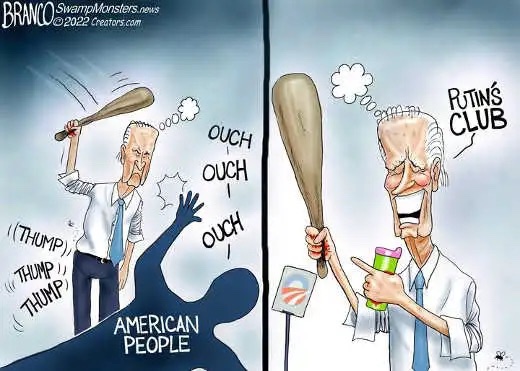
This might have a decisive impact on the US currency as the drive to break with the petrodollar continues to grow and could produce something like a “perfect storm” impacting on the US economy. It threatens to drastically lower the standards of living of nearly all Americans within the next several years as the dollar loses value and purchasing power. As the US economy is heavily interconnected with many European economies, Europe is also likely to be a victim of the coming disaster.
The good news, of course, is that the United States will no longer be able to afford its endless wars and international interventions. Lacking its economic power, it will no longer be able to declare itself “exceptional” and the enforcer of a “rules based international order.” It would mean an ending of the funding of developments like the Ukraine proxy war and the troops will have to come home from places like Syria and Somalia. And it might even mark the ending of sending billions of dollars annually to a wealthy Israel.
Ending dollar supremacy would inevitably have an immediate impact on what passes for US foreign policy, making it more difficult for Washington to initiate and sustain Treasury Department sanctions on countries like Iran and North Korea. It could also create economic turmoil for many countries until the situation resolves itself by producing greater volatility in currency markets worldwide. The Federal Reserve Bank will no doubt respond to the unfolding crisis by acting as it always does by raising interest rates to astronomical levels, thereby hurting most the Americans who can least afford the shock therapy.
 Ms. Cat’s Chronicles
You must be logged in to post a comment.