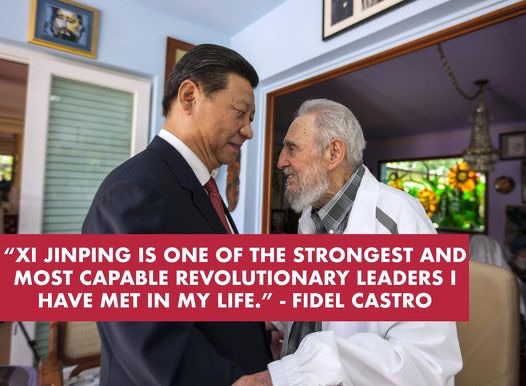
Twenty-six million Russians died in the defense of their homeland against the Nazis. Chinese combatants, men and women, inheritors of a millennial culture, are people of uncommon intelligence and an invincible spirit of struggle. Xi Jinping is one of the strongest and most capable revolutionary leaders I have met in my life.
…But whether you might not be doing more harm than good with your anti-Semitism is something I would ask you to consider. Foranti-Semitism betokens a retarded culture, which is why it is found only in Prussia and Austria, and in Russia too. Anyone dabbling in anti-Semitism, either in England or in America, would simply be ridiculed, while in Paris the only impression created by M. Drumont’s writings – wittier by far than those of the German anti-Semites – was that of a somewhat ineffectual flash in the pan.
I knew nothing of Donbass or Palestine until after I started this blog. In fact, I was hesitant to blog about Palestine at first. It wasn’t until after I learned more about Islam that I started looking at the Middle East. Before that, I was into Christopher Hitchens and followed Robert Spencer and Pamela Geller. Charlie Kirk, from TP USA, and Michelle Malkin even followed me on Twitter. Now, I don’t care for any of them.
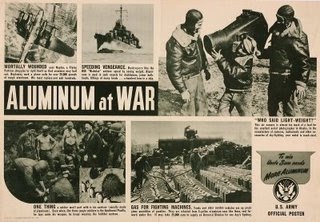
Alcoa is now the third largest aluminum producer in the world. Back in 1941, it was much more powerful. It had a monopoly on aluminum in addition to owning a massive amount of America’s electricity production and other minerals. Before America declared war on Germany, it sent so much of its aluminum product over to Germany that the country made upwards of sixty percent more aluminum products than America. When the US’s involvement in the war began, there was a massive aluminum production shortage in America, in no small part because of Alcoa’s monopoly. Alcoa essentially sold the Axis powers much of the material to build their war machines and a reprieve from the American war machine.
…
2. General Motors
Similar to their automotive rivals, General Motors was sued by Holocaust survivors for assisting the Nazi war machine. Beginning in 1935, GM built a factory in Berlin for the purpose of building “Blitz” trucks for the Wehrmacht. Ford began building similar trucks around the same time, but GM was the number one producer of the vehicles that were vital for the quick conquests of Poland, France, and much of the Soviet Union. Albert Speer, the minister of armaments and war production, claimed that the rubber GM supplied was the key to the ability of the Germans to wage war the way they did. Inevitably when America declared war on Germany, the Reich seized GM’s German production facilities.
Although neither Ford nor General Motors ever fully conceded that they had willingly participated in the use of slave labor, they both were massive contributors to a fund started in 2000 for Holocaust survivors.
You might think that a history of cultural Marxism would start with Marx, but the poorly coiffed Prussian has almost nothing to do with this tale of insidious infiltration. Instead, the theory took off in the late 1990s due to speeches, essays, and books by William Lind, then with the Free Congress Foundation, and Patrick Buchanan, the firebrand conservative columnist, TV talking head, and sometime presidential candidate. (The idea, though not the name, was hatched earlier, in a 1992 monograph called “The New Dark Age: The Frankfurt School and Political Correctness.” It was written by a disciple of the noted conspiracy theorist Lyndon LaRouche.)
On August 28, FBI and DHS officers detained and interrogated @profdannyshaw at Chicago's O'Hare after he returned from the Free Palestine Film Festival in London
According to Shaw, agents from the FBI’s Chicago Field Office grilled him for three hours about his Palestine…
The synagogue was selling land and property in illegal settlements, a crime under international law.
Shut the fuck up with this antisemitism bullshit. Ethnic cleansing is not a Jewish value, is it? That’s what you’d be saying if opposing it is antisemitic you fucking clown. pic.twitter.com/D44O6kmQxO
Wikipedia’s editors have voted to declare the Anti-Defamation League “generally unreliable” on the Israeli-Palestinian conflict, adding it to a list of banned and partially banned sources.



 Ms. Cat’s Chronicles
You must be logged in to post a comment.