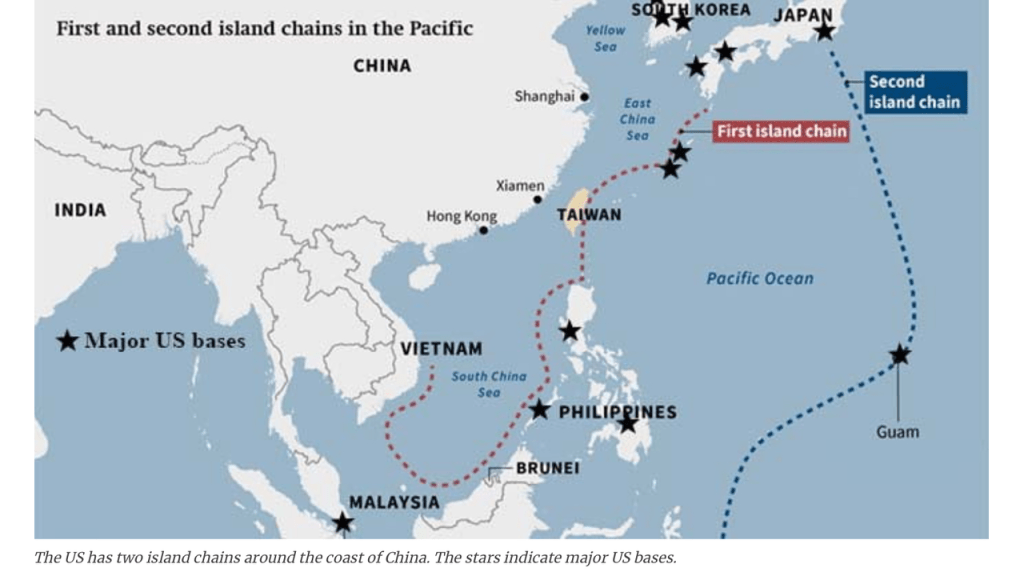
IF advocates of the United States’ access to bases of the Armed Forces of the Philippines (AFP) and US deployment of intermediate-range missiles prove the above headline unduly alarmist, this writer would be most thankful.
US National Security Adviser Jake Sullivan has recently claimed the US is not “looking for a crisis.”This is said, of course, with an important caveat – no crisis is sought as long as China subordinates itself to the United States.
Australia’s current Labor government is intensifying the transformation of Australia into a crucial platform for a US war against China across the Indo-Pacific region, effectively placing the population in the firing line of a potential nuclear war.
In the event of a conflict with China or Russia, the Naval Special Warfare community is expected to have an even larger role than it had during the counterterrorism and counterinsurgency campaigns of the Global War on Terror (GWOT).
Tensions are mounting on the Korean Peninsula as South Korea and the United States prepare for key annual joint military drills amid increasing nuclear threats from North Korea. The exercises, scheduled for Aug. 19-29, are designed to improve defenses against missile strikes, GPS jamming and cyber threats.
Never get involved in a land war in Asia, MacArthur had told Kennedy, because if you do, you will be repeating the same mistake the Japanese made in World War II—deploying millions of soldiers in a futile attempt to win a conflict that cannot be won.
…
Kennedy appreciated MacArthur’s soothing judgment on Cuba (and would soon change the military’s top leadership—perhaps in keeping with MacArthur’s views), but then shifted the subject to Laos and Vietnam, where communist insurgencies were gaining strength. The Congress, he added, was pressuring him to deploy U.S. troops in response. MacArthur disagreed vehemently: “Anyone wanting to commit ground troops to Asia should have his head examined,” he said. That same day, Kennedy memorialized what MacArthur told him: “MacArthur believes it would be a mistake to fight in Laos,” he wrote in a memorandum of the meeting, adding, “He thinks our line should be Japan, Formosa, and the Philippines.” MacArthur’s warning about fighting in Asia impressed Kennedy, who repeated it in the months ahead and especially whenever military leaders urged him to take action. “Well now,” the young president would say in his lilting New England twang, “you gentlemen, you go back and convince General MacArthur, then I’ll be convinced.” So it is that MacArthur’s warning (which has come down to us as “never get involved in a land war in Asia”), entered American lore as a kind of Nicene Creed of military wisdom—unquestioned, repeated, fundamental.
The United States has announced it will upgrade U.S. Forces Japan (USFJ) to a joint force headquarters (JFHQ) with expanded operational responsibilities. The new command will report to the US Indo-Pacific Command (USINDOPACOM). The revamped structure will assume the control of about 55,000 personnel stationed in Japan from the U.S. Indo-Pacific Command some 6,200 kilometers away in Honolulu, Hawaii. The move is intended to streamline communications between the US and Japan, especially during a crisis involving China.





 Ms. Cat’s Chronicles
You must be logged in to post a comment.