Political Footprint of the Military Industry

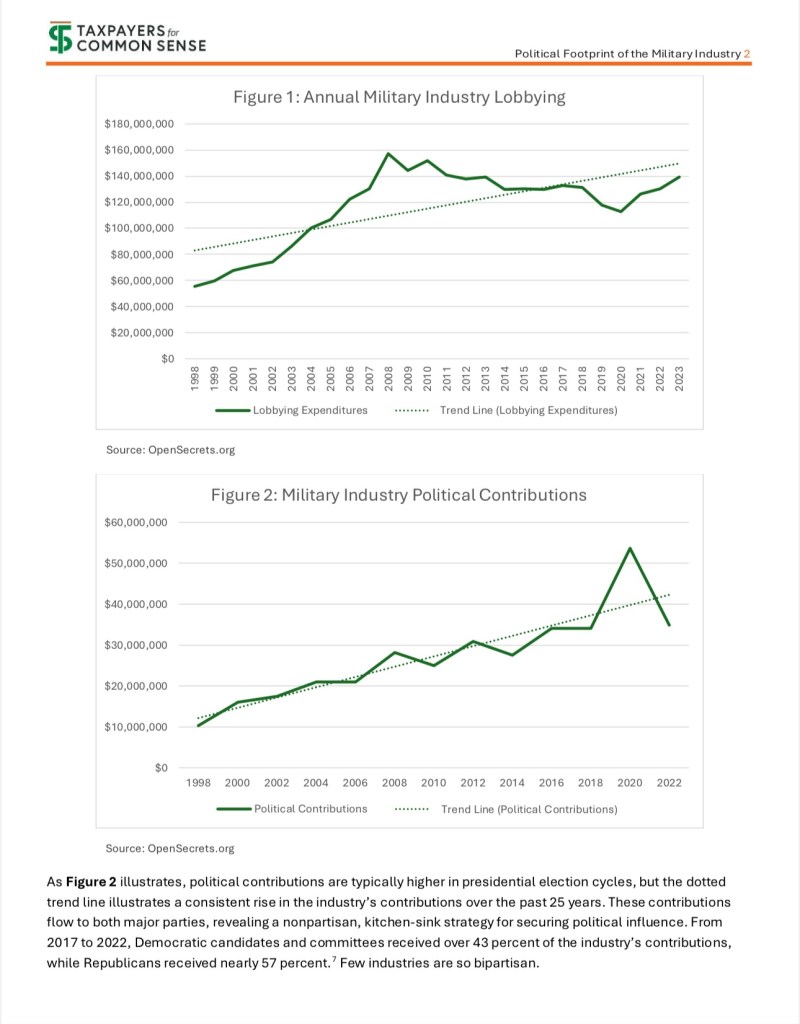
For over two decades, the military industry has consistently spent more than $100 million per year lobbying policymakers to influence policies and spending decisions that support its financial interests. In addition to these lobbying expenditures, the industry contributes tens of millions of dollars to political candidates and committees each election cycle. The sheer scale of this spending buys significant political influence, and the data suggests that this approach is paying off.

Political Footprint of the Military Industry

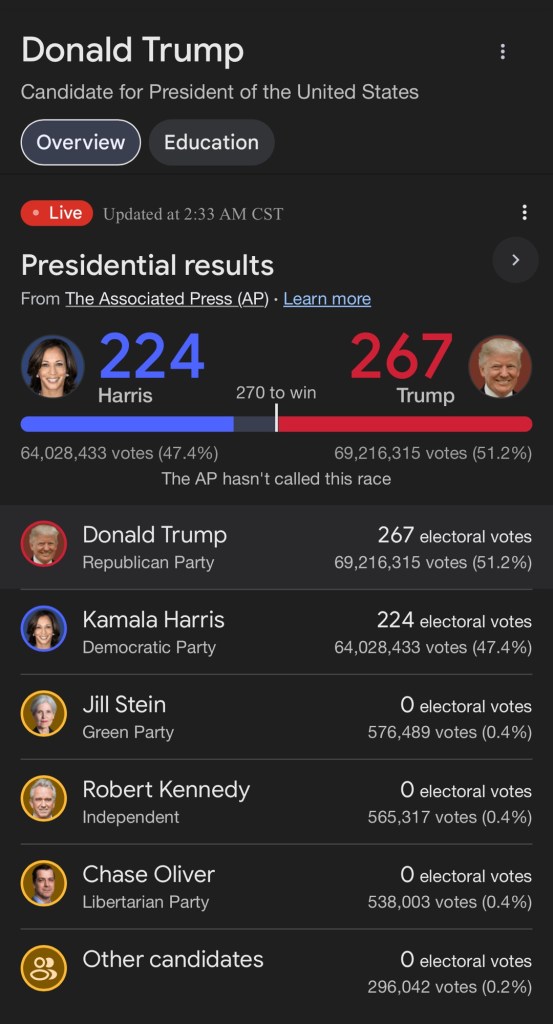
Fox News calls it for Orange Man

Donald Trump elected as the next President of the United States

This election didn’t really matter that much to me. Neither the Democrats nor Republicans have done anything for me. Anyway, it didn’t matter who won, as nothing will change. Same circus, different clowns. The Palestinians have lost, while Silicon Valley and the Military Industrial Complex (or as it has been rebranded, the Defense Industrial Base) have won.

Japan’s Ground-Based Air Defense Options to the Philippines

Japan’s Ground-Based Air Defense Options to the Philippines

Bilateral defense relations between Japan and the Philippines come at an all-time high, signifying the continuous cooperation between both maritime nations that share a common adversary and similar situation regarding territorial domains and integrity in the Indo-Pacific region.

With the success of the export of the aforementioned radar systems to the Philippines from Japan, the latter is now raising up an idea of the likelihood of selling its surface-to-air missile batteries for the Philippine military to consider, with a wide variety of variants coming from the Japan Ground Self-Defense Force that might find its way for the likes of the Philippine Air Force. This is especially in line with the recently passed New Government Procurement Act or NGPA (Republic Act 12009), allowing the purchase of second-hand military hardware, provided it is economically preferable to the government.

Largest U.S. Drone Manufacturer Says It Will Need To Ration Batteries For Customers After Sanctions By China

Largest U.S. Drone Manufacturer Says It Will Need To Ration Batteries For Customers After Sanctions By China

Bry said China sanctioned his company for selling drones to Taiwan—noting the Taiwanese National Fire Agency is its only customer in the country—but said Skydio was “proud to support critical infrastructure operators, first responders, and allied militaries.”

The blog post sharply attacked the Chinese government, saying the sanctions show that the Chinese government “will use supply chains as a weapon to advance their interests over ours.”

Bry also accused the Chinese government of attempting to “eliminate the leading American drone company” and increase the “world’s dependence on Chinese drone suppliers.”

According to the Financial Times, Skydio’s list of customers includes the Ukrainian military, and the company has sent over 1,000 of its drones to Ukraine to aid with gathering intelligence in its ongoing war with Russia and record instances of war crimes by the Russian military. Skydio’s X10 drone—which is affected by the battery rationing—is reportedly hard to jam, and Ukraine has sought to acquire thousands of them.

Related:

[04-10-2024] How American Drones Failed to Turn the Tide in Ukraine

The Silicon Valley company Skydio sent hundreds of its best drones to Ukraine to help fight the Russians. Things didn’t go well. 

Skydio’s drones flew off course and were lost, victims of Russia’s electronic warfare. The company has since gone back to the drawing board to build a new fleet.

The Navy only ‘thinks’ it has a schedule for new submarine delivery

YouTube

The Navy only ‘thinks’ it has a schedule for new submarine delivery

The first Columbia class submarine is due for delivery to the Navy in 2027. It plans to spend more than a hundred billion dollars for a dozen of them. Delays in this scale of program are inevitable. In fact, sub number one is already late. Yet the Navy, auditors say, lacks a statistical schedule risk analysis to go along with the program. And that means it may not have enough insight into the whole program. To share details, the Director of Contracting and National Security Acquisitions at the Government Accountability Office, Shelby Oakley, joined the Federal Drive with Tom Temin.

The Kims Are Coming!

After a few cat and mouse days of Defense Secretary Lloyd “Raytheon” Austin’s denials, the Pentagon finally yesterday affirmed that there was evidence of a North Korean military presence in Russia. Asked what they were doing in Russia, Austin replied, “What exactly they are doing? Left to be seen. These are things that we need to sort out.”

The Kims Are Coming!

Previously:

Kiev leaves out milk and cookies for Santa

US Missile Agency Scales Back Guam Defence Plans + More

Source

US Missile Agency Scales Back Guam Defence Plans

The project is designed to create “360 degree” protection for the U.S. Pacific territory from missile and air attacks of all kinds, the agency said. Plans include integrating Raytheon’s SM-6, SM-3 Block IIA, Lockheed Martin’s THAAD, and the Patriot PAC-3, which uses components from both companies, over about 10 years.

Read More »