
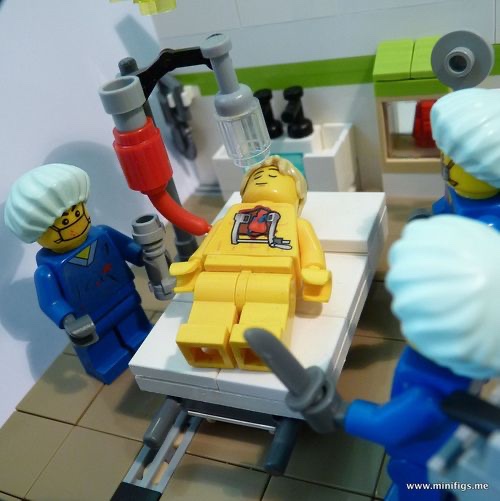
Part 2 of an investigative report on human trafficking in Ukraine
Human Beings Disassembled “Like Legos”
Related:
A cruel harvest of the poor’: Israeli allegedly behind human organ black market arrested in Cyprus
Part 2 of an investigative report on human trafficking in Ukraine
Human Beings Disassembled “Like Legos”
Related:
A cruel harvest of the poor’: Israeli allegedly behind human organ black market arrested in Cyprus
The tragicomic “insurrection” in Brasilia on Sunday was destined to meet a sudden death. The universal condemnation and, in particular, the brusqueness with which the Biden Administration distanced itself from the protestors, sealed their fate. Certainly, this revolt is no “civil war,” although it is difficult to make predictions about new protests in the country.
Biden Stoops to Conquer Brazil’s Lula

Last month, Dr. Robert Honeyman lost their sister to Covid. They wrote about it on Twitter and received dozens of condolences, over 4,000 retweets and 43,000 likes.
These Doctors Pushed Masking, Covid Lockdowns on Twitter. Turns Out, They Don’t Exist
The Pfizer board member directly contacted Twitter and expressed concerns about a tweet “going viral.”
Twitter censored tweets after pressure from Pfizer director
French police have attacked Yellow Vests protesters, firing tear gas and rubber bullets at thousands of demonstrators, who took to the streets to denounce French President Emmanuel Macron’s economic policies and pension reform.
French police attack Yellow Vests protesters in rally against Macron’s economic policies
Related:
Emmanuel Macron presses ahead with pension reform as French discontent swells
Macron: French health sector problems could deepen in coming years
As the world faces three major threats, namely the COVID-19 induced public health and economic crises as well as the ongoing climate emergency, the business world is in a position to make real positive change.
Avoiding a climate lockdown (original)
H/T: Kim Iversen—The Next Agenda
Related:
A green economic renewal after the COVID-19 crisis (PDF)
WEF: Paris Is Planning To Become A ’15-minute City’
15-minute city:
A 15-minute city is a residential urban concept in which most daily necessities can be accomplished by either walking or cycling from residents’ homes. The concept (see also the New Urbanism of the 1980s) is present, among many, in D’Acci’s Isobenefit Urbanism since 2013 (“The Isobenefit Urbanism approach aims to create cities in which each dweller can do her/his usual main daily activities by walking or at maximum biking”) was popularized by Paris mayor Anne Hidalgo and inspired by French-Colombian scientist Carlos Moreno who in 2016 coined the term. 15-minute cities are built from a series of 5-minute neighborhoods, also known as complete communities or walkable neighborhoods. The concept has been described as a “return to a local way of life”.
Lula da Silva returned as Brazil’s president, calling for fighting poverty and hunger, re-industrializing, strengthening the BRICS, and deepening Latin American integration. Far-right leader Jair Bolsonaro fled to Florida, fearing legal consequences for his corruption.
Brazil’s President Lula is back – and Bolsonaro fled to Florida
The big jump in hourly pay in November isn’t inflationary. Working families’ real earnings are no higher than they were before the pandemic.
The Federal Reserve is poised to punish workers even as paychecks have been shrinking
Before 1970, 40-60% of patients who died in hospitals received an autopsy. In 1970, The Joint Commission, the organization responsible for hospital accreditation, eliminated the requirement of a 20% autopsy rate for in-hospital deaths for hospitals to receive accreditation. In the years since this decision, we have seen drastic declines of autopsy rates. In recent years, less than 5% of hospital deaths are followed up with an autopsy.
In a move that has further contributed to our declining autopsy rates, in 2019 the Trump administration pushed through the Omnibus Burden Reduction (Conditions of Participation) Final Rule. This rule attempted to “cut through red tape” by eliminating redundant, or excessively burdensome regulations that affect hospitals and healthcare providers. A part of this rule eliminated the requirement for hospitals to “attempt to secure autopsies in cases of unusual death and of medical-legal and educational interest”. The Centers for Medicare and Medicaid Services (CMS) and the Trump administration argued that the autopsy requirement was redundant because states have their own autopsy regulations in place. However, the American Society for Clinical Pathology highlighted that only six states have laws requiring autopsies in the case of all unusual deaths.
 Ms. Cat’s Chronicles
You must be logged in to post a comment.