
I’ve been trying to work on my RAND and SeaLight document, but I can’t seem to get into it. I’m still not feeling well, either. For some reason, I can’t format my document on my iPhone the way that I would like, and I still can’t use my iPad for it. This morning, my iPad fell out of its mount and landed on my face. No worries, my ego was hurt more than my nose. To be honest, I’ve about lost all interest in it. If a tree falls in a forest and no one is around to hear it, does it make a sound? I feel like that tree. The tree makes a sound, but no one is around to hear it fall. Who has time to worry about details, anyway? I barely do anymore, and I’m unemployed. I’m going to stop now before I have to get the violin out.
Read More »Category: Philippines
Washington’s Unstoppable Superweapon
As geopolitical tensions escalate, the U.S. wields its most formidable weapon—not military might, but a sophisticated network of political and informational control that reshapes nations and regions to serve its interests
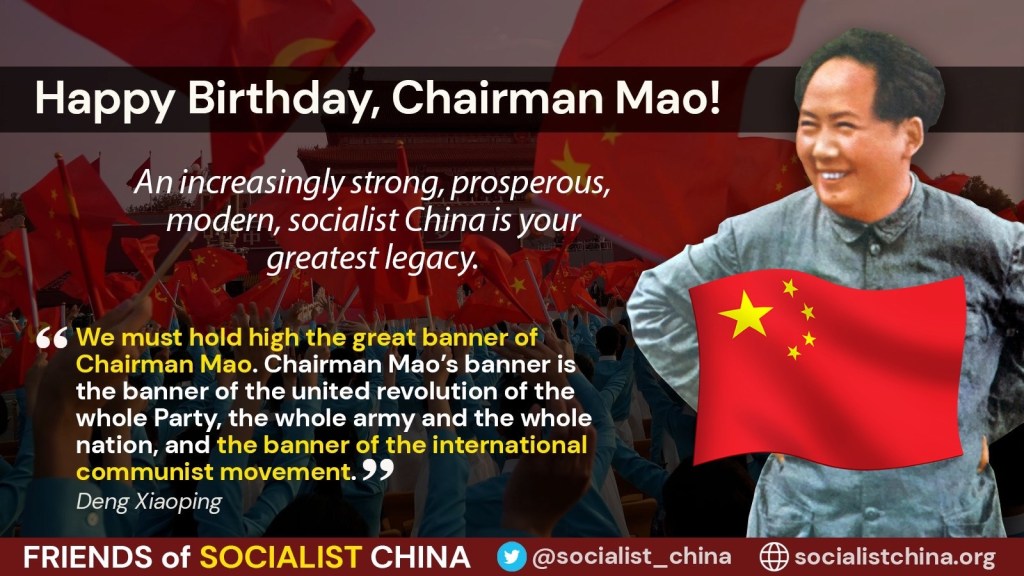
A reading from Mao Zedong on his birthday: “U.S. Imperialism is a Paper Tiger”
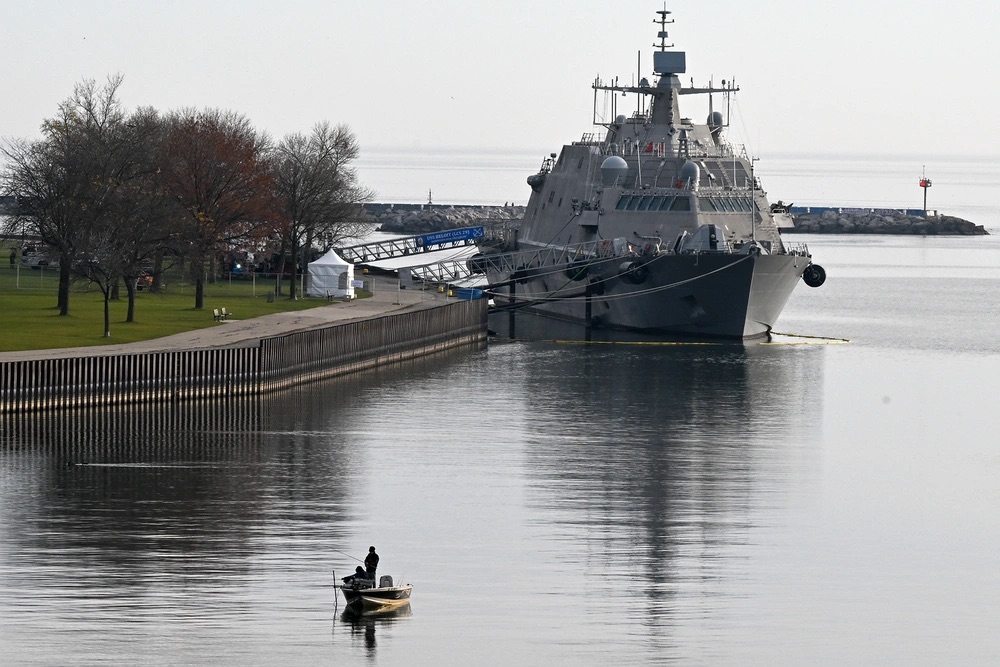
Philippine Army acquiring US missile system
Philippine Army acquiring US missile system
“It is planned to be acquired because we see its feasibility and its functionality in our concept of archipelagic defense implementation,” Philippine Army chief Lt. Gen. Roy Galido told a news conference.
“I’m happy to report to our fellow countrymen that your army is developing this capability for the interest of protecting our sovereignty,” he said, adding the total number to be acquired would depend on “economics.”
As a rule, it takes at least two or more years for the Philippine military to acquire a new weapons system from the planning stage, Galido said, adding it was not yet budgeted for 2025.
Brawner already announced that they wanted one, three months ago. Shortly afterward, the U.S. said that they were keeping the Typhon in the Philippines, at the Laoag International Airport. Will this be a second unit? The only new information that I’ve learned, is that it’ll take at least two years for them to officially acquire the Typhon. Why announce it, again? Except to provoke China?
Related:
What’s Really Going On In the South China Sea Between the Philippines and China
PH: The BongBong Rocket 🤭

The Mystery of Marcos’ Rocket Program
Read More »’A Failed Project?’
The only VALID reason I could think of for all these “secrecy” or lack of transparency is that the program itself was NOT successful, and there are a number of ways that it could have failed. For one, the FAILURE or SUCCESS RATE of the launches were never published, and it’s possible that there were just too many launch failures, like the rockets exploding or veering off course at their launch pad or after launch, or even rockets not taking off at all. And even if the launches were successful, there is the issue of how accurate the rocket was in terms of hitting its target. If it ends up several hundreds or thousands of meters from its intended target, then it’s not very useful. And just like the Launch Rate, the Accuracy of the rockets were also never published.
More notes on the marriage of RAND and SeaLight

Understanding and Countering China’s Maritime Gray Zone Operations | RAND
As noted, there appear to be real challenges working through the necessary technologies to support command messaging efforts from being able to acquire simple programs, such as Adobe [1], that can help improve image quality of released content to access to social media. It would seem prudent that an assessment of such issues should be conducted by the command with necessary remediation actions undertaken when the new commander comes into USINDOPACOM.
…
The Global Engagement Center (GEC) at the U.S. Department of State [2], for example, partially funds the Asia Maritime Transparency Initiative [Center for Strategic and International Studies]. The GEC, the State Department, or DoD should seek to identify other voices that can support and that can more credibly communicate key messages.
Read More »
China warns PH, slams US
Senior Col. Wu Qian, a spokesman for China’s Ministry of National Defense, accused the Philippines of causing disturbances in various areas with the support and encouragement of the United States.
“From Ren’ai Jiao (Ayungin Shoal) to Xianbin Jiao (Sabina Shoal) and from Houteng Jiao to Huangyan Dao (Scarborough Shoal), such repeated provocations have allowed the international community to see clearly who is undermining peace and stability in the South China Sea and who is fabricating and spreading lies,” Wu said.
Read More »
The marriage of RAND and SeaLight

A Caricature of Marxism and Imperialist Economism: Monism And Dualism
Slowly, but surely, I’m going through both of the following RAND publications. I just recently noticed that “Understanding and Countering China’s Maritime Gray Zone Operations” was posted over at SeaLight on the 12th of December. Ray Powell, from SeaLight, is quoted at least 14 times in the first publication. So far, I’ve seen RAND “recommend” the same tactics as they’ve deployed in the Philippines; civilian society organizations, embedded journalism, information warfare, influencers, and online trolls.
I’ve always known that they would try to expand their information operation to the other countries that are in ASEAN, just by following the SeaLight podcast. If not their information operation, regime change and terrorism (in Balochistan and Myanmar). I’ve also noticed that Powell has been referring to the Philippines’ “transparency initiative” as “non-violent resistance,” lately (RAND refers to it as “assertive transparency”). Ironic, considering that they’ve already succeeded in overthrowing the government of Bangladesh and are now attempting it in Cambodia, India and Pakistan. For those who don’t know about the regime change asset Gene Sharp and his neoliberal “nonviolence,” see the links on this page. Unfortunately, I don’t have as much time to dedicate to this right now due to other obligations.
Understanding and Countering China’s Maritime Gray Zone Operations | RAND
RAND and SeaLight document (work in progress)
Part 3a: RAND and SeaLight – Taiwan Relations Act
RAND and SeaLight Part 3b: Four Ways China Is Growing Its Media Influence in Southeast Asia
No. I won’t follow back, Twitter

The seal on the left is the seal of the Combined Joint Task Force – Operation Inherent Resolve (CJTF–OIR). The seal on the right is of the Kurdish-led Syrian Democratic Forces (SDF). According to Reason, the CJTF–OIR is embedded with the SDF (see below*).

But Ahmed al-Sharaa AKA Abu Mohammad al-Julani said that the Kurds were the brethren of Hayʼat Tahrir al-Sham (HTS). /s
International anarchist and leftist groups declare their support for SDF
International League of Peoples’ Struggle:
Communist Party of the Philippines (CPP) founding chairman José María Sison organized the ILPS in 2001.
*Syria’s Rojava [Where They Run Torture Camps] Is in Grave Danger +
The SDF equals the YPG/PKK/Kurds: A timeline of the PKK’s war on Turkey
PhilHealth’s Fund Crisis: Illegal Transfers, Congressional Decisions, and Leadership Failures 🇵🇭
The Universal Health Care (UHC) Act of 2019, a landmark legislation for equitable healthcare access, places PhilHealth at the forefront of its implementation. However, recent controversies—ranging from the unlawful transfer of funds to the National Treasury to Congress denying PhilHealth a budget for 2025—have exposed systemic failures and raised serious questions about accountability and leadership.
PhilHealth’s Fund Crisis: Illegal Transfers, Congressional Decisions, and Leadership Failures
 Ms. Cat’s Chronicles
You must be logged in to post a comment.