Chokepoints Are The Focus Of A New Cold War

By Captain John Konrad (gCaptain) In 1883, Alfred Thayer Mahan laid out the brutal truth of global power: Whoever rules the waves rules the world. He wasn’t just talking about fleets of warships. He was talking about chokepoints—the narrow passages through which the vast majority of the world’s trade must pass. Control them, and you don’t need to launch an invasion. You can starve an economy and restrict military sealift without ever firing a shot.

Chokepoints Are The Focus Of A New Cold War

Related:

Trump orders military to plan invasion of Panama to seize canal: report

US Seizing Panama & Greenland Aimed at China (archived)

Stranglehold: The Context, Conduct and Consequences of an American Naval Blockade of China

Offshore Control: A Proposed Strategy for an Unlikely Conflict

From Global Anti-Imperialism to the Dandelion Fighters, China’s Solidarity with Palestine from 1950 to 2024

Frontier of global anti-imperialist struggle: China’s perceptions of the Palestinian struggle from 1955 to 1976
China is probably one of few states which flipped its diplomatic stance on the “Palestinian-Israeli conflict” in the most dramatic manner from the 1950s to 1970s. In only 20 years, the People’s Republic of China (PRC)’s official foreign policy dramatically changed from almost establishing diplomatic relations with Israel in 1950 to denying any legitimacy of the Israeli state in the 1960s to 1970s. As I aim to demonstrate in this article, the Maoist era, especially from 1955 to 1976, established the foundation of China’s diplomatic support for the Palestinian liberation movement, and this legacy is still one of the main factors guiding China’s official stance on Palestine today.

From Global Anti-Imperialism to the Dandelion Fighters, China’s Solidarity with Palestine from 1950 to 2024

Related:

THE CHINESE PEOPLE FIRMLY SUPPORT THE ARAB PEOPLE’S STRUGGLE AGAINST AGGRESSION

EDSA1: The Snap Revolution

Off to the side was a more youthful Wolfowitz. He told me that this picture, which had pride of place in his office, was of exactly the moment when the Reaganites had narrowly voted to dump the Ferdinand Marcos dictatorship in the Philippines in 1986 and to recognize the election victory of his opponent Cory Aquino.* “It was the first argument I won,” said Wolfowitz proudly. “I said that if we supported a dictator to keep hold of a base, we would end up losing the base and also deserving to do so. Whereas,” he went on, “by joining the side of ‘people power’ in Manila that year, we helped democracy movements spread through Taiwan and South Korea and even I think into Tiananmen Square in 1989.

* See, for the best account of this upheaval in real time, James Fenton’s book The Snap Revolution.

Related:

*The Snap Revolution (Part One: The Snap Election) | James Fenton

*The Snap Revolution (Part Two: The Narrow Road to the Solid North)

*The Snap Revolution (Part Three: The Snap Revolution)

Previously: PH’s EDSA1 AKA People Power Revolution

Google Document: PH’s EDSA1 AKA People Power Revolution & Chile’s 1988 Plebiscite

Tiananmen Square

Top Trump allies hold secret talks with Zelenskyy’s Ukrainian opponents

Poroshenko: ‘Donbas children will sit in cellars, ours’ will go to school’

Top Trump allies hold secret talks with Zelenskyy’s Ukrainian opponents

The senior Trump allies held talks with Ukrainian opposition leader Yulia Tymoshenko, a remorselessly ambitious former prime minister, and senior members of the party of Petro Poroshenko, Zelenskyy’s immediate predecessor as president, according to three Ukrainian parliamentarians and a U.S. Republican foreign policy expert.

Read More »

The State: A Product of the Irreconcilability of Class Antagonisms

The State: A Product of the Irreconcilability of Class Antagonisms

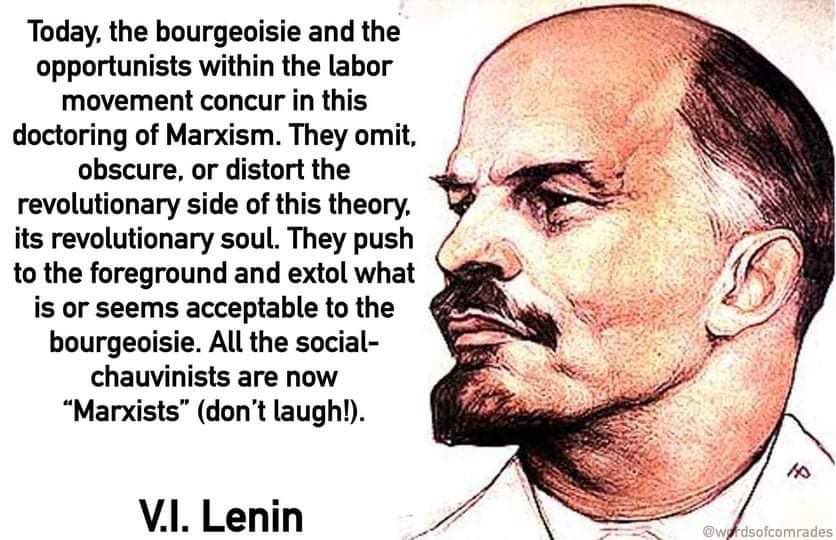
What is now happening to Marx’s theory has, in the course of history, happened repeatedly to the theories of revolutionary thinkers and leaders of oppressed classes fighting for emancipation. During the lifetime of great revolutionaries, the oppressing classes constantly hounded them, received their theories with the most savage malice, the most furious hatred and the most unscrupulous campaigns of lies and slander. After their death, attempts are made to convert them into harmless icons, to canonize them, so to say, and to hallow their names to a certain extent for the “consolation” of the oppressed classes and with the object of duping the latter, while at the same time robbing the revolutionary theory of its substance, blunting its revolutionary edge and vulgarizing it. Today, the bourgeoisie and the opportunists within the labor movement concur in this doctoring of Marxism. They omit, obscure, or distort the revolutionary side of this theory, its revolutionary soul. They push to the foreground and extol what is or seems acceptable to the bourgeoisie. All the social-chauvinists are now “Marxists” (don’t laugh!). And more and more frequently German bourgeois scholars, only yesterday specialists in the annihilation of Marxism, are speaking of the “national-German” Marx, who, they claim, educated the labor unions which are so splendidly organized for the purpose of waging a predatory war!

Trump is negotiating with BOTH Russia AND Ukraine for Donbass’ minerals.

Ukraine expected to sign a deal with Trump giving U.S. access to its rare minerals—but almost half are impossible to get to

Ukraine is nearing a deal to grant the U.S. access to its rare minerals in exchange for continued political and, perhaps, military support, though negotiations face challenges since 40% of these resources are in Russian-occupied territory. With Trump pushing for access to these minerals while also engaging in talks with Russia, Ukraine faces uncertainty over its strategic partnerships as it navigates its war effort and economic future.

That being said, information about what materials Ukraine has and where they are located presents snags for negotiations. Namely, Ukraine can’t promise access to all its materials when a reported 40% of the minerals are under land currently occupied by Russia.

On top of that, the main motivation for Zelensky agreeing to swap minerals is likely to be in return for military aid from America—which Ukrainian officials say has not been explicitly penciled into the draft.

Despite this, yesterday sources in Kyiv confirmed the terms to share materials—including oil and gas—are almost agreed after months of negotiation.

Related:

Read More »