
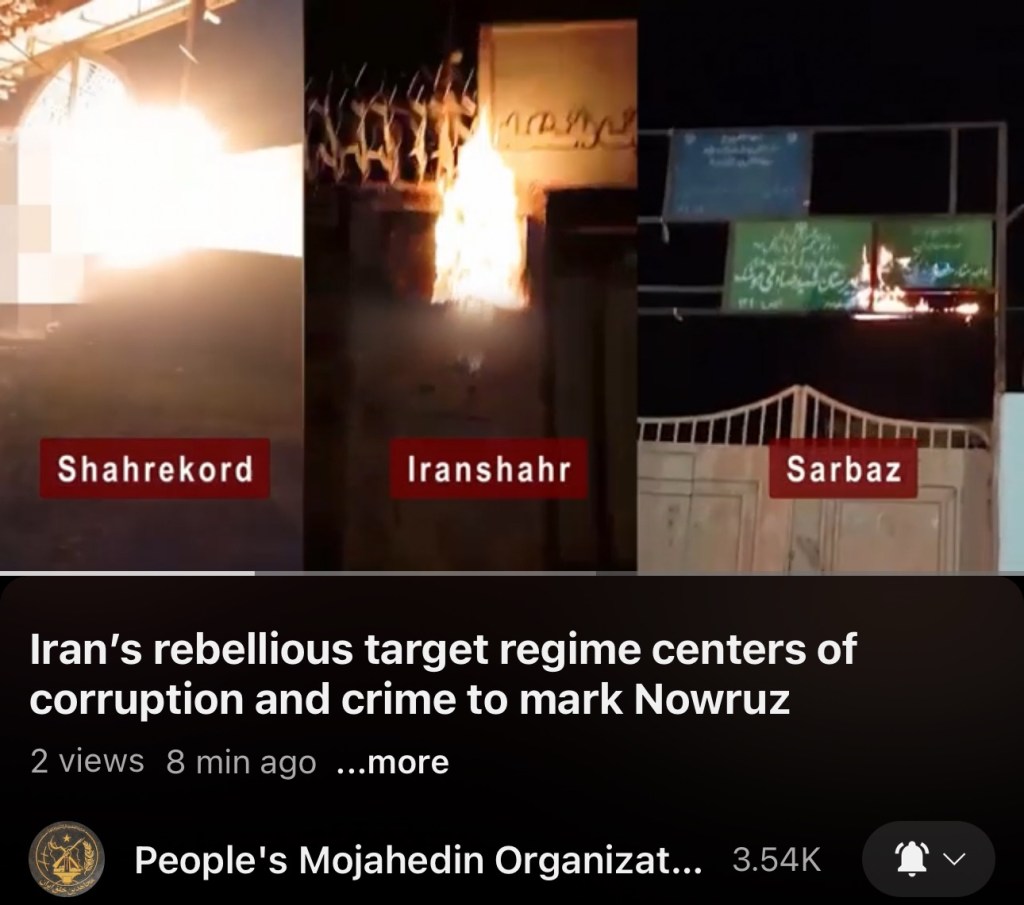
Alireza Jafarzadeh (Spokesman for the People’s Mojahedin Organization of Iran – PMOI):
New Era for Iran Is Within Reach
Last month, over 160 bipartisan U.S. lawmakers for H.Res.166, which supports the Ten-Point Platform for the Future of Iran introduced by Mrs. Rajavi that calls for universal right to vote, free elections, a market economy, and separation of religion and state, and advocates gender, religious, and ethnic equality, a foreign policy based on peaceful coexistence, peace in the Middle East, and a nonnuclear Republic of Iran.
Related:
H.Res. 166: Expressing support for the Iranian people’s desires
Maryam Rajavi’s Ten Point Plan for the Future of Iran
Concerns over MEK’s potential Influence in Congress + More
Trump 2.0’s Incoming Ukraine Envoy Speaks at Event Hosted by Cult That Wants Regime Change in Iran
Trump’s pick for Sec. Of State Marco Rubio’s love affair with Israel, MKO, Pahlavi’s



 Ms. Cat’s Chronicles
You must be logged in to post a comment.