Heard about this via Scott Horton’s interview with Larry Johnson (timestamp: 28:00).
Putin fears him — 20,000 Ukrainians want to fight for him
Read More »
Heard about this via Scott Horton’s interview with Larry Johnson (timestamp: 28:00).
Putin fears him — 20,000 Ukrainians want to fight for him
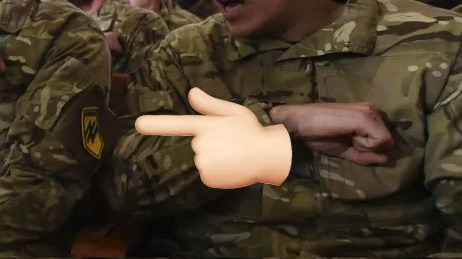
Read More »Two weeks ago, masked men attacked Major Andriy Korynevych, a recruitment officer from the Azov Brigade in the National Guard of Ukraine (NGU), and beat him in broad daylight near his home in Ivano-Frankivsk, western Ukraine. About ten days later, he dropped a bombshell: police identified his attackers and their accomplices, all of them from the Azov movement’s 3rd Assault Brigade (AB3). Furthermore, Korynevych suggested that the assault took place on the orders of Andriy Biletsky, the leader of the Azov movement, who he said is “closely connected” to the attackers. NGU Azovites are evidently furious—their unit published a statement denouncing the alleged assailants—and many AB3 Azovites are no less enraged at their counterparts’ betrayal, for going to the police and airing their dirty laundry.
Related:
Seven Decades of Nazi Collaboration: America’s Dirty Little Ukraine Secret (Archived)
Note: The 3rd Assault Brigade is widely regarded as the successor to the Azov Battalion, a unit originally founded by Neo-Nazi Andriy Biletsky. The battalion, later expanded and reorganized into the Azov Regiment, underwent rebranding amid evolving military and political dynamics, eventually forming the core of the current brigade.
El Tercer Cuerpo de Andriy Biletsky (Andriy Biletsky’s Third Corps)
On March 14, Colonel Andriy Biletsky, commander of the Third Assault Brigade, announced its conversion into the Third Corps of the Armed Forces of Ukraine, a formation that will remain under his command. In a video sharing the news on Instagram, Biletsky stated:
Read More »
Recruitment and far right: “I Love the Third Brigade”
The United States is putting pressure on Zelensky to lower the age of conscription again, but for the moment the Ukrainian president is rejecting this possibility. This is what Ukrainian media such as Ukrainska Pravda reported this week, referring to the mobilization of men between 18 and 25 years old, a very small population group in which the country’s future cannot afford to lose. Even before the law on mobilization was approved, which is very unpopular despite not being as harsh as foreign allies demanded, prominent figures and self-proclaimed friends of Ukraine such as US Senator Lindsey Graham have publicly encouraged Ukraine to recruit those over 18 years old despite the demographic risk that this implies for the country they claim to defend. These suggestions seem to have become a demand that is confirmed even by people who belong to the state apparatus. “If this information has come to light, it may confirm that American politicians from both parties are putting pressure on President Zelensky on the question of why there is no mobilisation for those aged 18-25 in Ukraine,” said Serhiy Leshchenko, one of Andriy Yermak’s advisers and a figure who has gone from representing the third sector, civil society in Maidan Ukraine to all kinds of well-paid positions in government or in the few state-owned companies that Kiev has not yet privatised. The past ten years show a double standard between those who have been privileged and those who have been impoverished and marginalised thanks to the European and liberal reforms of the peacetime years. However, Ukraine’s refusal to recruit its most vulnerable population group strictly responds to the future needs of the state, which, if it hopes to rebuild itself, must maintain minimum levels of youth population.
Read More »
Ukraine’s brigades can recruit their own soldiers, and they compete with each other to craft the best advertising campaigns to sell the war.
…
The creative work, Bondarenko said, is done by a team of 20 — 13 military personnel and seven civilians. Their messaging feels impossible to escape, covering more than 1,000 billboards across Ukraine, which she said are largely donated. Digital ads are funded by the profits from their YouTube channel, she said, which has nearly 1.3 million subscribers and generates more than $15,000 monthly. On Instagram, they have another 115,000 subscribers.
Soon, they hope to expand into a new area — merchandising. The brigade envisions it as a one-stop shop where people can purchase T-shirts, patches and other mementos of the war.
Meet Ukraine’s top fighting unit — at least that’s what their ad says
The 3rd Assault Brigade is the Neo-Nazi Azov Battalion rebranded. Andriy Biletsky was its founder.
Related:
Thirst Trap Nation: How E-girls Are Luring Young Boys Into Joining Army, with Alan MacLeod
“Sexualized fascism”: how the taboo nature of Nazi imagery made the alt-right more powerful
This year on Ukraine’s Independence Day, some prominent Russian neo-Nazis found themselves in Lviv, the unofficial capital of Ukrainian nationalism, to attend the first “Nation Europa” conference, which brought together representatives of an extreme-right network in Europe and neo-Nazi movements in the Ukrainian armed forces.
Related:
More Ukrainians Want to Negotiate an End to the War. Soldiers Don’t Agree.
Interview with Moss Robeson: On the history of Washington’s ties to the Ukrainian Banderites and their role in the war against Russia
The government-funded research project’s mysterious removal of Azov’s profile was followed by a State Department decision to allow the controversial right-wing unit to receive U.S. military aid.
Neo-Nazi Azov Battalion profile quietly removed from Stanford extremist group list
Previously:
US Lifts Ban on Arming and Training Ukraine’s Neo-Nazi Azov Brigade
Azov welcomed the decision, saying US military assistance will increase its ‘combat effectiveness’
US Lifts Ban on Arming and Training Ukraine’s Neo-Nazi Azov Brigade
Related:
Andrei Biletsky, the neo-Nazi father of Azov
Biletsky is currently in the 3rd Assault Brigade.