Psychedelic Drugs Are Rushing Towards Approval for Therapy. Here’s What’s Next

Psychedelic Drugs Are Rushing Towards Approval for Therapy. Here’s What’s Next

Yet one glaring problem remains. Despite promising clinical results, no one knows exactly how psychedelic drugs work in the brain. Examining their actions on brain cells isn’t just an academic curiosity. It could give rise to variants that maintain antidepressant properties without the high. And because hallucinogens substantially alter our perception [management?!] of the world, they could be powerful tools for investigating the neurobiology behind consciousness.

This year, scientists found another common themepsychedelics seem to “reset” the brain to a more youthful state, at least in mice. Like humans, mice have an adolescent critical period, during which their brains are highly malleable and can easily rewire neural circuits, but the window closes after adulthood.

An earlier study showed that MDMA reopens the critical window in adult mice, so that they change their “personality.” Mice raised alone are often introverted and prefer to keep to themselves in adulthood. A dose of MDMA increased their willingness to snuggle with other mice—essentially, they learned to associate socializing with happiness, concluded the study.

It’s not that surprising. MDMA is well-known to promote empathy and bonding. The new study, by the same team, extended their early results to four psychedelics that don’t trigger fuzzy feelings—LSD, ketamine, psilocybin, and ibogaine. Similar to MDMA, adult mice raised alone changed their usual preference for solitude when treated with any of the drugs. Because habits are hard to change in adulthood—for mice and men—the drugs may have reopened the critical period, allowing the brain to more easily rewire neural connections based on new experiences.

These are just early results. But psychedelic research is gaining a new ally—artificial intelligence. Algorithms that predict protein structure, combined with rational drug design, could generate psychedelics that retain their psychiatric benefits without the high.

H/T: The Most Revolutionary Act

Related:

Psychoanalytic roots of CIA psychoprofiling/pseudoscience

Meaghan thought psychedelic therapy could help her PTSD. Instead it was the start of a nightmare

Why is the American right suddenly so interested in psychedelic drugs

What if a Pill Can Change Your Politics or Religious Beliefs? (archived)

Do Psychedelic Trips Change Your Political Views? (archived)

FDA Weighs New Application To Approve MDMA As First-Ever Psychedelic Medicine For PTSD + More About MAPS

A psychedelics-focused drug development company is officially asking the Food and Drug Administration (FDA) to review an application to approve MDMA as a prescription medication for the treatment of post-traumatic stress disorder (PTSD).

The MAPS Public Benefit Corporation (MAPS PBC) announced on Tuesday that it submitted the new drug application (NDA) to FDA, requesting an expedited review given that the agency previously designated the psychedelic as a breakthrough therapy.

FDA Weighs New Application To Approve MDMA As First-Ever Psychedelic Medicine For PTSD

H/T: The Most Revolutionary Act

The MAPS Public Benefit Corporation is subsidiary of Multidisciplinary Association for Psychedelic Studies. MAPS was founded by Rick Doblin.*

Related:

Read More »

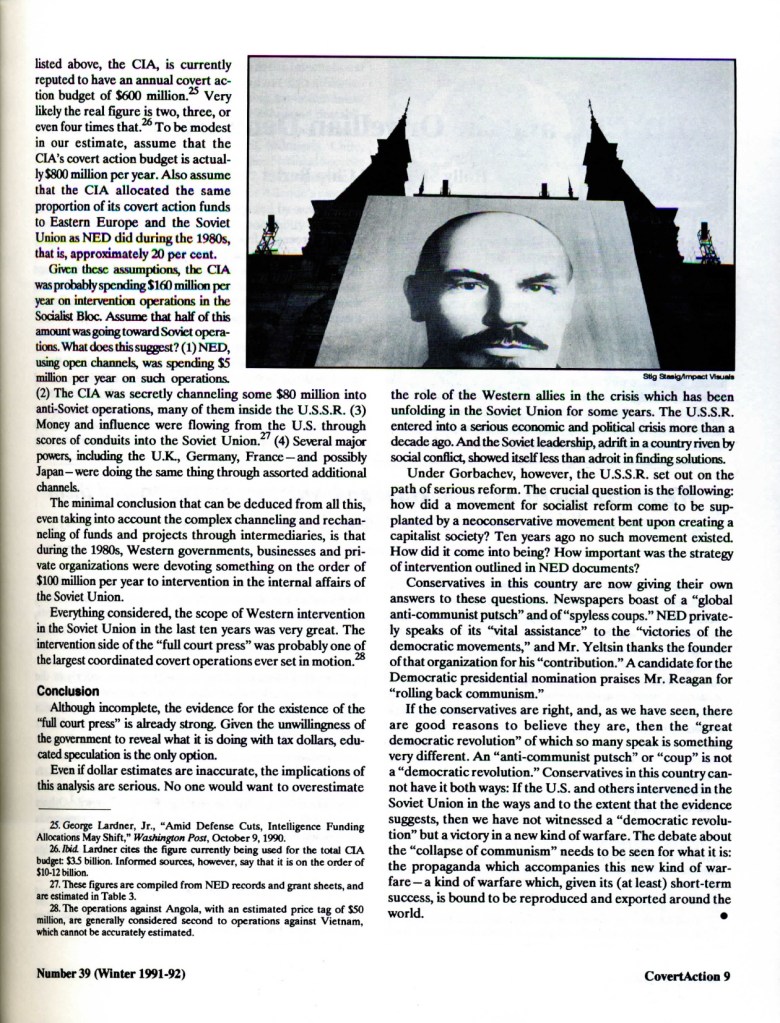
At 60, We’re Winning – and Losing – the JFK Media War

Twelve days ago, I was asked by the Opinion section of the New York Times to write an essay on the JFK assassination nearly 60 years later. This was a major breakthrough because the newspaper of record has always embraced the official version of the assassination, even as the Warren Report, based on the “magic bullet” and all that nonsense, has grown increasingly tattered over the years. In 2015, when The Devil’s Chessboard — my book about CIA spymaster Allen Dulles and the national security state’s war with President Kennedy — was published, the Times refused to review it. (Nonetheless, the book was a New York Times bestseller.)

At 60, We’re Winning – and Losing – the JFK Media War

H/T: Kim Iversen

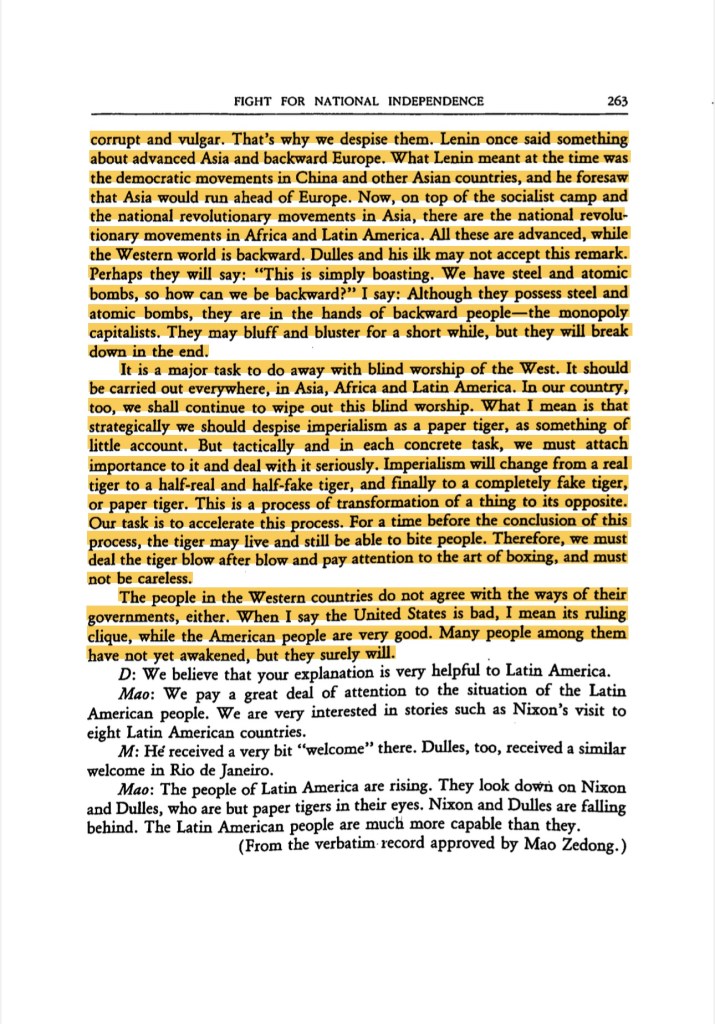
CIA Covert Operations: The 1964 Overthrow of Cheddi Jagan in British Guiana

Washington, DC, April 6, 2020 – Cold War concerns about another Communist Cuba in Latin America drove President John F. Kennedy to approve a covert CIA political campaign to rig national elections in British Guiana, then a British colony but soon to be independent, according to declassified documents posted today by the National Security Archive.

CIA Covert Operations: The 1964 Overthrow of Cheddi Jagan in British Guiana

US government bailout of Silicon Valley and banks is $300B gift to rich oligarchs

The US Federal Reserve printed $300 billion in a week to save collapsing banks and bail out Silicon Valley oligarchs. 93% of Silicon Valley Bank’s deposits were uninsured, over the FDIC limit of $250,000, but the government still paid them. 56% of SVB’s loans went to venture capitalist and private equity firms.

US government bailout of Silicon Valley and banks is $300B gift to rich oligarchs

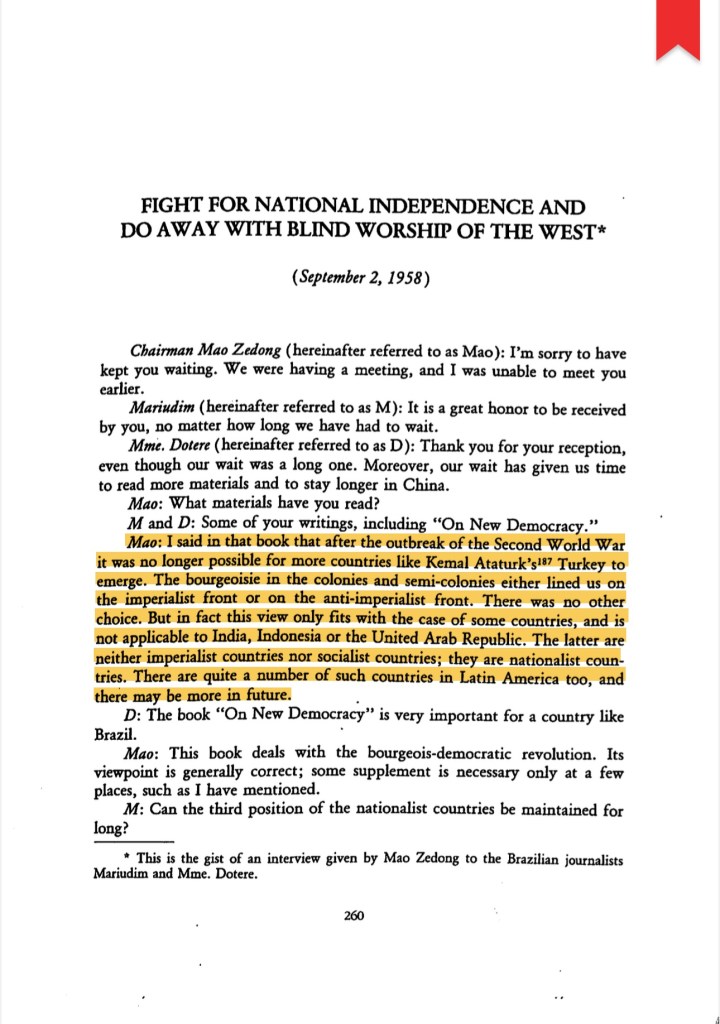
[2018] The Wilson administration’s war on Russian Bolshevism

“The Time You Sent Troops to Quell the Revolution”

The United States invasion of Russia remains a hidden dimension of U.S. policy in the Great War, marking the beginning of a long Cold War. In August 1918, three months prior to the Armistice, the Wilson administration sent several platoons of U.S. soldiers into Russia to aid in the overthrow of the new Bolshevik government, which had come to power in the October Revolution of 1917. The operation was carried out alongside British, French, Canadian and Japanese forces in support of White Army counter-revolutionaries whose generals were implicated in wide-scale atrocities, including pogroms against Jews. This “Midnight War” was carried out illegally, without the consent of Congress. The Commanding General in Siberia, William S. Graves thought that his mission was to protect a delegation of Czech troops and the Trans-Siberian railway and to serve as a mediator. He was disappointed to learn that in fact the United States was enmeshed in another country’s civil war and came to oppose the whole operation. In his memoirs, he expressed “doubt if history will record in the past century a more flagrant case of flouting the well-known and approved practice in states in their international relations, and using instead of the accepted principles of international law, the principle of might makes right.”

The Wilson administration’s war on Russian Bolshevism

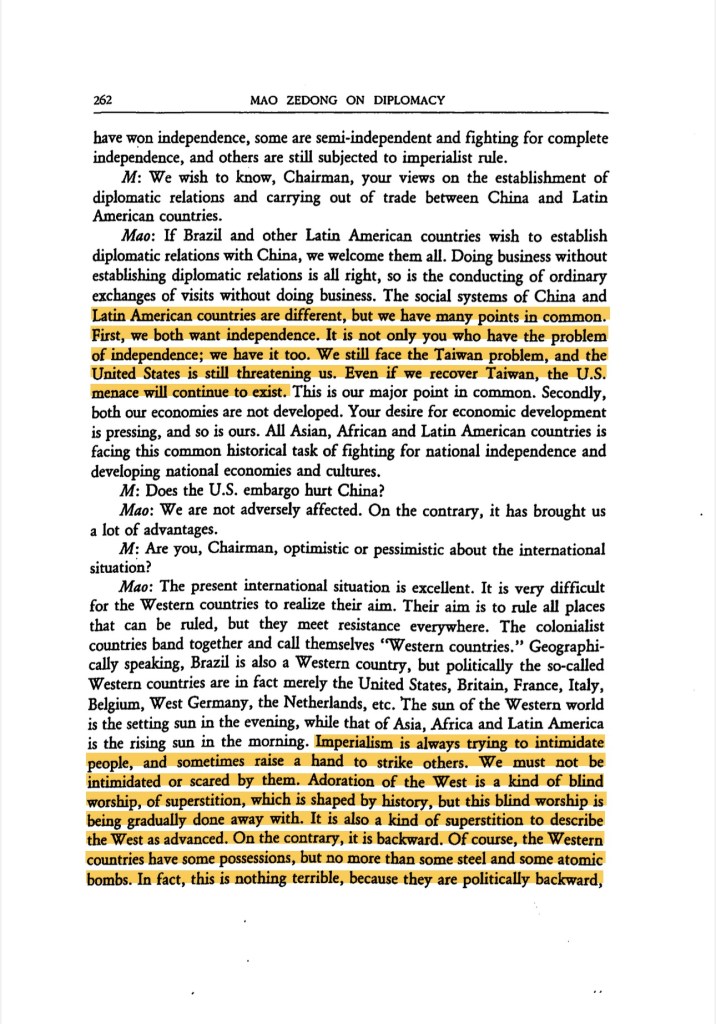
You’re Not Actually Helping When You “Support” Protesters In Empire-Targeted Nations

Truthout has a recent article titled “The Left Can Support Protesters in China Without Shilling for US Imperialism” with a subtitle asserting that “Chinese workers and Uyghurs need solidarity from leftists worldwide,” and it at no point attempts to defend either one of those titular claims.

You’re Not Actually Helping When You “Support” Protesters In Empire-Targeted Nations

Truthout interviews Rebecca E Karl, for the above-linked article. She works for NGOs/non-profits affiliated with George Soros and John D. Rockefeller 3rd (Rockefeller Foundation). As for Naomi Klein, she was ‘compromised’ even before coronavirus as covered by Cory Morningstar. I can’t find anything on the Jacobin author, as his name (pseudonym?!) is the same as the deceased Iranian poet and journalist Khosrow Golsorkhi. The GrayZone covered Jacobin, previously.

Notes for self:

Read More »