
Trump is negotiating with BOTH Russia AND Ukraine for Donbass’ minerals.

Ukraine expected to sign a deal with Trump giving U.S. access to its rare minerals—but almost half are impossible to get to

Ukraine is nearing a deal to grant the U.S. access to its rare minerals in exchange for continued political and, perhaps, military support, though negotiations face challenges since 40% of these resources are in Russian-occupied territory. With Trump pushing for access to these minerals while also engaging in talks with Russia, Ukraine faces uncertainty over its strategic partnerships as it navigates its war effort and economic future.

That being said, information about what materials Ukraine has and where they are located presents snags for negotiations. Namely, Ukraine can’t promise access to all its materials when a reported 40% of the minerals are under land currently occupied by Russia.

On top of that, the main motivation for Zelensky agreeing to swap minerals is likely to be in return for military aid from America—which Ukrainian officials say has not been explicitly penciled into the draft.

Despite this, yesterday sources in Kyiv confirmed the terms to share materials—including oil and gas—are almost agreed after months of negotiation.

Related:

Read More »
Top 10 American Companies that Aided the Nazis

Top 10 American Companies that Aided the Nazis

4. Alcoa

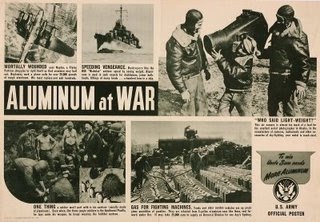
Alcoa is now the third largest aluminum producer in the world. Back in 1941, it was much more powerful. It had a monopoly on aluminum in addition to owning a massive amount of America’s electricity production and other minerals. Before America declared war on Germany, it sent so much of its aluminum product over to Germany that the country made upwards of sixty percent more aluminum products than America. When the US’s involvement in the war began, there was a massive aluminum production shortage in America, in no small part because of Alcoa’s monopoly. Alcoa essentially sold the Axis powers much of the material to build their war machines and a reprieve from the American war machine.

2. General Motors

Similar to their automotive rivals, General Motors was sued by Holocaust survivors for assisting the Nazi war machine. Beginning in 1935, GM built a factory in Berlin for the purpose of building “Blitz” trucks for the Wehrmacht. Ford began building similar trucks around the same time, but GM was the number one producer of the vehicles that were vital for the quick conquests of Poland, France, and much of the Soviet Union. Albert Speer, the minister of armaments and war production, claimed that the rubber GM supplied was the key to the ability of the Germans to wage war the way they did. Inevitably when America declared war on Germany, the Reich seized GM’s German production facilities.

Although neither Ford nor General Motors ever fully conceded that they had willingly participated in the use of slave labor, they both were massive contributors to a fund started in 2000 for Holocaust survivors.

I worked for two Nazi collaborators! 🙀

China vs. the US: shipbuilding, subsidies, and the Jones Act

Hypocrisy thrives where double standards prevail.

Earlier, I stupidly tweeted out an article about the Jones Act and shipbuilding and Colin Grabow, from the Cato Institute, liked it (he was quoted in the article). I looked him up and decided to listen to this video on the shipbuilding competition between China and the US, where he and a lawyer for United Steelworkers were on the panel. China is eating their lunch, and it’s the ruling elites’ own fault, yet they scapegoat China for it. The double standards over China’s “unfair economic practices” AKA the subsidizing of their shipbuilding industry irritates me (liars irritate me even more). States give subsidies, grants, and tax breaks to corporations, all the time. Fincantieri Marinette Marine is just one example, but Wisconsin had done the same for Foxconn. Foxconn received tax breaks and $3B in subsidies, which was “the largest ever subsidy provided by a state to a foreign company”, despite not living up to their promises.

Rumble

Colin Grabow wants to end the Jones Act. I’ve made at least three video clips regarding the Jones Act, two with Sal Mercogliano from What’s Going On With Shipping and one from the government-funded CSIS (I’ve posted them, below). Spoiler alert: Sal says that the problem isn’t the Jones Act. Meanwhile, both CSIS and the Cato Institute (part of the Atlas Network) blame the Jones Act. Deregulation is a wet dream of big corporations (which fund both the Cato Institute and CSIS).

Read More »

Biden’s push for more Chinese steel tariffs is a political decision, not an economic one: Analyst

Biden’s push for more Chinese steel tariffs is a political decision, not an economic one: Analyst

Biden wants to hike tariffs on imports of Chinese steel and aluminum

Chinese steel imports account for less than 1% of U.S. demand, officials told reporters. But Chinese subsidies and programs mean its steel prices are 40% lower than U.S. prices, and the Biden administration is worried that there could be a surge of exports.

Related:

Trump’s tariffs are equivalent to one of the largest tax increases in decades

New Democrat Coalition Trade Task Force Statement on Section 301 Tariffs Announcement

Baltimore Bridge Fallout to Extend Coast-to-Coast in Cargo Shift

The bridge collapse Tuesday that shut the Port of Baltimore and closed a major highway will cause weeks or months of transportation disruptions in the Mid-Atlantic region and accelerate a shift of cargo to the US West Coast as importers and exporters try to avoid potential bottlenecks at trade gateways from Boston to Miami.

Baltimore Bridge Fallout to Extend Coast-to-Coast in Cargo Shift

On the strategic relationship between Venezuela and China

During a state visit to the People’s Republic of China in September 2023, Venezuelan president, Nicolas Maduro met president Xi Jinping and both agreed to strengthen the relationship of their countries by establishing seven sub commissions to elevate it to the level of ‘all-weather strategic partnership’. This is the culmination of a relationship that began with president Hugo Chavez’s first visit to Beijing in 1999, the very first year of his presidency.

On the strategic relationship between Venezuela and China

Here’s Why 97% of Western Europeans Don’t Drink Fluoridated Water

Fluoride is probably an ingredient you’re used to seeing on your toothpaste or hearing about at your dental clinic. However, most communities in North America also add it to their tap water.

Here’s Why 97% of Western Europeans Don’t Drink Fluoridated Water

Related:

Fluoride Action Network

List Of Bottled Water Without Fluoride In 2022 (also gives recommendations for reverse osmosis systems and water pitchers that will filter out fluoride).

Decided to finally start researching something that I’ve had in the back of my mind for a while now. It’s a crazy idea but this just proves a part of it, for me. I’ve been drinking Aquafina, for a few years, but need to look into another brand or a water pitcher. Bottled water is just easier, for me, considering a pitcher won’t fit in my bedside fridge. I haven’t researched any medications that contain fluoride but Fluoxetine (Prozac) is one of them. I haven’t taken it for years (haven’t taken any prescription medications).