
Rubio’s Promise to “Unleash Chiang” Won’t Land Well in China
Read More »Tag: Arms Control
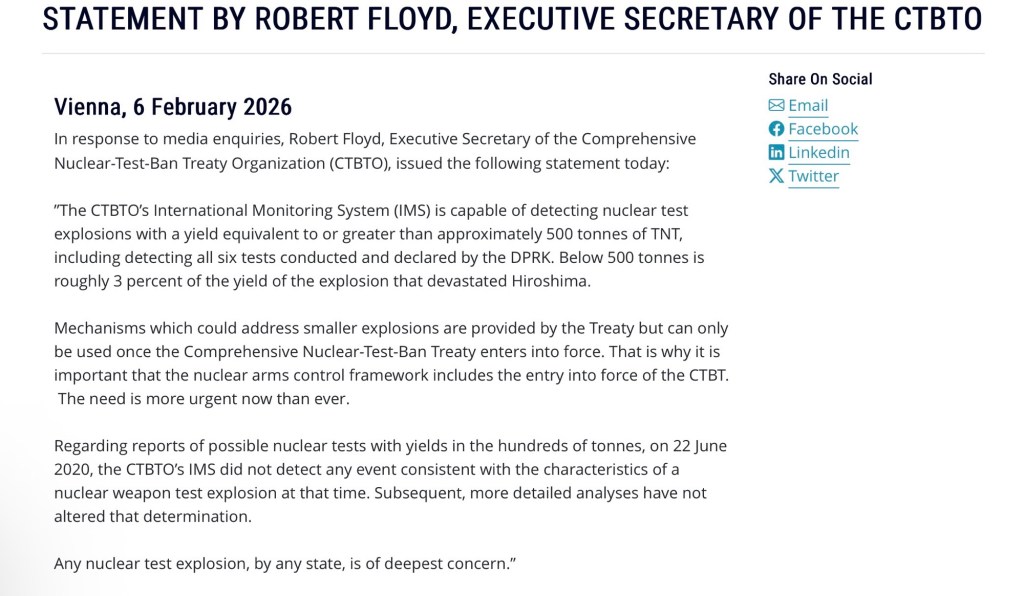
No evidence to support US claim China conducted nuclear blast test: Monitor
US Sows Chaos Across Asia as it Aims for China
The United States is escalating its confrontation with China under the guise of “deterring aggression,” while in reality reorienting its global strategy toward maintaining hegemony over Asia through destabilization, political manipulation, and military buildup.
US Sows Chaos Across Asia as it Aims for China
Listening to Soldiers Of Reason: The RAND Corporation and the Rise of the American Empire

Soldiers Of Reason: The RAND Corporation and the Rise of the American Empire
Related:
The Rand Corporation: The Think Tank That Controls America (archived)
By the 1960s, America’s rivals were paying attention. The Soviet newspaper Pravda nicknamed RAND “the academy of science and death and destruction.” American outfits preferred to call them the “wizards of Armageddon.”
America Is Updating Its Nuclear Weapons. The Price: $1.7 Trillion.
To understand how America is preparing for its nuclear future, follow Melissa Durkee’s fifth-grade students as they shuffle into Room 38 at Preston Veterans’ Memorial School in Preston, Conn. One by one, the children settle in for a six-week course taught by an atypical educator, the defense contractor General Dynamics.
“Does anyone know why we’re here?” a company representative asks. Adalie, 10, shoots her hand into the air. “Um, because you’re building submarines and you, like, need people, and you’re teaching us about it in case we’re interested in working there when we get older,” she ventures.
Adalie is correct. The U.S. Navy has put in an order for General Dynamics to produce 12 nuclear ballistic missile submarines by 2042 — a job that’s projected to cost $130 billion. The industry is struggling to find the tens of thousands of new workers it needs. For the past 18 months, the company has traveled to elementary schools across New England to educate children in the basics of submarine manufacturing and perhaps inspire a student or two to consider one day joining its shipyards.
…
Though the new Columbia-class subs are primarily being built in Rhode Island, Connecticut and Virginia, the Navy is going to tremendous lengths to recruit talent across the country. Over the past year, a blitz of ads has appeared at various sports events — including major league baseball games, WNBA games and even atop a NASCAR hood — steering fans to buildsubmarines.com. The website connects job seekers with hiring defense contractors as part of a nearly $1 billion campaign. Some of that money will go toward helping restore the network of companies that can supply the more than three million parts that go into a Columbia sub. Like so much of the nation’s nuclear infrastructure, those supplier numbers have plummeted since the 1990s.
America Is Updating Its Nuclear Weapons. The Price: $1.7 Trillion.
Now this is grooming!
Recommended Reading:
[2013] Cultural Exchange and the Cold War: How the West Won
Cultural Exchange and the Cold War: How the West Won (archived)
There are many theories of why Soviet communism collapsed and the Cold War ended. Here are a few of them to consider:
…
That is a claim also made by a former Hungarian ambassador to Washington, Andras Simonyi*, who led a rock band in Budapest during the Cold War. In a talk titled “How Rock Music Helped Bring Down the Iron Curtain,” delivered at the Rock ‘n Roll Hall of Fame in Cleveland, Simonyi said, ”Rock ‘n roll, culturally speaking, was a decisive element in loosening up communist societies and bring them closer to the world of freedom.”
Related:
He plays guitar in the rock band, The Coalition of the Willing (est.2003) with top rated U.S. guitarist Jeff “Skunk” Baxter (Steely Dan, Doobie Brothers) which has Secretary of State Tony Blinken (guitar, vocals) as a regular guest.
Biden’s UN General Assembly Speech Aimed at Russia Exposes US Hypocrisy

The president blamed Russia for the lack of arms control despite the history of the US pulling out of treaties
Biden’s UN General Assembly Speech Aimed at Russia Exposes US Hypocrisy
NY Times Blames SOCIAL SPENDING for Debt Crisis—Ignores Endless War
This is a clip from our show SYSTEM UPDATE, now airing every weeknight at 7pm ET on Rumble. You can watch the full episode for FREE here: How Endless War Bankrupted the US While Inflicting Mass Suffering at Home. Plus: Macron Threatens Internet Shutdown & Update on US Govt’s Private Data Purchases | SYSTEM UPDATE #111
NY Times Blames SOCIAL SPENDING for Debt Crisis—Ignores Endless War via Glenn Greenwald
Related:
America Is Living on Borrowed Money
America’s Wars and the US Debt Crisis
Jeffrey Sachs: Bipartisan Support of War, from Iraq to Ukraine, Is Helping Fuel U.S. Debt Crisis
Jeffrey Sachs: Bipartisan Support of War, from Iraq to Ukraine, Is Helping Fuel U.S. Debt Crisis
The United States faces a default on its debt in early June if a deal on the debt ceiling is not reached between the Biden administration and Republicans in Congress before then. House Speaker Kevin McCarthy is pushing for sweeping budget cuts and new work requirements for recipients of government programs, including Social Security, Medicare, Medicaid and SNAP. Notably, however, neither Republicans nor Democrats are proposing cuts to one of the biggest drivers of the nation’s debt: the massive U.S. military budget. “We’ve got to get this military-industrial lobby under control, but it’s hard to do, because it’s a bipartisan affair,” says our guest, economist Jeffrey Sachs, whose recent article is headlined “America’s Wars and the US Debt Crisis.”
Jeffrey Sachs: Bipartisan Support of War, from Iraq to Ukraine, Is Helping Fuel U.S. Debt Crisis
Previously:
The War in Ukraine Was Provoked—and Why That Matters to Achieve Peace
Watchdog: World military spending up to an all-time high
Global military spending grew for the eighth consecutive year in 2022 to an all-time high of $2.24 trillion, with a sharp rise in Europe, chiefly due to Russian and Ukrainian expenditure, a Swedish think tank said Monday.
Watchdog: World military spending up to an all-time high
H/T: Glenn Diesen
 Ms. Cat’s Chronicles
You must be logged in to post a comment.