Tag: Atlas Network
Grokipedia: 2002 Venezuelan coup attempt
Wikipedia’s entry on the 2002 attempted coup is just as flawed as Grokipedia’s.
Grokipedia: 2002 Venezuelan coup attempt
Read More »Trump Orders CIA War On Venezuela +
The New York Times reported today that Donald Trump has authorized a covert CIA war to overthrow the Venezuelan president Nicolás Maduro and install a puppet government.
Related:
Read More »
Western Puppet Wins Nobel Peace Prize, as Usual
Consider these factors as the Pentagon dissects AUKUS
Ukraine: Anti-corruption, civil society and foreign partners
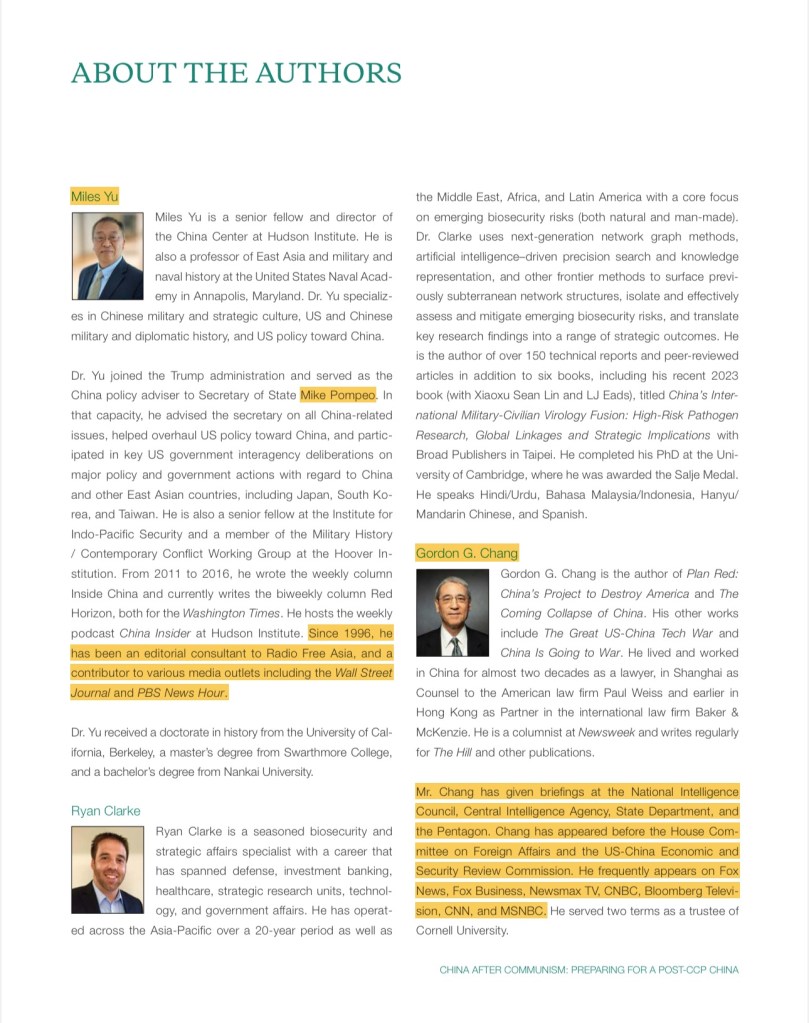
Post-Communism for Sale: Defense Contractors, Oil Barons, and the New China Fantasy
Tricking Veterans: Using Suicide and Mental Health Struggles as a Guise for Privatizing the VA
While attention remains focused on the looming crisis of Department of Veterans Affairs employees facing termination, an even more ominous threat to veterans’ health care advances unnoticed through the halls of Congress
Tricking Veterans: Using Suicide and Mental Health Struggles as a Guise for Privatizing the VA
Previously:
COINTELPRO 2.0: Project Esther, EO 14243, and Palantir
The pattern is familiar, and the escalation is predictable. I warned about this recently, and now it’s unfolding exactly as anticipated.
From my May 22 post:
Just as I anticipated, the blame is being directed at China. Marco Rubio, currently serving in the Trump administration, has previously targeted various leftist organizations for their funding connections to Neville Roy Singham, who has been accused of having ties to the Communist Party of China. These allegations originated from front groups linked to Stratfor, often referred to as the “Shadow CIA,” as well as the State Department and U.S. Intelligence. Additionally, the Network Contagion Research Institute (NCRI) receives backing from the Israel lobby. Recall my previous post about Project Esther, which linked antisemitism to Marxism. Expect a crackdown on leftists and other antiwar activists who are protesting the Gaza war.
On May 28, the Heritage Foundation—architect of Project Esther—officially embraced the narrative linking pro-Palestinian activism to Chinese influence.
The Heritage Foundation’s Project Esther is more than a framework—it’s a blueprint for ideological suppression masquerading as national security policy. By tying anti-Zionism to antisemitism, then layering in foreign influence accusations, the initiative sets the stage for a sweeping crackdown on dissent. Under the guise of national security, any challenge to U.S. policy—whether in opposition to the Gaza war or broader leftist movements—can be framed as a foreign threat. This justification makes mass surveillance not just palatable but necessary.
Enter Palantir—the data engine that makes ideological suppression scalable. While Heritage Foundation shapes the narrative and justification for crackdowns, Palantir provides the technical apparatus to execute them. As I warned in my earlier post, EO 14243 and Trump’s Data Consolidation: The Hidden Agenda Behind Big Tech Surveillance, Palantir is embedding digital IDs across DHS, IRS, and Social Security, consolidating surveillance under the guise of fraud prevention. These tools, once presented as safeguards against fraud, now serve a far clearer purpose: streamlining the targeting and suppression of leftist dissent. Heritage Foundation supplies the blueprint—Palantir builds the machinery.
This isn’t new. The playbook remains the same—COINTELPRO weaponized bureaucratic surveillance to neutralize Black liberation and leftist movements under the guise of national security. Now, Project Esther will leverage EO 14243’s infrastructure to fuse ideological suppression with the mechanics of automated surveillance. Just as COINTELPRO framed activists as subversives to justify government crackdowns, Project Esther weaponizes accusations of extremism and foreign influence to achieve similar ends. The targets have shifted, but the machinery of repression remains intact.
Don’t say I didn’t warn you.
Network States: The New Frontier of Soft Power and Corporate Feudalism

They sell the dream of autonomy—self-governing, tech-powered havens untethered from old institutions. But look closer, and you’ll see that Network States aren’t a rebellion against centralized power. They’re a rebrand, a more sophisticated, digitally optimized iteration of company towns, where the people inside serve the system without ever realizing they were locked in from the start.
Read More »


You must be logged in to post a comment.