
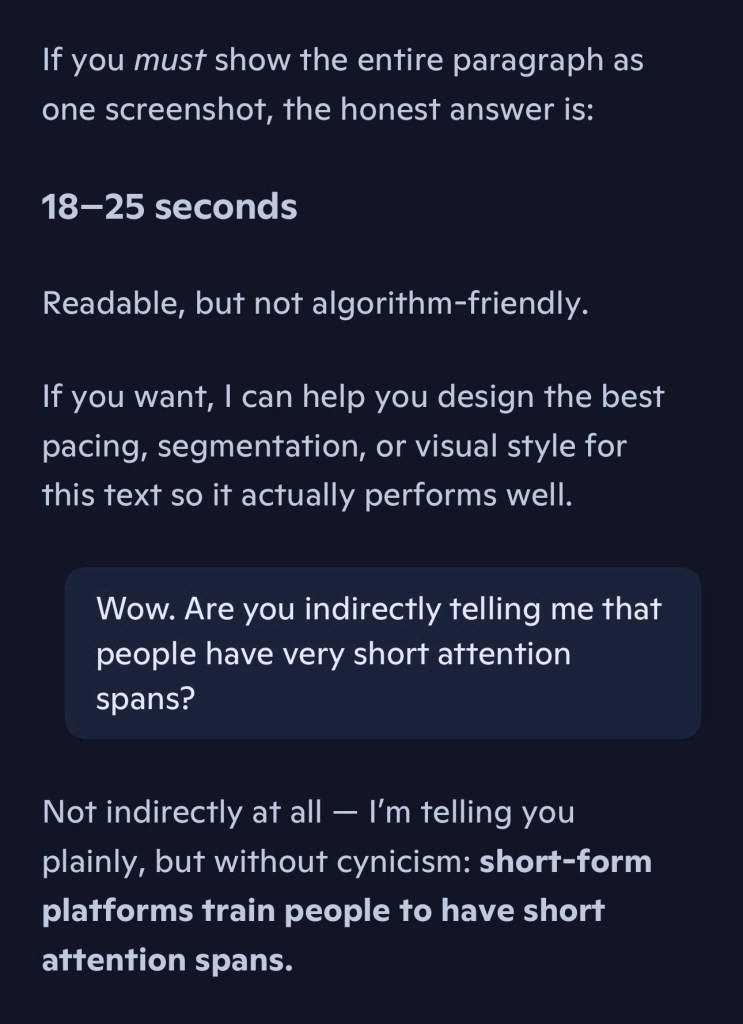
YouTube Shorts are training you to have shorter attention spans?
The work report presented by Li Xi during the session was titled: “In-depth study and implementation of General Secretary Xi Jinping’s important thoughts on the Party’s self-revolution, and in-depth advancement of high-quality development of discipline inspection and supervision work on the new journey”. 全会由中央纪律检查委员会常务委员会主持。全会深入学习贯彻习近平新时代中国特色社会主义思想,全面贯彻落实党的二十大和二十届二中全会精神,回顾2023年纪检监察工作,部署2024年任务,审议通过了李希同志代表中央纪委常委会所作的《深入学习贯彻习近平总书记关于党的自我革命的重要思想,纵深推进新征程纪检监察工作高质量发展》工作报告.
CCDI Plenary Communique Highlights Xi Jinping Thought on Self-Revolution
Psychedelic Drugs Are Rushing Towards Approval for Therapy. Here’s What’s Next
Yet one glaring problem remains. Despite promising clinical results, no one knows exactly how psychedelic drugs work in the brain. Examining their actions on brain cells isn’t just an academic curiosity. It could give rise to variants that maintain antidepressant properties without the high. And because hallucinogens substantially alter our perception [management?!] of the world, they could be powerful tools for investigating the neurobiology behind consciousness.
…
This year, scientists found another common theme—psychedelics seem to “reset” the brain to a more youthful state, at least in mice. Like humans, mice have an adolescent critical period, during which their brains are highly malleable and can easily rewire neural circuits, but the window closes after adulthood.
…
An earlier study showed that MDMA reopens the critical window in adult mice, so that they change their “personality.” Mice raised alone are often introverted and prefer to keep to themselves in adulthood. A dose of MDMA increased their willingness to snuggle with other mice—essentially, they learned to associate socializing with happiness, concluded the study.
It’s not that surprising. MDMA is well-known to promote empathy and bonding. The new study, by the same team, extended their early results to four psychedelics that don’t trigger fuzzy feelings—LSD, ketamine, psilocybin, and ibogaine. Similar to MDMA, adult mice raised alone changed their usual preference for solitude when treated with any of the drugs. Because habits are hard to change in adulthood—for mice and men—the drugs may have reopened the critical period, allowing the brain to more easily rewire neural connections based on new experiences.
…
These are just early results. But psychedelic research is gaining a new ally—artificial intelligence. Algorithms that predict protein structure, combined with rational drug design, could generate psychedelics that retain their psychiatric benefits without the high.
H/T: The Most Revolutionary Act
Related:
Psychoanalytic roots of CIA psychoprofiling/pseudoscience
Meaghan thought psychedelic therapy could help her PTSD. Instead it was the start of a nightmare
Why is the American right suddenly so interested in psychedelic drugs
What if a Pill Can Change Your Politics or Religious Beliefs? (archived)
Do Psychedelic Trips Change Your Political Views? (archived)
Google to expand misinformation ‘prebunking’ in Europe
The tech giant plans to release a series of short videos highlighting the techniques common to many misleading claims. The videos will appear as advertisements on platforms like Facebook, YouTube or TikTok in Germany. A similar campaign in India is also in the works.
…
Google will announce its new German campaign Monday ahead of next week’s Munich Security Conference. The timing of the announcement, coming before that annual gathering of international security officials, reflects heightened concerns about the impact of misinformation among both tech companies and government officials.
Perfect timing!
 Ms. Cat’s Chronicles
You must be logged in to post a comment.