
The Frontman of Empire: How Bono’s “Activism” Serves the Powerful
Read More »Tag: Barack Obama
The ‘Foreign Policy Consensus’ Is Alive and Well in Washington
The ‘Foreign Policy Consensus’ Is Alive and Well in Washington
by José Niño, Libertarian Institute
Brian Berletic, a former U.S. Marine now residing in Thailand, believes something bigger might be at play with Trump’s foreign policy agenda. The talk of foreign policy restraint vis-a-visa Russia is merely a facade. Berletic pointed out that Defense Secretary Pete Hegseth’s “division of labor” framework during his February 2025 address in Brussels will only increase tensions with Russia.
Read More »
It’s the same old playbook—When will people ever learn?
Beware of the Juan Guaidó of Türkiye
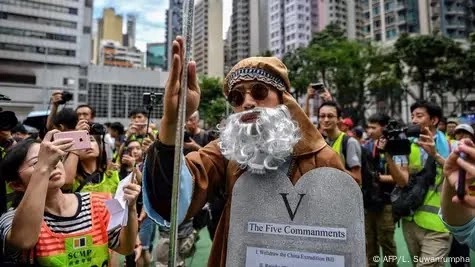
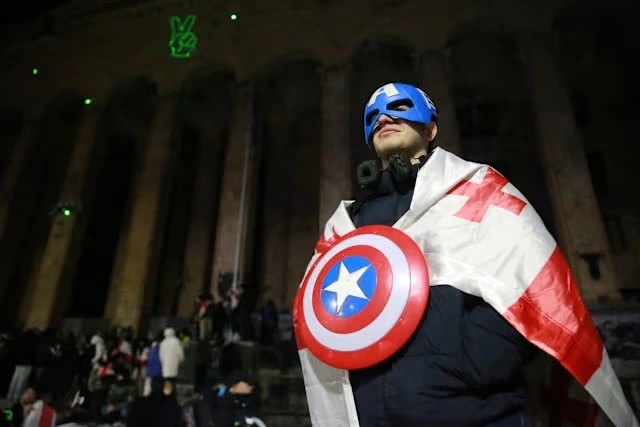
Ekrem İmamoğlu, mayor of Istanbul and a prominent figure in the Republican People’s Party (CHP), is widely regarded as President Recep Tayyip Erdoğan’s primary political opponent. His arrest occurred just days before the CHP was expected to officially announce him as their candidate for the 2028 presidential election. Ironically, Wikipedia characterizes him as a “dark horse” candidate, a relatively unknown figure who emerged as a challenger in the 2019 Istanbul mayoral election. In other words, the Juan Guaidó of Türkiye.
During his tenure as Mayor of Istanbul, İmamoğlu appointed Yavuz Saltık as the Chief of Staff of the Istanbul Metropolitan Municipality. Saltık had previously served as an advisor for prominent international organizations, including the International Republican Institute (IRI), the National Democratic Institute (NDI), and the Konrad Adenauer Foundation (KAS). Notably, the IRI and NDI are key elements of the National Endowment for Democracy (NED), while KAS is closely linked to the German political party, the Christian Democratic Union (CDU). NED gets the majority of its funding from the U.S. Congress. The origins of the NED trace back to the late 1960s, when the Central Intelligence Agency (CIA) came under scrutiny for covertly backing activists and opposition groups in countries perceived to be aligning with the Soviet Union. After these CIA operations were exposed, the agency faced widespread criticism for what many viewed as underhanded interference in the affairs of sovereign nations. Following years of debate over whether and how such funding should persist, Congress ultimately established the NED in 1983.
Unsurprisingly, Trotskyist factions are rallying behind what appears to be another color revolution, aimed at “balkanizing” Iran, establishing Greater Kurdistan, and undermining China and Russia.
Related:
Flashback 2019: Could the US force regime change in Turkey- The short answer is yes.
Read More »[2012] Syria, Yemen, and America’s Quest for Imperial Dominance
Syria, Yemen, and America’s Quest for Imperial Dominance
US interest in Yemen is certainly not rooted in altruism or a desire to promote democratic ideals. On the contrary, it is the application of a long-standing geopolitical strategy to control international trade through the Mandab Strait and Suez Canal, access to African raw materials, and most specifically, block the expansion of Chinese economic influence in both the Middle East and Africa. For these reasons, the United States has a keen interest in both Yemen and Somalia, desperate to maintain chaos in those countries so as to prevent stable, nationalist leaders from emerging. In so doing, Washington once again shows itself to be an imperialist aggressor, interested only in maintaining and expanding the empire.
Previously:
Trump extortion to choke off China’s maritime commerce
[2010] The Yemen Hidden Agenda: Behind the Al-Qaeda Scenarios, A Strategic Oil Transit Chokepoint
[2010] The Yemen Hidden Agenda: Behind the Al-Qaeda Scenarios, A Strategic Oil Transit Chokepoint
The Yemen Hidden Agenda: Behind the Al-Qaeda Scenarios, A Strategic Oil Transit Chokepoint
The Oil chokepoint and other oily affairs
The strategic significance of the region between Yemen and Somalia becomes the point of geopolitical interest. It is the site of Bab el-Mandab, one of what the US Government lists as seven strategic world oil shipping chokepoints. The US Government Energy Information Agency states that “closure of the Bab el-Mandab could keep tankers from the Persian Gulf from reaching the Suez Canal/Sumed pipeline complex, diverting them around the southern tip of Africa. The Strait of Bab el-Mandab is a chokepoint between the horn of Africa and the Middle East, and a strategic link between the Mediterranean Sea and Indian Ocean.” [9]
Read More »
Front: Media Development Investment Fund (MDIF)
Strengthening the Financial Independence of Independent Media Organisations
The key findings of the literature review with regard to international donor assistance and private funding for independent media are as follows:
Read More »
- The United States and Germany are the largest contributors of international media assistance (Myers & Juma, 2018); China is emerging as a large donor for media and communications infrastructure projects
although it is less interested in freedom of the media(Myers & Juma, 2018);
PH: Sputtering WPS gaslighting
Sputtering WPS gaslighting (archived)
THE West Philippine Sea “cognitive warfare” narrative has been playing since Sept. 2012 when then President Noynoy Aquino signed Administrative Order 29 “Naming the West Philippine Sea of the Republic of the Philippines, and for other purposes.”
…
This has already caused massive real economic damage to Filipinos, like the loss of 1.5-million Chinese tourist arrivals and $1.5-billion (P90-billion) tourism revenues for our six million tourism workers.
Even worse, it can give the US the basis for creating a false flag operation blaming China for a human disaster and precipitating a major conflict – which is clearly what the US warmongers intend as evidenced by the US military bases in the country.
Previously:
Chinese Navy Helicopter Intercepts Philippine Cessna Over Scarborough Shoal + Embedded Journalism
Ukraine as a Solution (2009) by Tang Shiping
As the Donald Trump administration and the Russian government agree to work together on ending the Ukraine war and lay out potential terms without Ukrainian and European input, I thought it would be interesting to revisit an essay from 16 years ago.
The Militia and the Mole
This whole story seems suspicious to me. The overemphasis that the mole was a loner, that he was a criminal, and legally changed his name, etc.
John Williams kept a backpack filled with everything he’d need to go on the run: three pairs of socks; a few hundred dollars cash; makeshift disguises and lock-picking gear; medical supplies, vitamins and high-calorie energy gels; and thumb drives that each held more than 100 gigabytes of encrypted documents, which he would quickly distribute if he were about to be arrested or killed.
Read More »
 Ms. Cat’s Chronicles
You must be logged in to post a comment.