
‘Responsible Statecraft’, a publication of analysis, opinion, and news that seeks to promote a positive vision of U.S. foreign policy based on humility, diplomatic engagement, and military restraint, asked some experts to gauge the short and long term effects of Kyiv’s bold invasion on the war.
‘Responsible Statecraft’: What does Ukraine’s incursion into Russia really mean?
Tag: Belfer Center for Science and International Affairs
Where is the political courage of yesteryear?
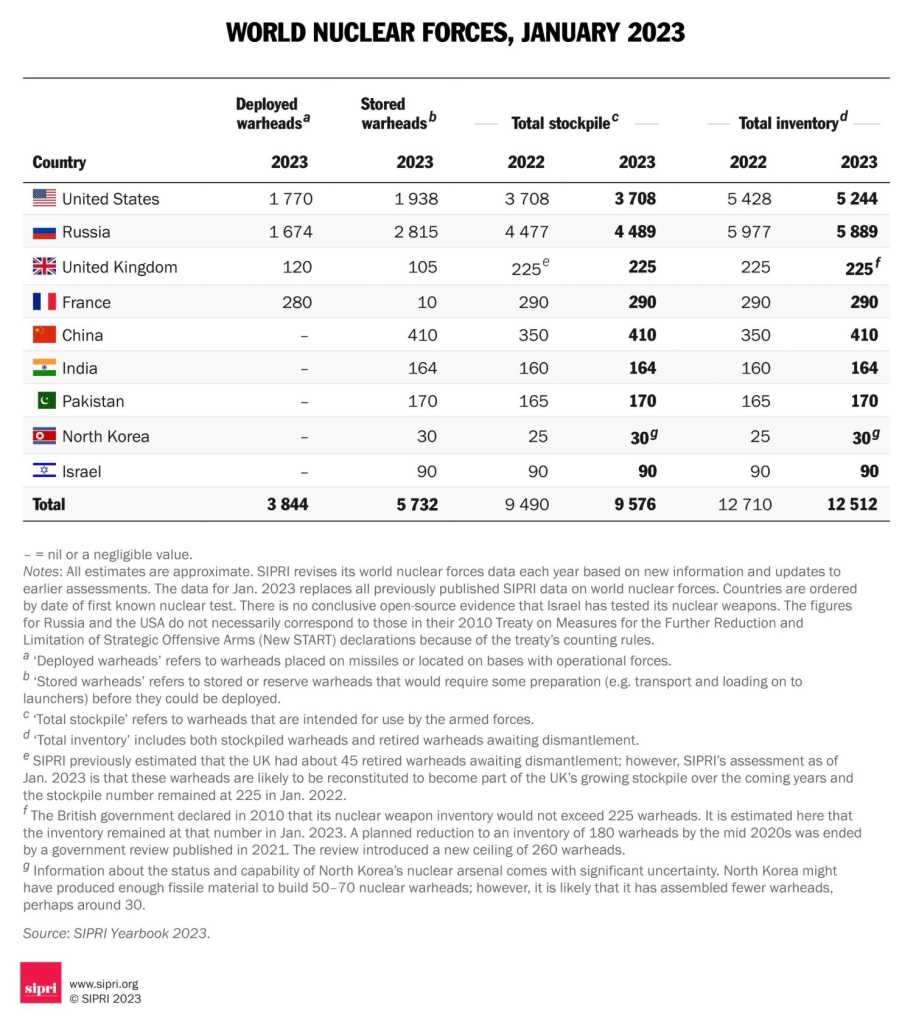
Are We Back to Nuclear Brinkmanship for Good?
In his speech last week, Sullivan said the world was at an “inflection point” that demanded “new strategies for achieving the same goal we’ve held since the Cold War: Reduce the risk of nuclear conflict.” Instead, we seem to be inching inexorably back toward a time when, as Kennedy commented 60 years ago, any “two men, sitting on opposite sides of the world, [can] decide to bring an end to civilization.”
*Disclaimer: The views expressed herein are solely those of the author and may or may not reflect those of Ms. Cat’s Chronicles.
What if Russia Won the Ukraine War but the Western Press Didn’t Notice?
The level of creative story-telling about Russia’s progress in the Ukraine War has reached the point where the scenario below is not entirely impossible. Sadly yours truly lacks the literary skills to execute a Philip K. Dick rendering of this sketch:
What if Russia Won the Ukraine War but the Western Press Didn’t Notice?
Related:
US may not maintain military support for Ukraine, Navy secretary says
The US may not be able to continue its ongoing support for Ukraine if weapons makers do not ramp up production, US Secretary of the Navy Carlos Del Toro told Fox News on Wednesday evening.
US may not maintain military support for Ukraine, Navy secretary says
Propaganda (too much to debunk):
The U.S. Lost the 5G Race…after an Immigrant was Forced to Leave
The U.S. Lost the 5G Race…after an Immigrant was Forced to Leave via Newsthink
Related:
The U.S. Needs a Million Talents Program to Retain Technology Leadership (archived)
It’s not just a matter of enticing new immigrants but of retaining bright minds already in the country. In 2009, a Turkish graduate of the California Institute of Technology and the Massachusetts Institute of Technology, Erdal Arikan, published a paper that solved a fundamental problem in information theory, allowing for much faster and more accurate data transfers. Unable to get an academic appointment or funding to work on this seemingly esoteric problem in the United States, he returned to his home country. As a foreign citizen, he would have had to find a U.S. employer interested in his project to be able to stay.
Back in Turkey, Arikan turned to China. It turned out that Arikan’s insight was the breakthrough needed to leap from 4G telecommunications networks to much faster 5G mobile internet services. Four years later, China’s national telecommunications champion, Huawei, was using Arikan’s discovery to invent some of the first 5G technologies. Today, Huawei holds over two-thirds of the patents related to Arikan’s solution—10 times more than its nearest competitor. And while Huawei has produced one-third of the 5G infrastructure now operating around the world, the United States does not have a single major company competing in this race. Had the United States been able to retain Arikan—simply by allowing him to stay in the country instead of making his visa contingent on immediately finding a sponsor for his work—this history might well have been different.
 Ms. Cat’s Chronicles
You must be logged in to post a comment.