
US Using Israel to Provoke Iran War, Deny Responsibility, Minimize Retaliation
Read More »Tag: Belt and Road Initiative
Satellite Photo Shows US Fighters and Bombers at Key Base for Iran
New satellite imagery reveals a significant concentration of U.S. military aircraft and bombers on the island of Diego Garcia in the Indian Ocean, including strategic B-52 bombers, KC-135 tankers, F-15 fighters and a C-5M heavy transport aircraft—a buildup signaling enhanced readiness for potential operations amid regional tensions.
Satellite Photo Shows US Fighters and Bombers at Key Base for Iran
Previously:
Serbia’s Organized Chaos +

Vucic in Moscow on May 9, on his way to meet with Russian President Vladimir Putin. (Ramil Sitdikov, RIA Novosti, President of Russia)
Network States: The New Frontier of Soft Power and Corporate Feudalism

They sell the dream of autonomy—self-governing, tech-powered havens untethered from old institutions. But look closer, and you’ll see that Network States aren’t a rebellion against centralized power. They’re a rebrand, a more sophisticated, digitally optimized iteration of company towns, where the people inside serve the system without ever realizing they were locked in from the start.
Read More »Why Washington is Worried About Burkina Faso’s Young Revolutionary Leader
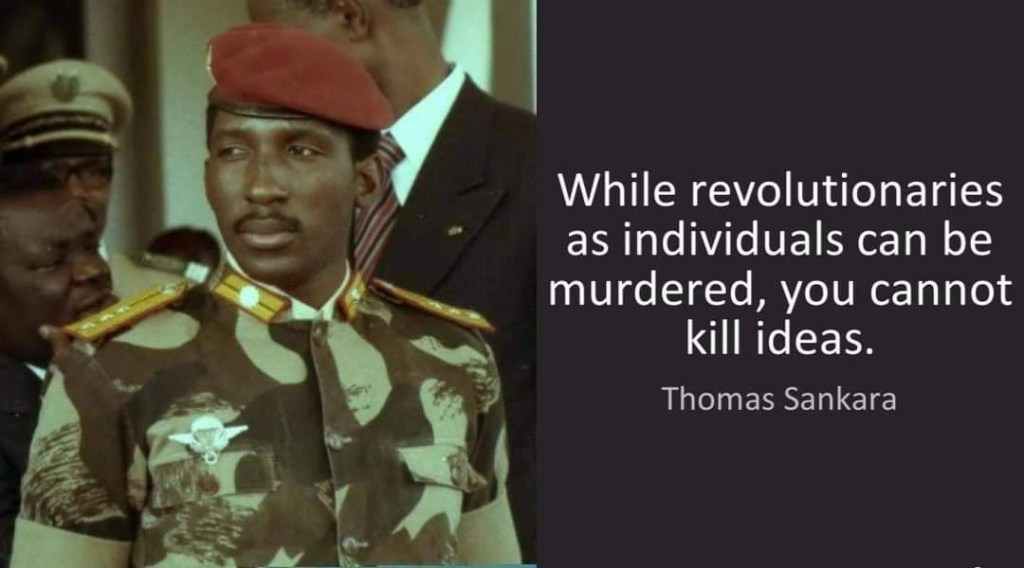
Why Washington is Worried About Burkina Faso’s Young Revolutionary Leader
Related Videos:
HRW accused Burkina Faso of war crimes
Related Articles:
The US/EU/NATO’s Regime Change Playbook for Burkina Faso and Captain Ibrahim Traoré
The Rising Star of Cpt. Ibrahim Traore – Burkina Faso’s Spirit of Sankara
In February 2024, Traoré ordered the suspension of the issuance of export permits for small-scale private gold production, a move aimed at tackling illegal trade. According to the World Gold Council’s 2023 figures, Burkina Faso is the 13th-largest gold producer in the world, producing about 100 tonnes, equivalent to about US$6 billion in value, each year.
Document: Burkina Faso
The RCO and “Putting the Cart before the Horse”
China Has Quietly Won the Trade War—and Now Leads the World

China has quietly won the trade war and is now reshaping global leadership—not through force, but through strategy, stability, and vision. It’s time for the West to learn, adapt, and embrace a shared future led by a preponderant China.
“There are decades where nothing happens; and there are weeks where decades happen.”
—Vladimir LeninChina Has Quietly Won the Trade War—and Now Leads the World (archived)
H/T: The Most Revolutionary Act
Related:
“Dark Indonesia” and Astroturfed Subversion + More
21-04-2025: Since February, Indonesia has been beset by protests largely led by students, so-called civil society organisations, some labour unions and K-pop fans. Protests emerged in many cities throughout the Indonesian archipelago including Jakarta, Surabaya, Yogyakarta, Bandung, Solo, Semarang, Bali, Samarinda, Banjarmasin and South Sumatra. The protestors were reportedly delivering a “red report card” on the first 100 days of President Prabowo Subianto’s administration. They also condemned Prabowo’s “Ndasmu!” remark towards critics of the Free Nutritious Meal program.[1] “Ndasmu” is an impolite Javanese word meaning “your head”, which perhaps implies that the protestors’ actions were the result of something that existed in their heads only. The slogan “Dark Indonesia” under which the protests took place, is a stab at Prabowo’s election slogan of “Golden Indonesia” (Indonesia Emas), which aims to advance the Unitary State of the Republic of Indonesia (NKRI) to a sovereign, prosperous nation by 2045, the centennial of its independence won in 1945.[2]
Related:
Read More »“Western Media Finally Admits Tariffs Aimed at Isolating China, Not ‘Reindustrialization’”
Western Media Finally Admits Tariffs Aimed at Isolating China, Not “Reindustrialization”
As warned, the US predicated tariffs on “reindustrialization” to sell to a gullible public, but was always aimed as preparations for isolating and eventually warring with China;
Read More »
 Ms. Cat’s Chronicles
You must be logged in to post a comment.