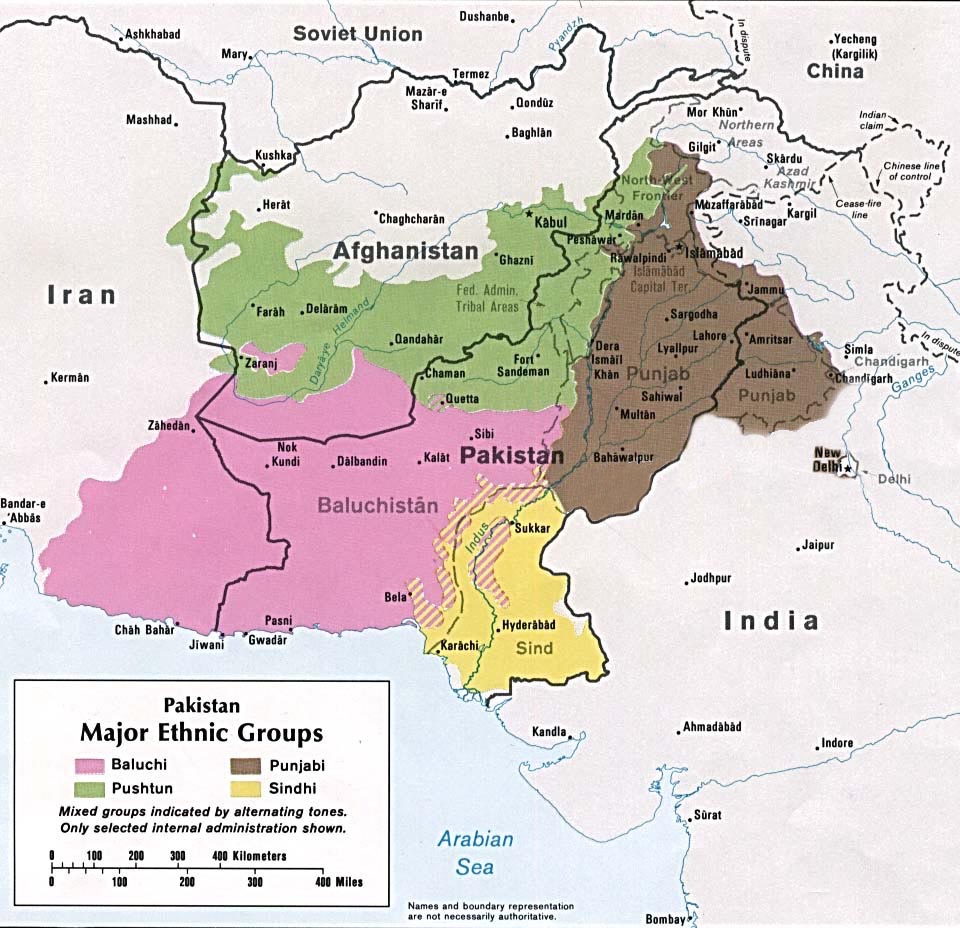
Balochistan is a little-known region spanning eastern Iran, western Pakistan, and southern Afghanistan. It is inhabited by the Baloch people, a unique nomadic ethno-linguistic group. Iran and Pakistan have struggled with insurgencies from the group for decades, embittered over a sense of disenfranchisement.
China’s most straightforward method of media outreach is directly broadcasting or publishing its state media content in target ASEAN countries. Xinhua, China’s official state media agency, has print bureaus in every Southeast Asian country. TV news channels CCTV-4 and the English-language CGTN likewise operate in nearly every country in the region, while China Radio International airs multilingual content in Vietnam, Laos, Cambodia, Thailand, and Myanmar. Xinhua is a ministry-level agency directly under the State Council, while the other media organizations all operate under the Chinese Communist Party Publicity Department.
At least six people including Pakistani paramilitary troops were killed and scores injured on Saturday, in a bombing claimed by separatists in volatile southwestern Balochistan province, officials said.
…
The BLA is also behind a surge in attacks in the region targeting Chinese workers.
Much of the violence is directed against Chinese infrastructure projects in Pakistan to connect China’s Xinjiang region with the Arabian Sea to reach markets in the Middle East, Europe, Africa and beyond.
Of course, AP makes no mention of Chinese workers being targeted.
On New Year’s eve, Chinese President Xi Jinping delivered his 2025 New Year address through China Media Group and the Internet. The following is the full text of the address:
As geopolitical tensions escalate, the U.S. wields its most formidable weapon—not military might, but a sophisticated network of political and informational control that reshapes nations and regions to serve its interests
I’ve always known that they would try to expand their information operation to the other countries that are in ASEAN, just by following the SeaLight podcast. If not their information operation, regimechange and terrorism (in Balochistan and Myanmar). I’ve also noticed that Powell has been referring to the Philippines’ “transparency initiative” as “non-violent resistance,” lately (RAND refers to it as “assertive transparency”). Ironic, considering that they’ve already succeeded in overthrowing the government of Bangladesh and are now attempting it in Cambodia, India and Pakistan. For those who don’t know about the regime change asset Gene Sharp and his neoliberal “nonviolence,” see the links on this page. Unfortunately, I don’t have as much time to dedicate to this right now due to other obligations.
Vietnam has jailed five party members for feeding information to Duong Van Thai, a blogger who is believed to have been abducted in Thailand last year and resurfaced in Vietnamese custody, the human rights group 88 Project reported, citing sources inside the government.
In addition to the 12 industrial parks built by the government and managed by the Industrial Parks Development Corporation and regional governments and the Diredawa Free Trade Zone, there are also industrial parks built and managed by private investors in various areas of Ethiopia. One of these private industrial parks is Eastern Industry Park. The industrial park is located in Dukem area, and 153 companies are engaged in production activities in the park. 95% of the companies are owned by Chinese investors, while the rest are owned by companies from India, England, and other countries. These producers are contributing significantly in terms of job creation, foreign exchange earnings, technology, and knowledge transfer.
You must be logged in to post a comment.