The ADA Is Turning 35—And It’s in Trump’s Crosshairs + More

The ADA Is Turning 35—And It’s in Trump’s Crosshairs

Since the bill was signed into law, disabled Americans have benefited from a much wider array of protections in the workforce, in education, and in the ability to access public places and private spaces open to the public, such as stores and restaurants. But in a world where disability rights victories, and disabled people themselves, are being attacked by anti-DEI activists who have President Donald Trump’s ear, disability civil rights feel a little more fragile. Section 504 of the Rehabilitation Act, another essential and wide-ranging item of civil rights legislation, is also in peril, most notably through a lawsuit filed by 17 Republican state attorneys general and led by Texas Attorney General Ken Paxton, as my colleague Sarah Szilagy reported in October.

Read More »

The Latest on Colby’s Strategy of Denial

There’s little in Elbridge A. Colby’s past to suggest that President Trump’s most loyal and fierce allies would embrace him.

Mr. Colby, 45, has deep roots in the foreign policy establishment that Mr. Trump is trying to destroy. He is the grandson of the former C.I.A. director William Colby; a product of Groton, Harvard and Yale Law School; someone who has spent much of his career working across party lines on some of the most complex national security issues: nuclear weapons strategy, China’s military buildup, the commercialization of space.

A Pentagon Nomination Fight Reveals the New Rules of Trump’s Washington

Related:

US Army War College: Adapting US Defense Strategy to Great-Power Competition

USNI: A Forward Denial Defense: Inside the First Island Chain

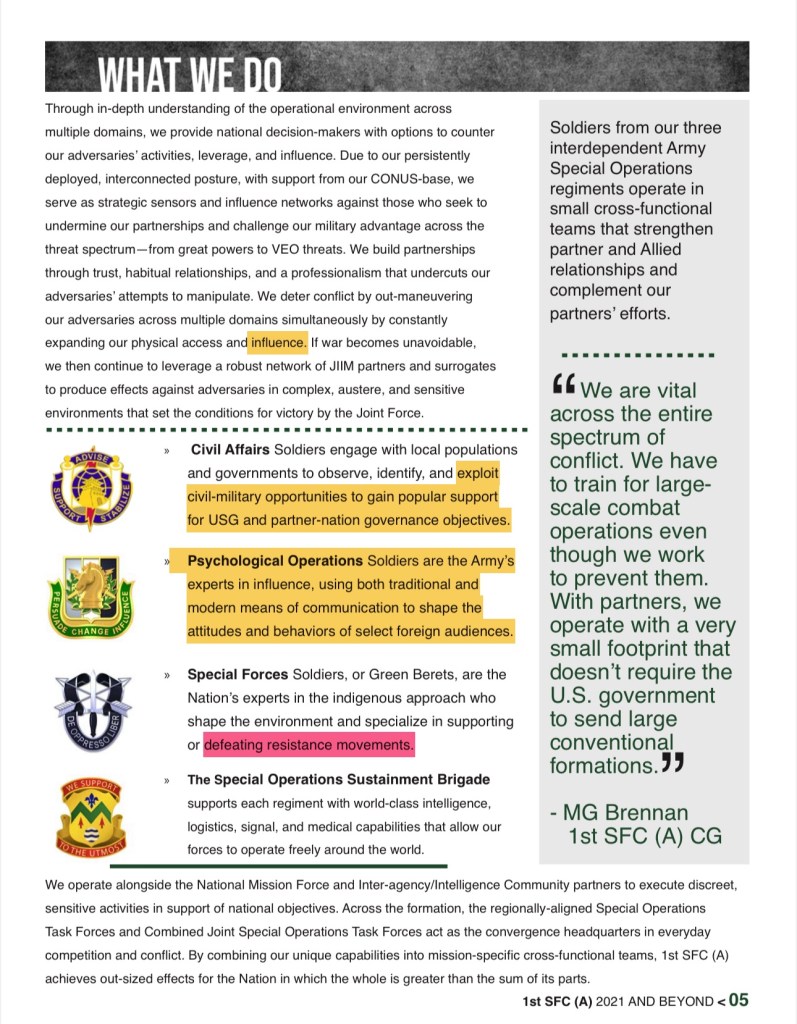
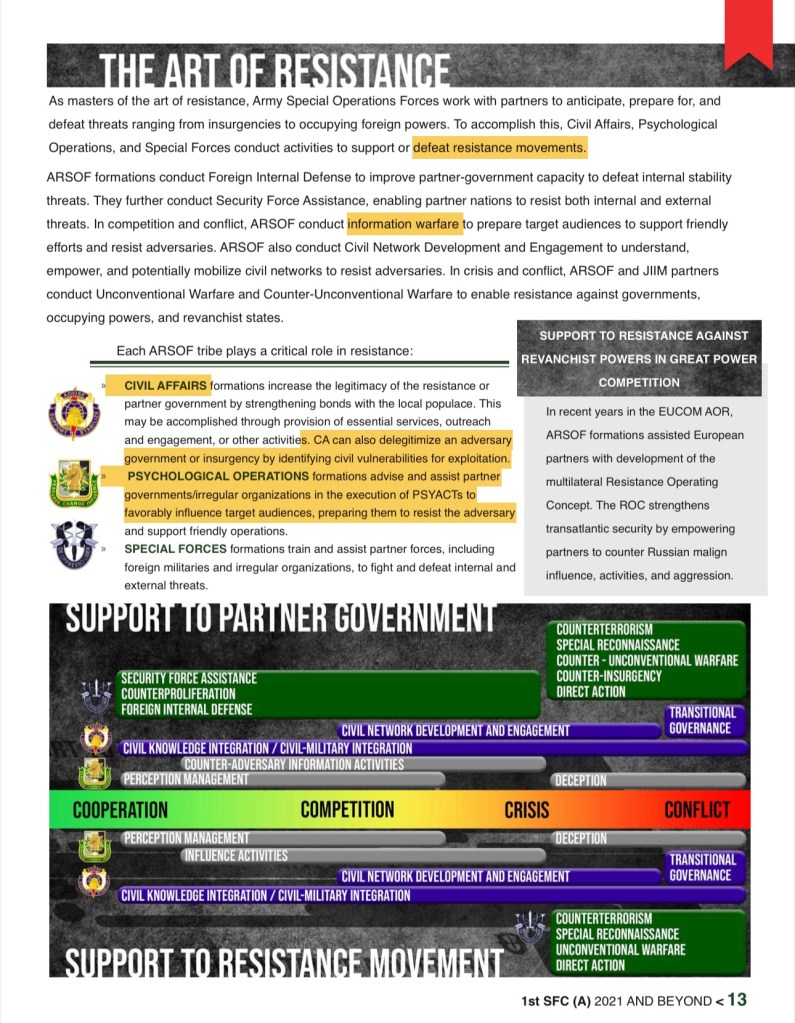
Colby-Pottinger document

New US-Ukraine partnership proposal from influential senators is a recipe for World War III

Atlantic Council resident fellow Andrew D’Anieri describes a new potential U.S.-Ukraine partnership

New US-Ukraine partnership proposal from influential senators is a recipe for bipartisan success

Related:

Washington wants Ukraine’s resources – US Senator

“According to open-source data, the total value of Ukraine’s former mineral resource base is estimated at almost $14.8 trillion, but $7.3 trillion of this is now in the Luhansk and Donetsk People’s Republics. That means almost half of the former Ukraine’s national wealth is in Donbass!” Medvedev explained in a lengthy Telegram post.

“To get access to the coveted minerals, the Western parasites shamelessly demand that their wards wage war to the last Ukrainian. They are already directly voicing such intent without hesitation,” Russia’s former leader added.

WikiSpooks: Atlantic Council

The future of critical raw materials: How Ukraine plays a strategic role in global supply chains

Ukraine is a key potential supplier of rare earth metals, including titanium, lithium, beryllium, manganese, gallium, uranium, zirconium, graphite, apatite, fluorite, and nickel. Despite the war, Ukraine holds the largest titanium reserves in Europe (7% of the world’s reserves). It is one of the few countries that mine titanium ores, crucial for the aerospace, medical, automotive and marine industries.

Before February 2022, Ukraine was a key titanium supplier for the military sector. It also has one of Europe’s largest confirmed lithium reserves (estimated at 500,000 tons), vital for batteries, ceramics, and glass. Ukraine is the world’s 5th largest gallium producer, essential for semiconductors and LEDs, and has been a major producer of neon gas, supplying 90% of the highly purified, semiconductor-grade neon for the US chip industry.

The Man Behind Trump’s VP Pick: It’s Worse Than You Think

While J.D. Vance has his own controversies, his close connection to billionaire Peter Thiel, who is poised to have unprecedented influence in a new Trump administration, should deeply unsettle every American who cares about freedom, privacy and reining in the surveillance state.

The Man Behind Trump’s VP Pick: It’s Worse Than You Think

H/T: The Most Revolutionary Act

Related:

Neoreactionaries

The FDA Just Quietly Gutted Protections for Human Subjects in Research

Late last year, the U.S. Food and Drug Administration (FDA) quietly introduced a regulation that may be one of the most important shifts in how non-profit and for-profit U.S. institutions, both at home and abroad, conduct future medical and public health research. It represents an erosion of personal medical choice and threatens to undermine the public’s trust in scientific investigations in biomedicine.

The FDA Just Quietly Gutted Protections for Human Subjects in Research