PH: Stratbase, CIPE (NED), and the Belt and Road Initiative

07-31-2024: If it’s bad business, it’s bad for the Philippines (archived)

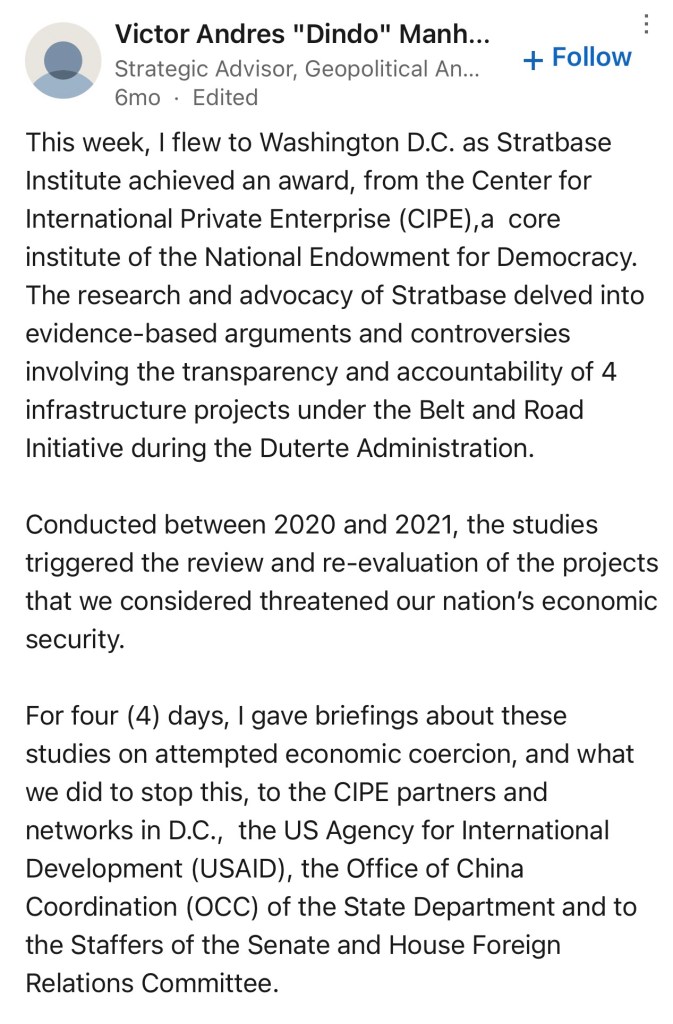
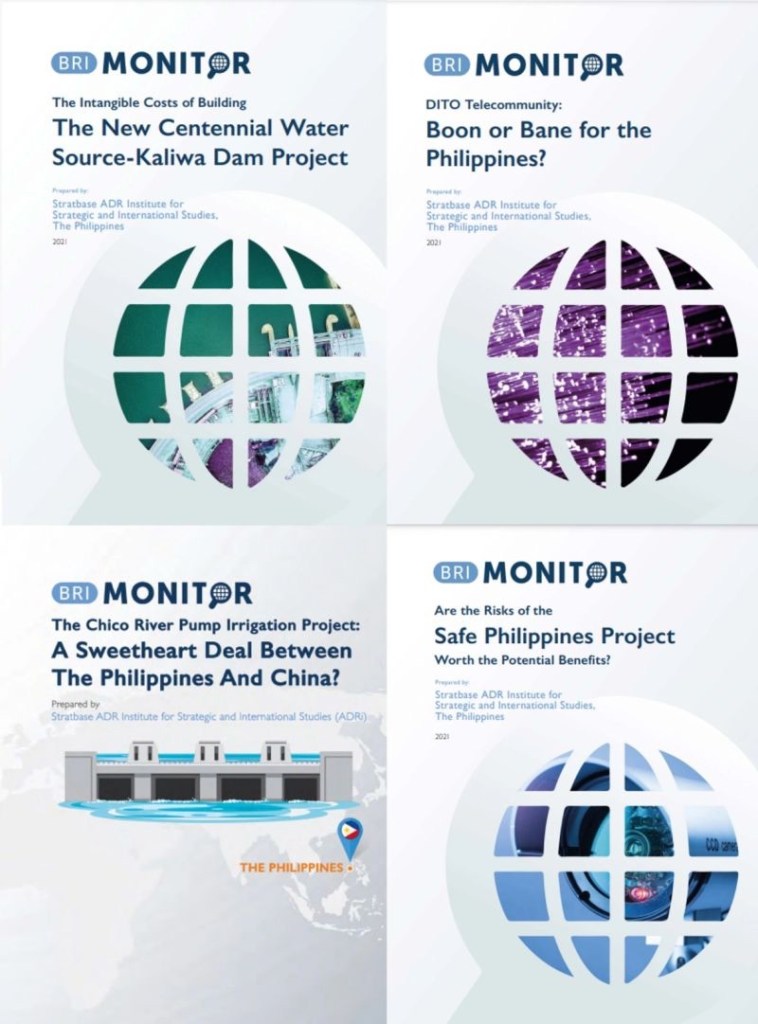
Our organization, the Stratbase ADR Institute, received an award from the prestigious Center for International Private Enterprise (CIPE), one of the four core institutes of the National Endowment for Democracy in Washington, DC. We were recognized for our research, advocacy, and strategic communication on four infrastructure projects entered into by the Philippines, during the administration of former President Rodrigo Duterte, under the Belt and Road Initiative of China.

The Philippines has currently withdrawn from the Belt and Road Initiative and the current administration has been careful to consider other partners aside from China.

Victor Andres “Dindo” C. Manhit is the president of the Stratbase ADR Institute.

Just like the National Endowment for Democracy, CIPE has been scrubbing their website. Search for the Philippines and click on the results. Most of the links are missing.

Related:

Read More »

‘It’s a win’: Philippines, China uphold South China Sea deal on resupply missions

Analysts say the agreement ‘commits both states to a status quo’ and urge the Philippines to hold firm on its South China Sea stance

‘It’s a win’: Philippines, China uphold South China Sea deal on resupply missions

Related:

China and the Philippines Hold the Tenth Meeting of the Bilateral Consultation Mechanism on the South China Sea

Read More »

The marriage of RAND and SeaLight

A Caricature of Marxism and Imperialist Economism: Monism And Dualism

Slowly, but surely, I’m going through both of the following RAND publications. I just recently noticed that “Understanding and Countering China’s Maritime Gray Zone Operations” was posted over at SeaLight on the 12th of December. Ray Powell, from SeaLight, is quoted at least 14 times in the first publication. So far, I’ve seen RAND “recommend” the same tactics as they’ve deployed in the Philippines; civilian society organizations, embedded journalism, information warfare, influencers, and online trolls.

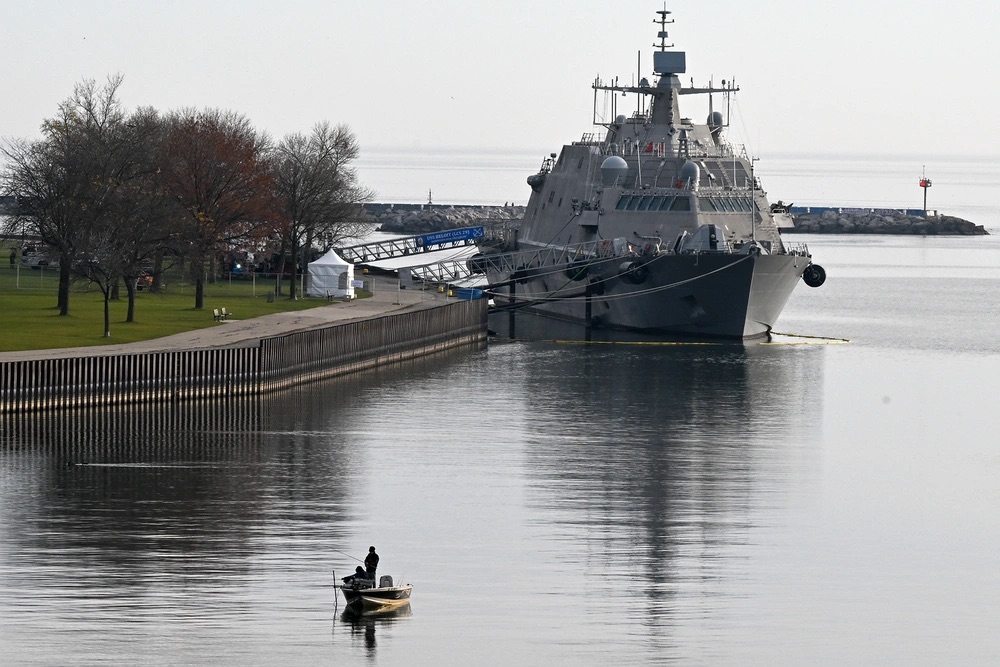
USS Beloit (LCS-29). Photo by EJ Hersom.

I’ve always known that they would try to expand their information operation to the other countries that are in ASEAN, just by following the SeaLight podcast. If not their information operation, regime change and terrorism (in Balochistan and Myanmar). I’ve also noticed that Powell has been referring to the Philippines’ “transparency initiative” as “non-violent resistance,” lately (RAND refers to it as “assertive transparency”). Ironic, considering that they’ve already succeeded in overthrowing the government of Bangladesh and are now attempting it in Cambodia, India and Pakistan. For those who don’t know about the regime change asset Gene Sharp and his neoliberal “nonviolence,” see the links on this page. Unfortunately, I don’t have as much time to dedicate to this right now due to other obligations.

Understanding and Countering China’s Maritime Gray Zone Operations | RAND

How the United States Can Support Allied and Partner Efforts to Counter China in the Gray Zone: Affirmative Engagement | RAND

RAND and SeaLight document (work in progress)

PART 2

Part 3a: RAND and SeaLight – Taiwan Relations Act

RAND and SeaLight Part 3b: Four Ways China Is Growing Its Media Influence in Southeast Asia

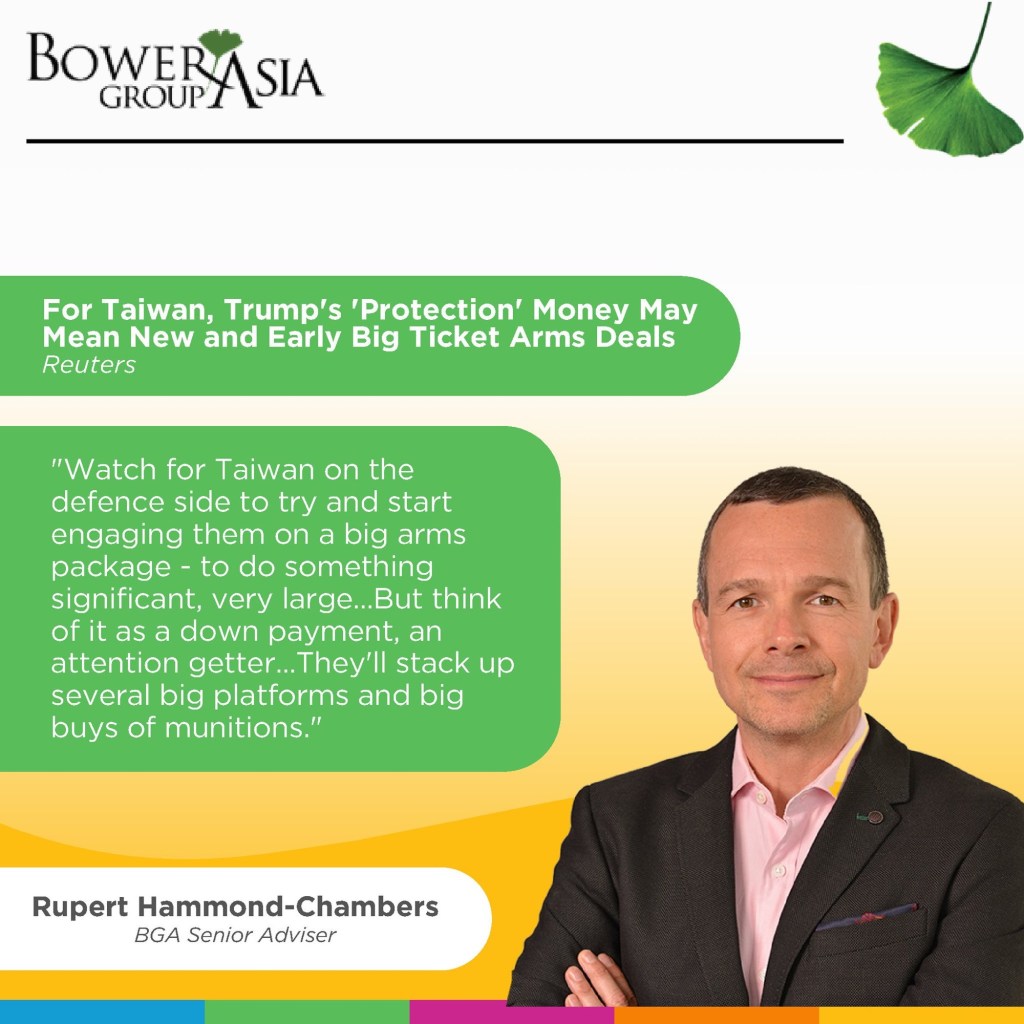
For Taiwan, Trump’s ‘protection’ money may mean new and early big ticket arms deals

For Taiwan, Trump’s ‘protection’ money may mean new and early big ticket arms deals

“Watch for Taiwan on the defence side to try and start engaging them on a big arms package – to do something significant, very large,” Rupert Hammond-Chambers, president of the U.S.-Taiwan Business Council which helps broker defence exchanges between Washington and Taipei, told Reuters, adding it could come in the first quarter of next year.

“But think of it as a down payment, an attention getter,” he said. “They’ll stack up several big platforms and big buys of munitions.”

The U.S. is already Taiwan’s most important arms supplier, although Taiwan has complained of an order backlog worth some $20 billion. A new order, almost $2 billion of missile systems, was announced last month.

Related:

Profile at BowerGroupAsia: Rupert Hammond-Chambers

Philippines sides with Vietnam in South China Sea dispute, hoping it will ‘return the favour’

Analysts believe that while Vietnam appreciates the gesture, it is unlikely to influence Hanoi’s strategy in the disputed waters.

Philippines sides with Vietnam in South China Sea dispute, hoping it will ‘return the favour’

Related:

BowerGroupAsia: Dr. Prashanth Parameswaran

Prashanth is concurrently a fellow at the Wilson Center, a senior columnist at The Diplomat magazine and an instructor for institutions including the U.S. State Department. He is the founder of the twice-weekly ASEAN Wonk newsletter, which offers research insights and analysis on the geopolitics and geoeconomics of Southeast Asia and the Indo-Pacific region. 

Stratbase ADR Institute Non-Resident Fellow: Dr. Prashanth Parameswaran

Dr. Parameswaran has held various roles across think tanks, governments, media and companies, including the Center for Strategic and International Studies, Singapore’s Ministry of Trade and Industry and the Associated Press. In those capacities, he worked on various issues including geopolitical and geoeconomic statecraft, Southeast Asia foreign and security policy, regional institutions, major power engagement in the Indo-Pacific as well as alliances and partnerships.   

Dr. Parameswaran holds a Ph.D. and MA focused on international business, international relations, Asian affairs, and U.S. foreign policy from the Fletcher School of Law and Diplomacy at Tufts University. He earned a BA from the University of Virginia, where he studied foreign affairs and peace and conflict studies with a focus on Asia. He regularly advises groups and individuals seeking to advance conversations on Indo-Pacific affairs and serves on the board of several institutions.  

Global Times: China and Vietnam capable to handle law enforcement conflict in S.China Sea properly; Philippines’ intention to stigmatize China ‘won’t work’

SeaLight document

Observations on the pundits in the PH media

Full video
Full video
Full video
Source

Retired Supreme Court associate justice Antonio Carpio says the Philippine government should accept Vietnam and Malaysia’s invitation to take China to an arbitral court on their territorial disputes.

Source

US-funded Rappler:

[OPINION] Ayungin and why PH should respond as one team, one nation (archived):

This crisis should be turned into an opportunity.

We have postponed the replacement of the BRP Sierra Madre for years, for fear of escalating tension at Ayungin Shoal. Now is the time to either construct a concrete facility or deploy a self-propelled oil platform inside the shoal as a permanent station for our troops; which should be far superior in terms of habitability, self-defense, and supportability. If completed, some of the Navy’s missile boats can be redeployed to secure the shoal, instead of languishing in Mindanao and conducting anti-smuggling operations.” – Retired Rear Admiral Rommel Jude Ong.

One thing that I’ve noticed about these pundits being quoted in the PH media, is that all of them have ties to the Stratbase Group, which includes the Stratbase ADR Institute and BowerGroupAsia.  Both the Stratbase ADR Institute and BowerGroupAsia have connections to Ray Powell and the U.S. government. 

Read More »

South China Sea: InfoOp Podcast (ASEAN)

YouTube

Clip from Episode 1 of Why Should We Care About the Indo-Pacific? Podcast (Apple Podcasts) with Ray Powell and Jim Carouso

Powell and Carouso worked together at the U.S. Embassy in Canberra, Australia. They’re trying to “shape” the Indo-Pacific for US corporate interests and to provoke a war with China.  

Jim Carouso is currently with the Center for Strategic & International Studies. CSIS is funded by various governments, including the United States, and corporations. Carouso is also with BowerGroupAsia in Singapore. He formerly worked in the State Department and was a chargé d’ affaires at the U.S. Embassy in Canberra and the U.S. Mission to the Association of Southeast Asian Nations.

Ray Powell was formerly a Defense Attaché in Canberra, Australia.

Source

The Defense Attaché System is part of the Defense Intelligence Agency.

Source.

More on SeaLight’s (formerly Project Myoushu) ‘assertive transparency’ campaign.

Previously:

SCS: The Office of Naval Research funded Stanford’s GKC

Philippines’ ‘assertive transparency’ strategy is causing them to miss out economically

PH: Compared To China, US Trade, Investment Offers Laughable + More