On April 21, the first day of the 14th annual Rx and Illicit Drug Summit, organizers announced a surprise presenter for the closing plenary on April 24: Robert F. Kennedy Jr., newly minted Secretary of the Department of Health and Human Services and vocal proponent of building labor camps for people who use drugs.
21-04-2025: Since February, Indonesia has been beset by protests largely led by students, so-called civil society organisations, some labour unions and K-pop fans. Protests emerged in many cities throughout the Indonesian archipelago including Jakarta, Surabaya, Yogyakarta, Bandung, Solo, Semarang, Bali, Samarinda, Banjarmasin and South Sumatra. The protestors were reportedly delivering a “red report card” on the first 100 days of President Prabowo Subianto’s administration. They also condemned Prabowo’s “Ndasmu!” remark towards critics of the Free Nutritious Meal program.[1] “Ndasmu” is an impolite Javanese word meaning “your head”, which perhaps implies that the protestors’ actions were the result of something that existed in their heads only. The slogan “Dark Indonesia” under which the protests took place, is a stab at Prabowo’s election slogan of “Golden Indonesia” (Indonesia Emas), which aims to advance the Unitary State of the Republic of Indonesia (NKRI) to a sovereign, prosperous nation by 2045, the centennial of its independence won in 1945.[2]
The background to the article reprinted here is the “long boom” of western capitalism during the 1950s and 1960s. It first appeared in International Socialism journal in Spring 1967. On the surface it appeared that the capitalist system had stabilised itself, had broken out of the boom-slump cycle and was now able to offer the workers of Western Europe and North America a steady increase in living standards.
This was a frustrating world for Marxists, who found themselves subject to two temptations. One was to surrender to the claims poured out by the system’s apologists that capitalism had solved its problems and that the path of gradual reform offered a sure road to socialism. The other was to deny the obvious signs of stability and prosperity and assert that capitalism was on the verge of imminent, catastrophic collapse. If these temptations were to be avoided, and Marx’s analysis of capitalism’s contradictions was to hold, then the long boom must be explained.
1. The governmental programme of the Soviet Government was not a reformist, but a revolutionary one. Reforms are concessions obtained from a ruling class that retains its rule. Revolution is the overthrow of the ruling class. Reformist programmes, therefore, usually consist of many items of partial significance. Our revolutionary programme consisted properly of one general item—removal of the yoke of the landowners arid capitalists, the overthrow of their power and the emancipation of the working people from those exploiters. This programme we have never changed. Some partial measures aimed at the realisation of the programme have often been subjected to change; their enumeration would require a whole volume. I will only mention that there is one other general point in our governmental programme which has, perhaps, given rise to the greatest number of changes of partial measures. That point is—the suppression of the exploiters’ resistance. After the Revolution of October 25 (November 7), 1917 we did not close down even the bourgeois newspapers and there was no mention of terror at all. We released not only many of Kerensky’s ministers, but even Krasnov who had made war onus. It was only after the exploiters, i.e., the capitalists, had begun developing their resistance that we began to crush that resistance systematically, applying even terror. This was the proletariat’s response to such actions of the bourgeoisie as the conspiracy with the capitalists of Germany, Britain, Japan, America and France to restore the rule of the exploiters in Russia, the bribery of the Czechoslovaks with Anglo-French money, the bribery of Mannerheirn, Denikin and others with German and French money, etc. One of the latest conspiracies leading to “a change”—to put it precisely, leading to increased terror against the bourgeoisie in Petrograd—was that of the bourgeoisie, acting jointly with the Mensheviks and Socialist-Revolutionaries; their conspiracy concerned the surrender of Petrograd, the seizure of Krasnaya Gorka by officer-conspirators, the bribing by British and French capitalists of employees of the Swiss Embassy and of many Russian employees, etc.
Woman’s fate is bound up with that of the exploited male. This is a fact. However, this solidarity, arising from the exploitation that both men and women suffer and that binds them together historically, must not cause us to lose sight of the specific reality of the woman’s situation. The conditions of her life are determined by more than economic factors, and they show that she is a victim of a specific oppression. The specific character of this oppression cannot be explained away by setting up an equal sign or by falling into easy and childish simplifications.
The National Council of Resistance of Iran (NCRI) and the Mojahedin-e-Khalq (MEK) are synonymous.
The Mujahedin-e-Khalq (MEK) has renewed its efforts to position itself as a credible opposition movement to the Islamic Republic. The recent outcome of the group’s lobbying activities has been a resolution submitted by 160 congressmen. However, a comprehensive new report from the Congressional Research Service [CRS] critically assesses these ongoing efforts, underscoring significant concerns regarding the MEK’s extremist ideological origins, historical involvement in terrorism, documented human rights abuses, and notably weak popular support among Iranians both domestically and within the diaspora.
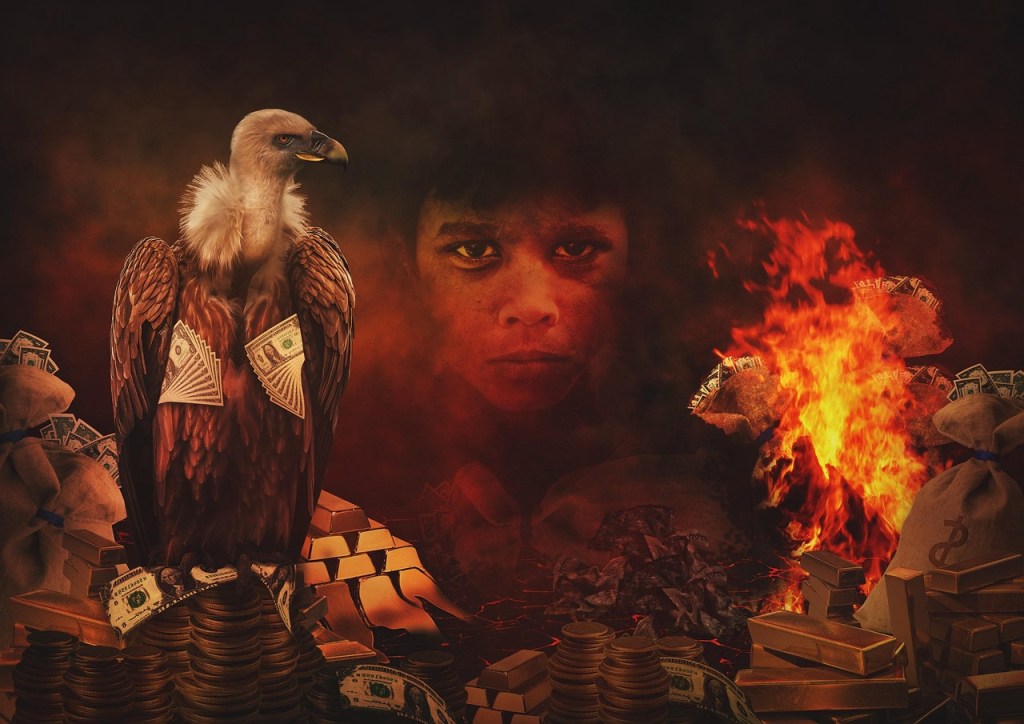
Unpretty people, heartless and cold, Their greed for profit, a story oft told. No sympathy flows for the downtrodden’s plight, Their eyes see only gold, no wrong or right.
Dollar signs gleam where their hearts should be, Their profit motive blinds morality. They’ve sold their souls for a sixpence’s gain, A bargain with darkness, a life of disdain.
Once in the temple, tables were turned, By He who saw greed and with anger burned. “A den of robbers!” His voice did declare, For prayer and peace, no room was there.
“A camel through a needle’s eye,” He said, “Is simpler than riches leading souls to dread. For wealth may chain what the spirit should free, And bar the way to eternity.”
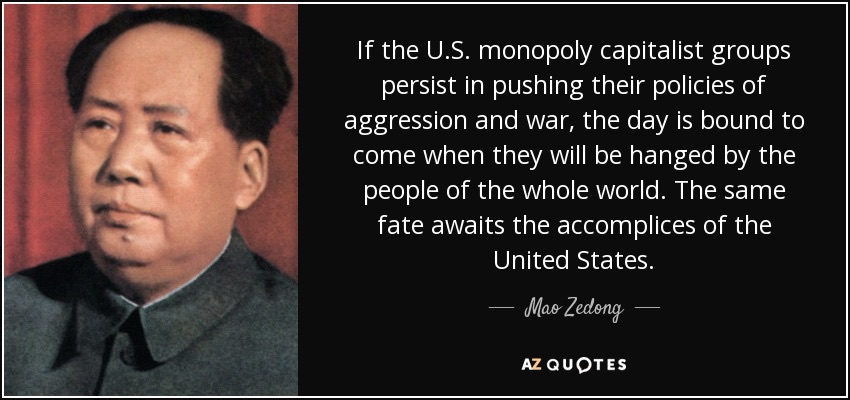
If there’s a God, justice will reign, And the money changers will meet their pain. Yet fear remains, will justice be served? Or will greed’s legacy go undisturbed?
Unpretty souls, with hearts of stone, May they find grace before the throne. For wealth is fleeting, but love endures, And only kindness truly cures.
Love yourself, believe in yourself. Fuck the rigged system.
Capitalism’s narrative, that you ain’t winning unless you’re near the top of monetary accumulation number game is horseshit. You’re worth is not measured by your bank balance.



 Ms. Cat’s Chronicles
You must be logged in to post a comment.