
CIA Arms Iran’s Kurds For Regime Change — Why Is The Opposition Against Them? +

The CIA is working to arm Kurdish forces inside Iran. President Trump called Kurdish leaders personally over the weekend — and on Tuesday spoke directly with Mustafa Hijri, president of the Democratic Party of Iranian Kurdistan, whose camps the IRGC had just struck with drones. Benjamin Netanyahu arrived at the White House with Kurdish uprising numbers already mapped. Weapons have reportedly been smuggled into western Iran since last year’s twelve-day war. Israeli strikes are targeting Iranian military outposts along the Iraq border to clear a path for ground operations.

CIA Arms Iran’s Kurds For Regime Change — Why Is The Opposition Against Them? (archived)

Related:

Exclusive—Türkiye wary US attack may turn Iran into breeding ground for PJAK: Sources

Report: Kurdish Fighters Have Been Entering Iran From Iraq and Clashing With the IRGC

[06-15-2025] Iran’s Dissident Kurds Seek US Help to Pave Way for Government’s ‘Collapse

Greater Kurdistan: A Work in Progress Brought to You by NATO, President Peace Prize and… Israel

The SDF equals the YPG/PKK/Kurds: A timeline of the PKK’s war on Türkiye
MEK/MKO/NCRI/PMOI

Hot spots where war may break out or escalate in 2025: Balochistan

source

Hot spots where war may break out or escalate in 2025

Balochistan – Iran and Pakistan

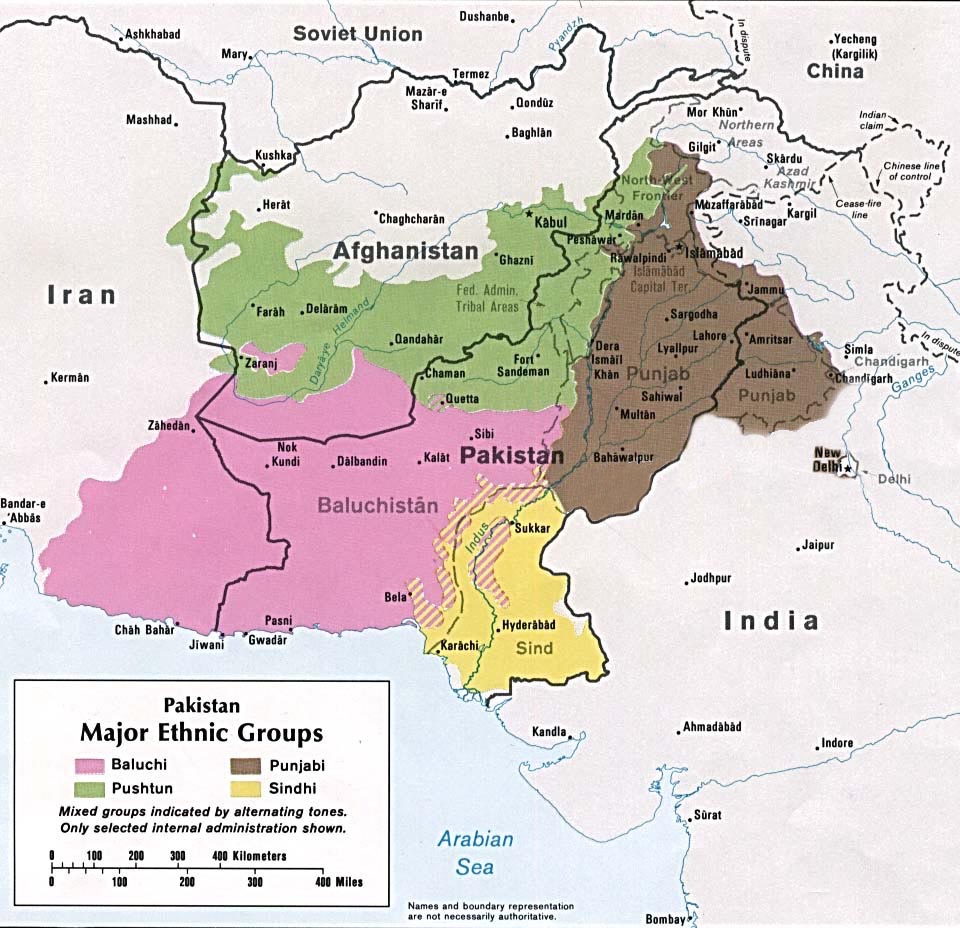
Balochistan is a little-known region spanning eastern Iran, western Pakistan, and southern Afghanistan. It is inhabited by the Baloch people, a unique nomadic ethno-linguistic group. Iran and Pakistan have struggled with insurgencies from the group for decades, embittered over a sense of disenfranchisement.

Read More »

Philippines sides with Vietnam in South China Sea dispute, hoping it will ‘return the favour’

Analysts believe that while Vietnam appreciates the gesture, it is unlikely to influence Hanoi’s strategy in the disputed waters.

Philippines sides with Vietnam in South China Sea dispute, hoping it will ‘return the favour’

Related:

BowerGroupAsia: Dr. Prashanth Parameswaran

Prashanth is concurrently a fellow at the Wilson Center, a senior columnist at The Diplomat magazine and an instructor for institutions including the U.S. State Department. He is the founder of the twice-weekly ASEAN Wonk newsletter, which offers research insights and analysis on the geopolitics and geoeconomics of Southeast Asia and the Indo-Pacific region. 

Stratbase ADR Institute Non-Resident Fellow: Dr. Prashanth Parameswaran

Dr. Parameswaran has held various roles across think tanks, governments, media and companies, including the Center for Strategic and International Studies, Singapore’s Ministry of Trade and Industry and the Associated Press. In those capacities, he worked on various issues including geopolitical and geoeconomic statecraft, Southeast Asia foreign and security policy, regional institutions, major power engagement in the Indo-Pacific as well as alliances and partnerships.   

Dr. Parameswaran holds a Ph.D. and MA focused on international business, international relations, Asian affairs, and U.S. foreign policy from the Fletcher School of Law and Diplomacy at Tufts University. He earned a BA from the University of Virginia, where he studied foreign affairs and peace and conflict studies with a focus on Asia. He regularly advises groups and individuals seeking to advance conversations on Indo-Pacific affairs and serves on the board of several institutions.  

Global Times: China and Vietnam capable to handle law enforcement conflict in S.China Sea properly; Philippines’ intention to stigmatize China ‘won’t work’

SeaLight document

World Spending On Nukes Explodes To More Than $90 Billion

World Spending On Nukes Explodes To More Than $90 Billion

Honeywell International, Northrop Grumman, BAE Systems, Lockheed Martin, and General Dynamics topped the list of companies profiting from nuclear weapons expenditures.

That flood of public funds to private contractors was coupled by significant spending by these companies on efforts to shape the debate around government spending. The companies spent $118 million lobbying governments in the U.S. and France in 2023 and donated more than $6 million to think tanks researching and writing about nuclear weapons.

Lockheed Martin contributed to the most think tanks, including: Atlantic Council, Brookings Institution, Chatham House, Center for a New American Security, Center for Strategic and International Studies, Hudson Institute, and Observer Research Foundation.

Indonesia’s feared ex-general Prabowo claims victory in presidential election + Notes

Indonesia’s feared ex-general Prabowo claims victory in presidential election

But the likely victory of Prabowo — an ex-general who was kicked out from the army and subjected to a two-decade ban from the U.S. over human rights violations — raises fears of the world’s third-largest democracy sliding backward into authoritarian rule.

Related:

3 things you should know about Indonesia’s presidential elections

Continuity and its risks


Prabowo is expected to largely continue the policies of President Widodo, or “Jokowi,” as Indonesians call him. President Widodo is not up for reelection as he’s serving his final term.

Through his two five-year terms, Indonesia’s economy — Southeast Asia’s largest — has grown at about 5% a year. His infrastructure building, cash and food assistance to the poor and health and education policies have been popular.

Indonesia is the world’s largest producer of nickel, used in making electric vehicle batteries, and Jokowi has barred the export of raw nickel, to help Indonesia move up the value chain from mining to manufacturing.

Prabowo is Suharto’s son-in-law. He received training in the 1980s from the U.S. military at Fort Benning, Ga. (now Fort Moore) and Fort Bragg, N.C. (now Fort Liberty).

Indonesia’s presidential election emerges as key battleground in US-China rivalry

Read More »

Politicians and commentators are blocked online in Brazil after censorship order targets Bolsonaro support

The censorship power lies with a single judge, Alexandre de Moraes.

Politicians and commentators are blocked online in Brazil after censorship order targets Bolsonaro support

Related:

Tech companies under fire after Brazilian riots repeat Jan. 6 pattern

[SumOfUs] Researchers analyzed five livestream broadcasts from far-right YouTubers taking part in the riots and mapped how the content was posted across other platforms, mainly Facebook.

How Meta and Google enabled and profited from the terrorist attacks in Brazil’s capital (PDF)

Stop the Steal 2.0: How Meta and TikTok Are Promoting a Coup (PDF)