
Rubio’s Promise to “Unleash Chiang” Won’t Land Well in China
Read More »Tag: Chiang Kai-shek
Anna Louise Strong: Stalin

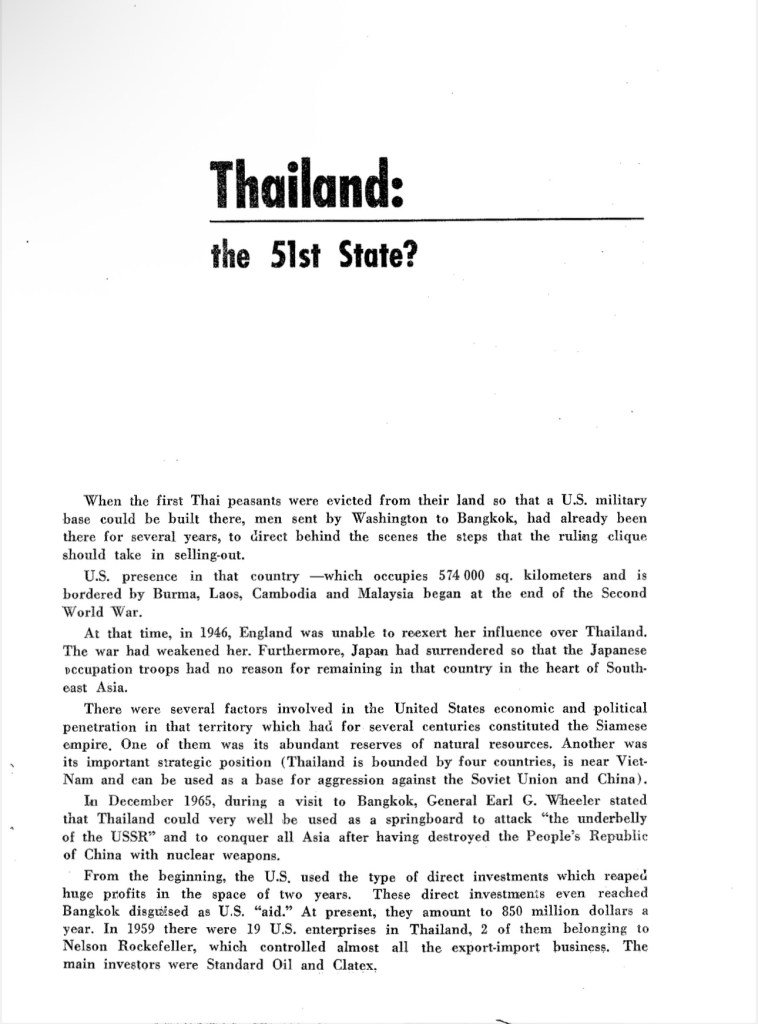
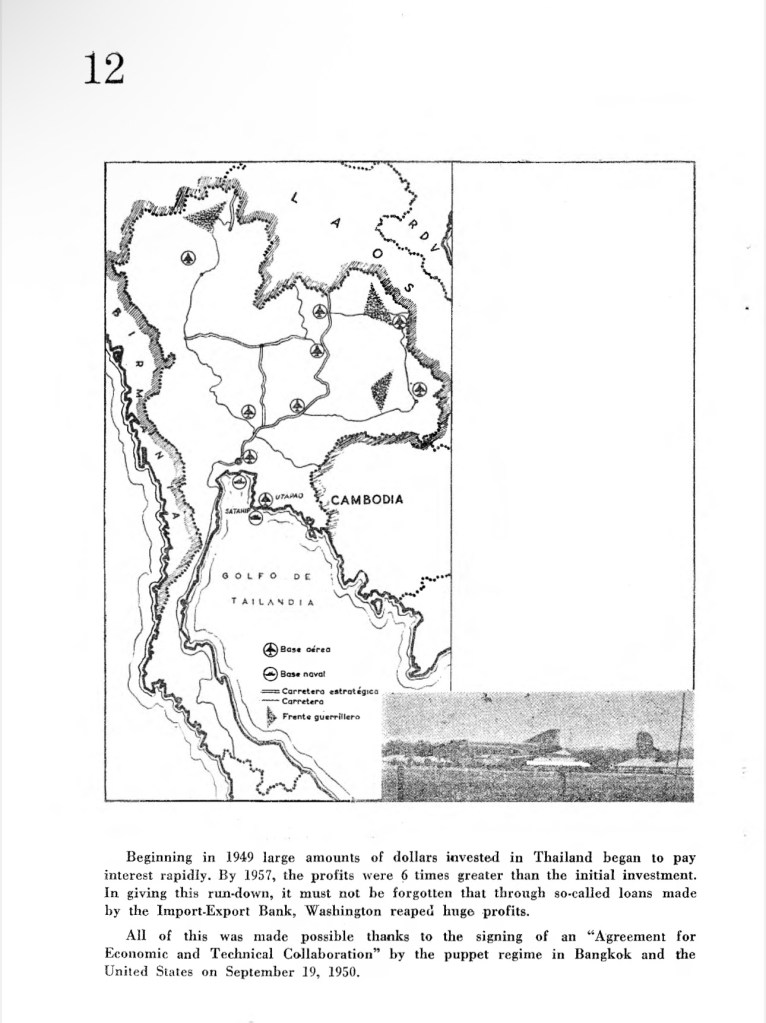
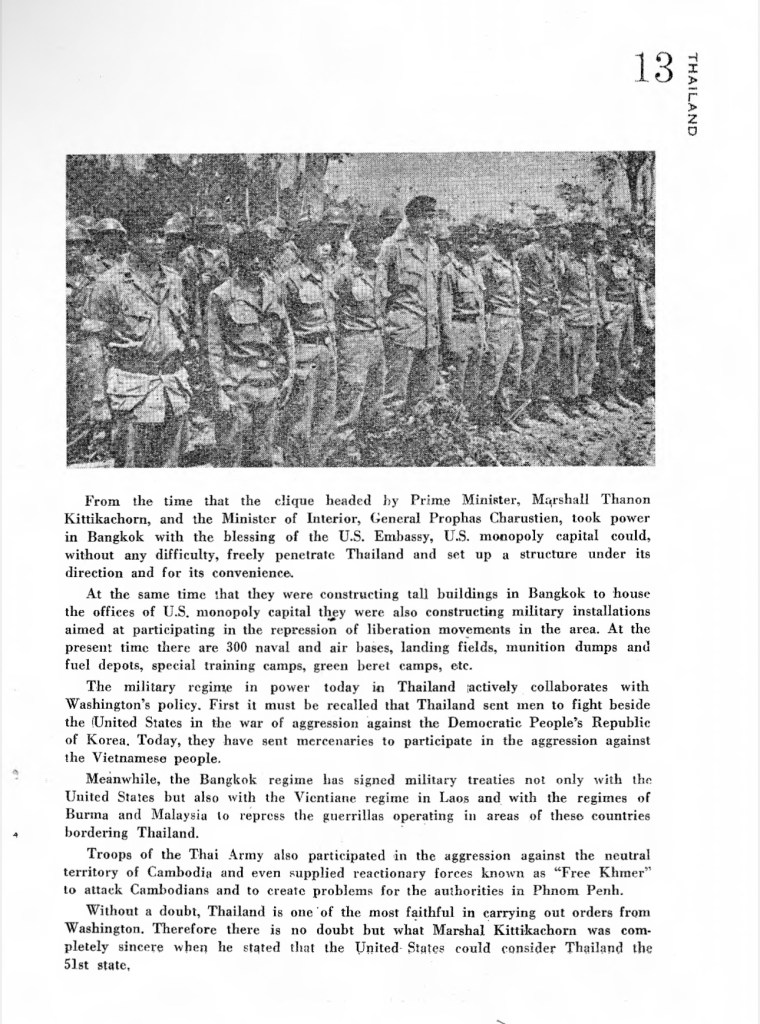
Operation Paper: The United States and Drugs in Thailand and Burma
Mao- Don’t Hit Out In All Directions
DeepSeek: Fact-checking Pro-Gun Activists Lie About Chinese Gun Ownership
Pro-Gun Activists Lie About Chinese Gun Ownership
Read More »Now while investigating Chinese gun laws I came across this paper written by Huan Zhu at the University of Kansas. This is what she had dug up form her research:
“After the establishment of the People’s Republic of China, there have been three special laws or regulations issued on control of firearms, which are Temporary Measures of Control of Firearms (1952), Measures of the People’s Republic of China for the Control of Firearms (1981), and Law of the People’s Republic of China on Gun Control (1996) (hereinafter referred to as Law on Gun Control).”
Mao – On the Question of the National Bourgeoisie and the Enlightened Gentry
A reading from Mao Zedong on his birthday: “U.S. Imperialism is a Paper Tiger”
Mao – Be Concerned with the Well-Being of the Masses, Pay Attention to Methods of Work
Interview with Three Correspondents from the Central News Agency, the Sao Tang Pao and the Hsin Min Pao
In the second group on your list, you raise the question of “restricting alien parties”, that is, the question of the friction in various localities. Your concern over this matter is justified. There has been some improvement recently, but fundamentally the situation remains unchanged.
Question: Has the Communist Party made its position on this question clear to the Central Government?
Answer: We have protested.
Question: In what way?
Answer: Our Party representative, Comrade Chou En-lai, wrote a letter to Generalissimo Chiang Kai-shek as early as July. Then again on August 1, people from all walks of life in Yenan sent a telegram to the Generalissimo and the National Government, demanding the withdrawal of the “Measures for Restricting the Activities of Alien Parties”, which had been secretly circulated and which are at the very root of the “friction” in various places.
Question: Has there been any reply from the Central Government?
Answer: No. But it is said that there are also people in the Kuomintang who disapprove of these measures. As everybody knows, an army that participates in the common fight against Japan is a friendly army, not an “alien army”, and similarly, a political party that participates in the common fight against Japan is a friendly party, not an “alien party”. There are many parties and groups taking part in the War of Resistance and, while they vary in strength, they are fighting in the same cause; surely they must all unite and must in no circumstances “restrict” one another. Which party is an alien party? The party of the traitors headed by Wang Ching-wei, the running dog of Japan, because it has nothing in common politically with the anti-Japanese parties; that is the kind of party which should be restricted. Between the Kuomintang and the Communist Party there is common political ground, namely, resistance to Japanese aggression. Therefore, the problem is to concentrate all our strength on opposing and checking Japan and Wang Ching-wei, and not on opposing and checking the Communist Party. This is the only basis for formulating correct slogans. Wang Ching-wei has three slogans: “Oppose Chiang Kai-shek,” “Oppose the Communist Party”, and “Be friends with Japan”. Wang Ching-wei is the common enemy of the Kuomintang, the Communist Party and the entire people. But the Communist Party is not the enemy of the Kuomintang, nor is the Kuomintang the enemy of the Communist Party; they should unite and help each other rather than oppose or “restrict” each other. The slogans on our side must be different from Wang Ching-wei’s, they must be the opposite of his and never be confused with them. If he says, “Oppose Chiang Kai-shek”, everyone should support Chiang Kai-shek; if he says, “Oppose the Communist Party”, everyone should unite with the Communist Party; and if he says, “Be friends with Japan”, everyone should resist Japan. We should support whatever the enemy opposes and oppose whatever the enemy supports. In articles nowadays people often quote the saying, “Do not sadden your friends and gladden your enemies.” It comes from a letter which Chu Fou, a general under Liu Hsiu of the Eastern Han Dynasty, wrote to Peng Chung, the prefect of Yuyang. In context it reads, “Whatever you do, you must be sure that you do not sadden your friends and gladden your enemies.” Chu Pou’s words express a clear-cut political principle which we must never forget.
Related:
The Atlantic publishes hit job against PM Modi: Here’s how the propaganda piece cherry-picks facts to attack Indian PM while romanticising Khalistan terrorists
The hit job titled “How a Strongman Made Himself Look Weak” claims that PM Modi responds to criticism within India by ‘co-opting’ the media and ‘repressing’ the religious minorities [read Muslims]. And, on foreign soil, the Modi government responds to criticism with anger and laughably, even ‘political assassinations’.
Related:
Daniel Block (Asia Foundation—CIA, Henry Luce Scholar— partners with the Asia Foundation, The Caravan)
Read More » Ms. Cat’s Chronicles
You must be logged in to post a comment.