
I love reading Pamphlets’ Twitter timeline for the laughs, but I love proving him wrong even more. Don’t slander Daddy Stalin! 🤭
I love reading Pamphlets’ Twitter timeline for the laughs, but I love proving him wrong even more. Don’t slander Daddy Stalin! 🤭
Mao’s Legacy and Accomplishments
“Mao Tse‐tung, who began as an obscure peasant, died one of history’s great revolutionary figures. In Chinese terms, he ranked with the first Emperor who unified China in 200 B.C.
A Chinese patriot, a combative revolutionary, a fervent evangelist, a Marxist theorist, a soldier, a statesman and poet, above all Mao was a moralist who deeply believed, as have Chinese since Confucius, that man’s goodness must come ahead of his mere economic progress.
China achieved enormous economic progress under Mao. He transformed China into a modern, industrialized socialist state.”
Unlike many great leaders, Mao never exercised, or sought, absolute control over day‐to‐day affairs.”
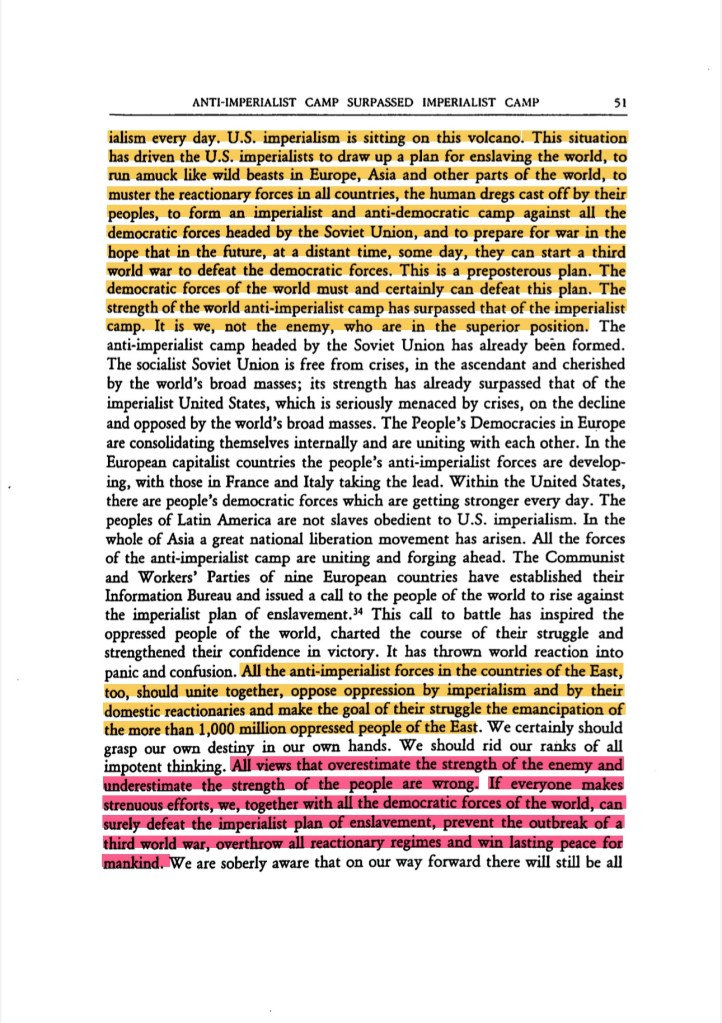
TO BE ATTACKED BY THE ENEMY IS NOT A BAD THING BUT A GOOD THING
“It is good if we are attacked by the enemy, since it proves that we have drawn a clear line of demarcation between the enemy and ourselves. It is still better if the enemy attacks us wildly and paints us as utterly black and without a single virtue. It demonstrates that we have not only drawn a clear line of demarcation between the enemy and ourselves but achieved a great deal in our work.”
Related:

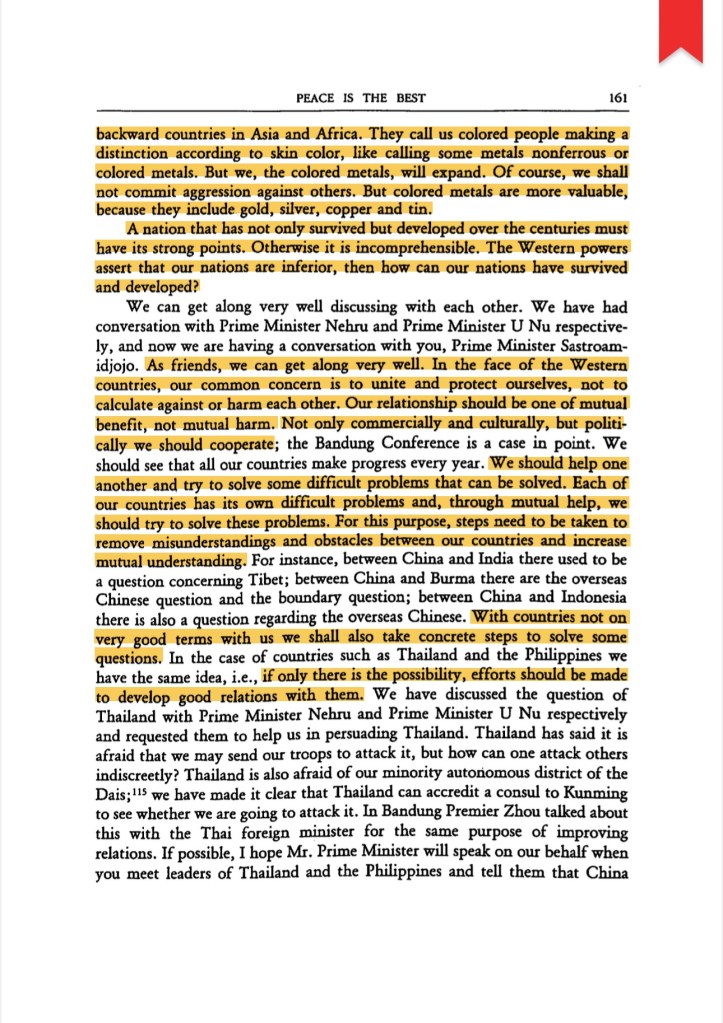
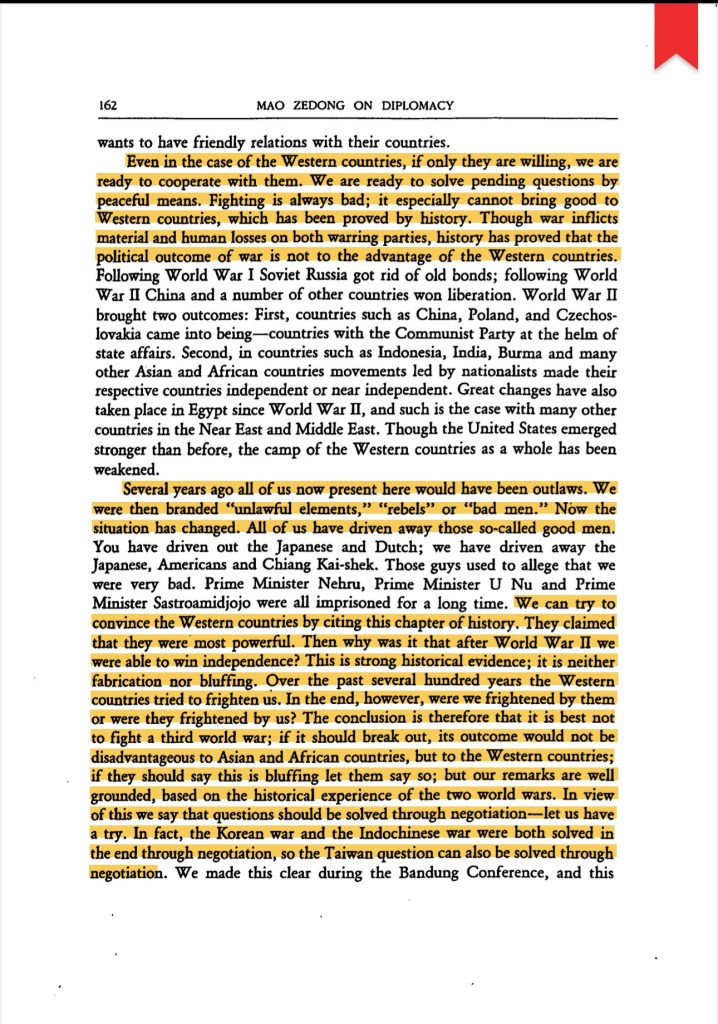

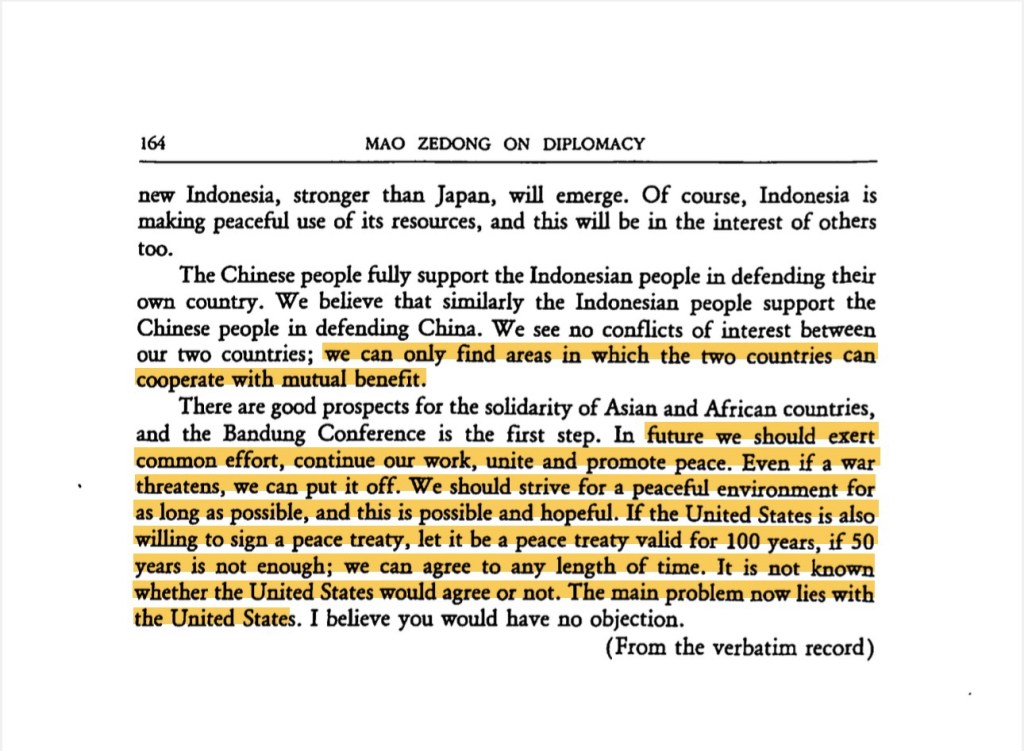
I’m alternating between reading ‘On Diplomacy’ and listening to ‘The Strategy of Denial’ on Audible.

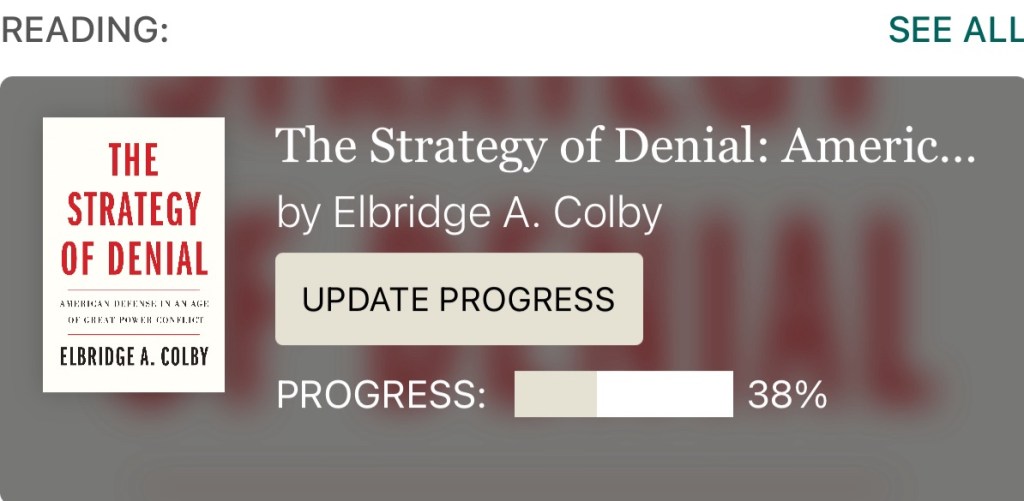
If war breaks out in Asia, the U.S. won’t send ground troops. Take note, Philippines!
MacArthur’s Last Stand Against a Winless War
Never get involved in a land war in Asia, MacArthur had told Kennedy, because if you do, you will be repeating the same mistake the Japanese made in World War II—deploying millions of soldiers in a futile attempt to win a conflict that cannot be won.
…
Kennedy appreciated MacArthur’s soothing judgment on Cuba (and would soon change the military’s top leadership—perhaps in keeping with MacArthur’s views), but then shifted the subject to Laos and Vietnam, where communist insurgencies were gaining strength. The Congress, he added, was pressuring him to deploy U.S. troops in response. MacArthur disagreed vehemently: “Anyone wanting to commit ground troops to Asia should have his head examined,” he said. That same day, Kennedy memorialized what MacArthur told him: “MacArthur believes it would be a mistake to fight in Laos,” he wrote in a memorandum of the meeting, adding, “He thinks our line should be Japan, Formosa, and the Philippines.” MacArthur’s warning about fighting in Asia impressed Kennedy, who repeated it in the months ahead and especially whenever military leaders urged him to take action. “Well now,” the young president would say in his lilting New England twang, “you gentlemen, you go back and convince General MacArthur, then I’ll be convinced.” So it is that MacArthur’s warning (which has come down to us as “never get involved in a land war in Asia”), entered American lore as a kind of Nicene Creed of military wisdom—unquestioned, repeated, fundamental.
The United States has announced it will upgrade U.S. Forces Japan (USFJ) to a joint force headquarters (JFHQ) with expanded operational responsibilities. The new command will report to the US Indo-Pacific Command (USINDOPACOM). The revamped structure will assume the control of about 55,000 personnel stationed in Japan from the U.S. Indo-Pacific Command some 6,200 kilometers away in Honolulu, Hawaii. The move is intended to streamline communications between the US and Japan, especially during a crisis involving China.
Japan-U.S. joint statement on war preparations forecasts doom
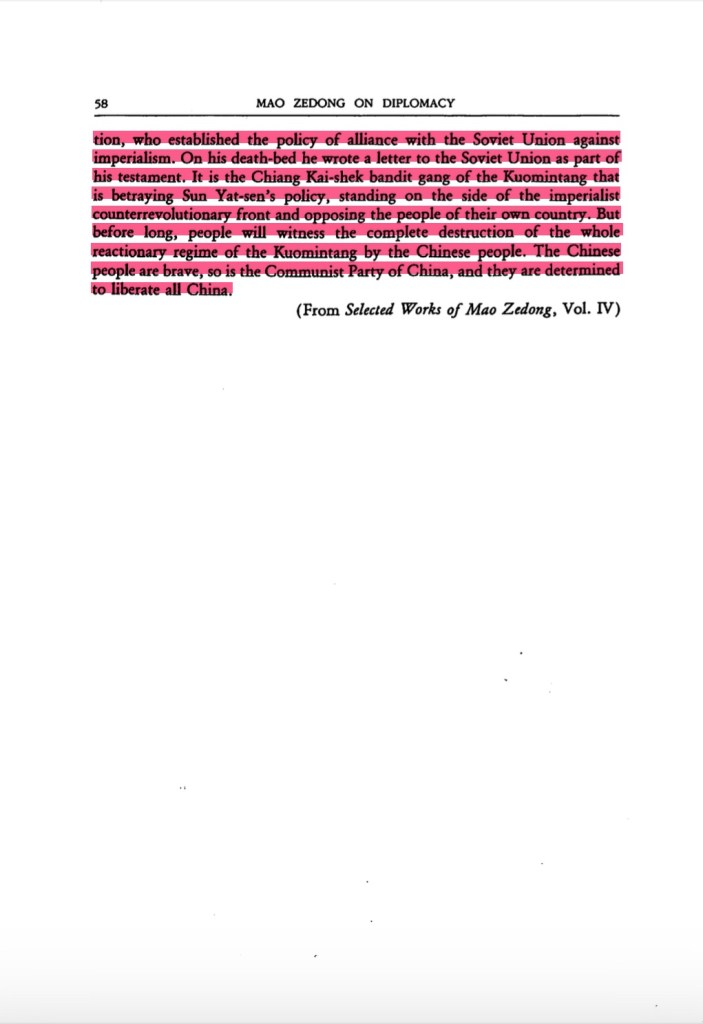
ON THE PEOPLE’S DEMOCRATIC DICTATORSHIP
In 1924 a famous manifesto was adopted at the Kuomintang’s First National Congress, which Sun Yat-sen himself led and in which Communists participated. The manifesto stated:
The so-called democratic system in modern states is usually monopolized by the bourgeoisie and has become simply an instrument for oppressing the common people. On the other hand, the Kuomintang’s Principle of Democracy means a democratic system shared by all the common people and not privately owned by the few.

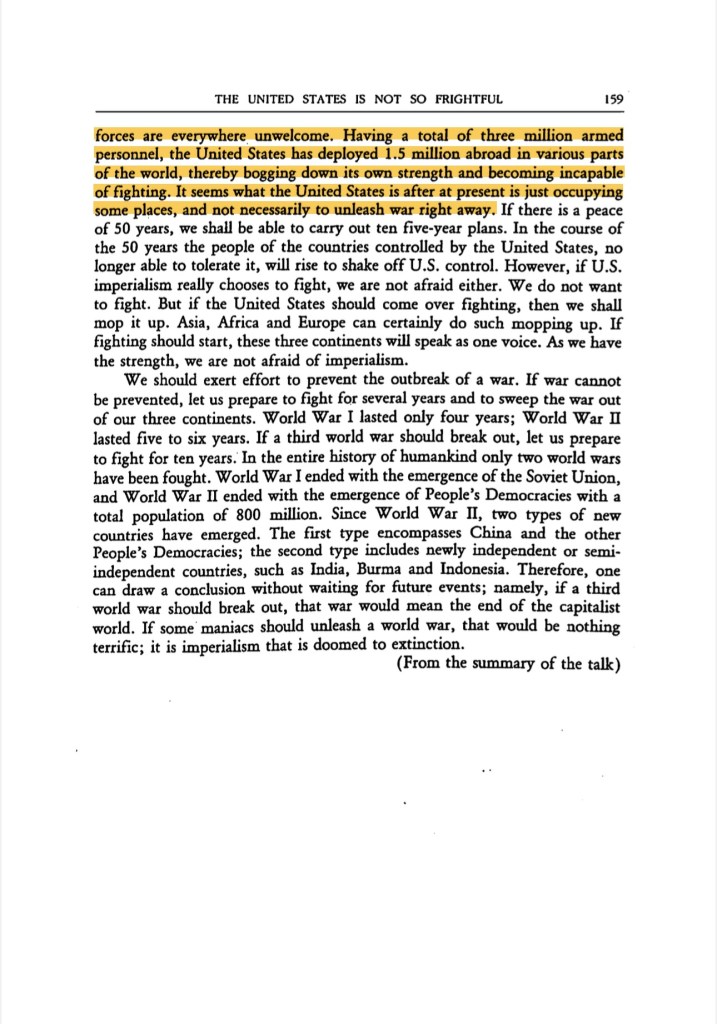
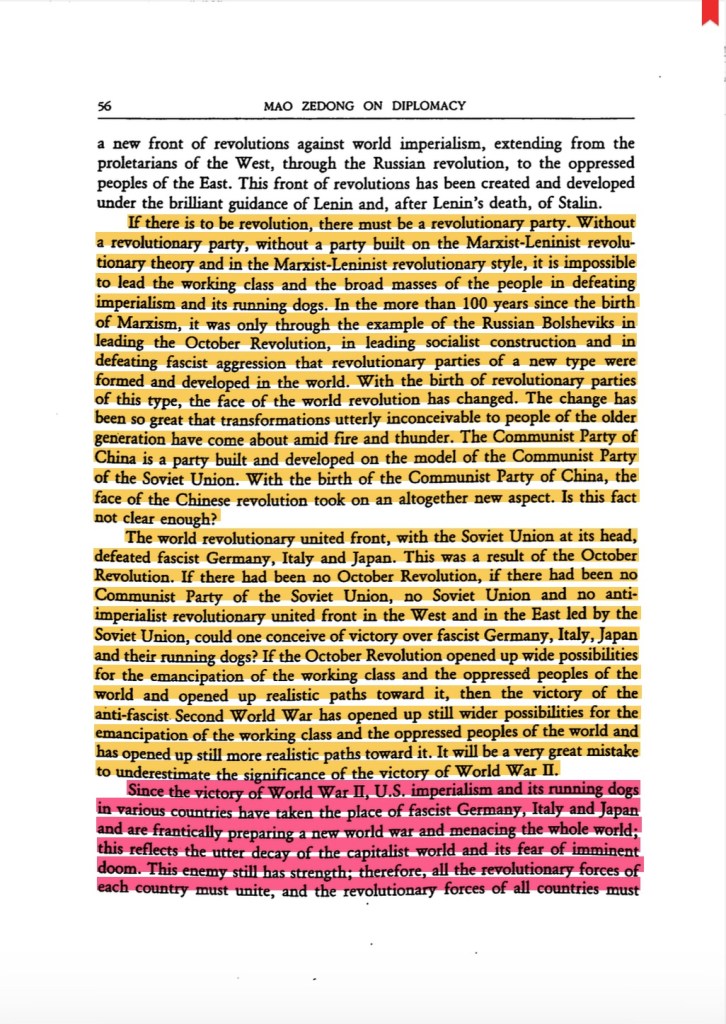
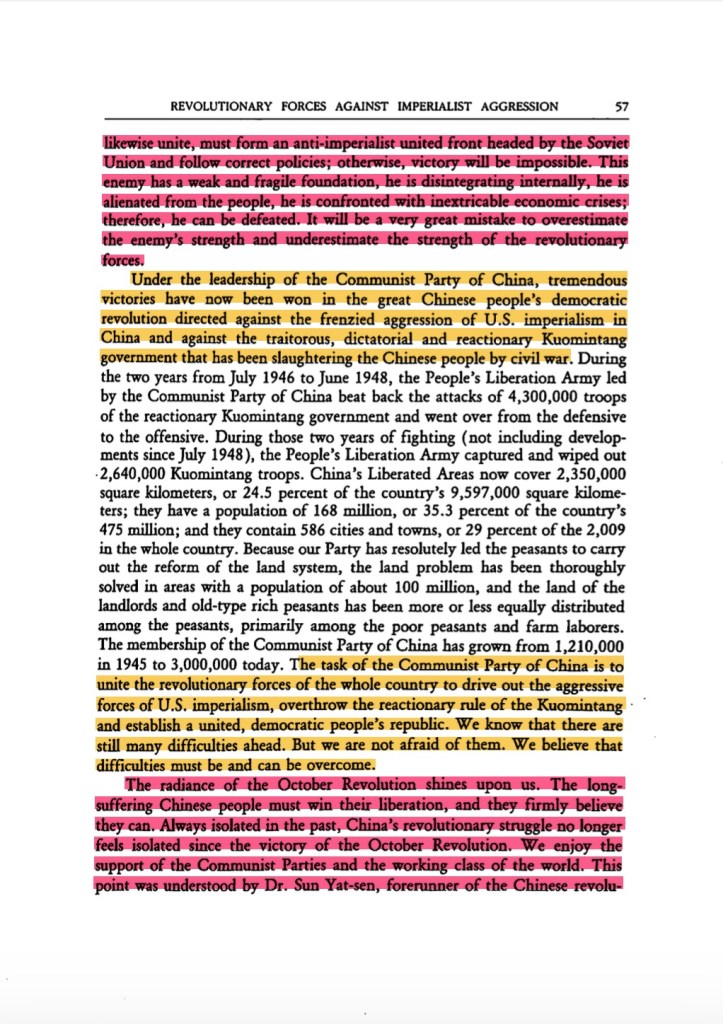

 Ms. Cat’s Chronicles
You must be logged in to post a comment.