Communism vs. Feminism

Porn, Feminism & the Meese Report

Feminist theory is not just flawed thinking; it is the product of a middle-class view of the world. In the prosperity of the 1960s, radical feminism was marked by its extreme utopian nature. Demands like “smash sexism” and “abolish the family” abounded—with absolutely no program that could win them. Since feminists rejected Marxism and with it the one class that actually has the power to revolutionize society, their utopian maximalist rhetoric dissolved inevitably into the most pragmatic minimalism. In fact, because the reformist strategies of the ’60s—above all the overwhelming support of feminists for the Democratic Party—failed to bear ample fruit, a fertile ground for cynicism was laid. The root of the current feminist support for the thoroughly capitulatory Dworkin is the cynicism born of defeat.

Read More »

The Three Sources and Three Component Parts of Marxism

The Three Sources and Three Component Parts of Marxism

People always have been the foolish victims of deception and self-deception in politics, and they always will be until they have learnt to seek out the interests of some class or other behind all moral, religious, political and social phrases, declarations and promises. Champions of reforms and improvements will always be fooled by the defenders of the old order until they realise that every old institution, how ever barbarous and rotten it may appear to be, is kept going by the forces of certain ruling classes. And there is only one way of smashing the resistance of those classes, and that is to find, in the very society which surrounds us, the forces which can—and, owing to their social position, must—constitute the power capable of sweeping away the old and creating the new, and to enlighten and organise those forces for the struggle.

Vladimir Lenin: Socialism and Religion

Vladimir Lenin: Socialism and Religion

The economic oppression of the workers inevitably calls forth and engenders every kind of political oppression and social humiliation, the coarsening and darkening of the spiritual and moral life of the masses. The workers may secure a greater or lesser degree of political liberty to fight for their economic emancipation, but no amount of liberty will rid them of poverty, unemployment, and oppression until the power of capital is overthrown. Religion is one of the forms of spiritual oppression which everywhere weighs down heavily upon the masses of the people, over burdened by their perpetual work for others, by want and isolation. Impotence of the exploited classes in their struggle against the exploiters just as inevitably gives rise to the belief in a better life after death as impotence of the savage in his battle with nature gives rise to belief in gods, devils, miracles, and the like. Those who toil and live in want all their lives are taught by religion to be submissive and patient while here on earth, and to take comfort in the hope of a heavenly reward. But those who live by the labour of others are taught by religion to practise charity while on earth, thus offering them a very cheap way of justifying their entire existence as exploiters and selling them at a moderate price tickets to well-being in heaven. Religion is opium for the people. Religion is a sort of spiritual booze, in which the slaves of capital drown their human image, their demand for a life more or less worthy of man.

The Military Programme of the Proletarian Revolution: II

To this must be added the following general consideration.

An oppressed class which does not strive to learn to use arms, to acquire arms, only deserves to be treated like slaves. We cannot, unless we have become bourgeois pacifists or opportunists, forget that we are living in a class society from which there is no way out, nor can there be, save through the class struggle. In every class society, whether based on slavery, serfdom, or, as at present, wage-labor, the oppressor class is always armed. Not only the modern standing army, but even the modern militia—and even in the most democratic bourgeois republics, Switzerland, for instance—represent the bourgeoisie armed against the proletariat. That is such an elementary truth that it is hardly necessary to dwell upon it. Suffice it to point to the use of troops against strikers in all capitalist countries.

The Military Programme of the Proletarian Revolution: II

The connection between the ACP and the Libertarian infiltrators

Circular of the CC of thc CPC on the Great Proletarian Cultural Revolution

I just wanted to move this from my YouTube supplement blog to this one. I was reminded of it when I saw the recent video of Hinkle in Russia again. His group, the American Communist Party, is working with the Communist Party of the Russian Federation to deliver humanitarian aid to the people of Donbass. I have more on this, but I don’t know when I will have time to work on it, again.


YouTube (Revolution Report/Donald Courter)

Read More »

The socialist attitude to the tragedy of Luigi Mangione

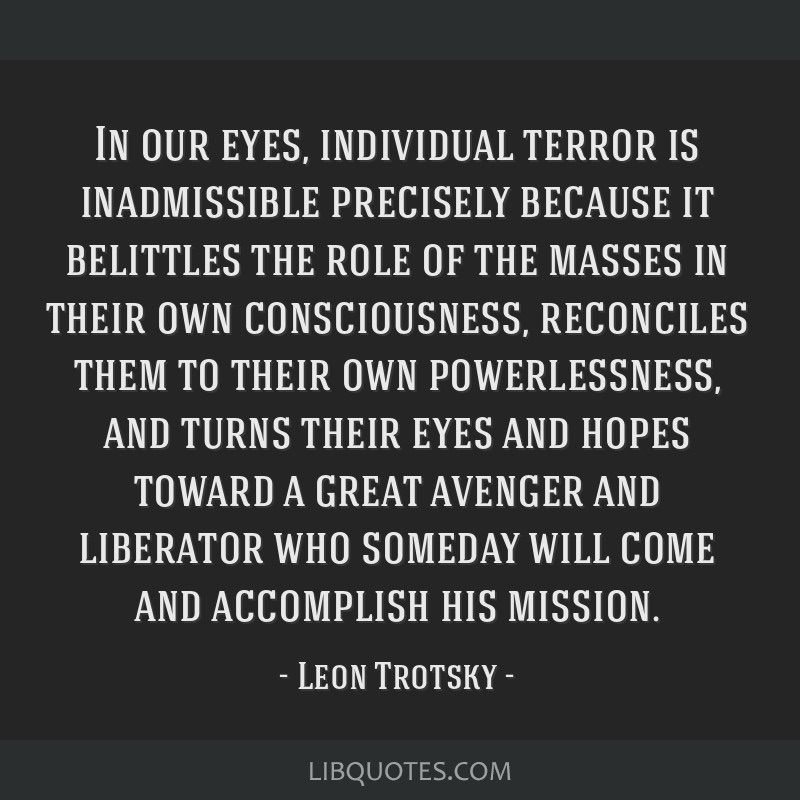
Why Marxists Oppose Individual Terrorism

The case of Luigi Mangione, the 26-year old who allegedly assassinated UnitedHealthcare CEO Brian Thompson in the streets of Manhattan, has become a major public issue in the United States. While many details remain to be explained, the response from different layers of society raises fundamental class questions.

The socialist attitude to the tragedy of Luigi Mangione

Frederick Engels: On Anti-Semitism

Twitter

Frederick Engels: On Anti-Semitism

…But whether you might not be doing more harm than good with your anti-Semitism is something I would ask you to consider. For anti-Semitism betokens a retarded culture, which is why it is found only in Prussia and Austria, and in Russia too. Anyone dabbling in anti-Semitism, either in England or in America, would simply be ridiculed, while in Paris the only impression created by M. Drumont’s writings – wittier by far than those of the German anti-Semites – was that of a somewhat ineffectual flash in the pan.

Read More »