
Laura Dogu and Washington’s Regime-Change Playbook: Nicaragua, Honduras, Venezuela + More

Laura Dogu and Washington’s Regime-Change Playbook: Nicaragua, Honduras, Venezuela

Laura Dogu’s appointment ultimately signals not innovation but continuity: a recalibration of tactics in pursuit of the same objective that has defined US policy toward the Bolivarian Revolution for decades – regime change through pressure, attrition, and delegitimization. Whether branded as “stabilization,” “economic recovery,” or “transition,” the underlying premise remains that Venezuela’s political future should be shaped in Washington, not Caracas.

Yet the record in Nicaragua, Honduras, and Venezuela itself suggests that external coercion has limits. Dogu’s mission will test not only Venezuela’s resilience but also the durability of the unremitting US strategy of Latin American interventions.

Previously:

Read More »
Trump’s Prescription for Poverty: Forced Psychiatry and the Criminalization of Homelessness

Trump order pushes forcible hospitalization of homeless people

Related:

Trump Pushes Policies That ‘Treat Homelessness and Mental Illness as a Crime’

New Research Shows Risks of Coercive Psychiatric Treatment

A new study from the Federal Reserve Bank of New York is raising difficult but necessary questions about a practice that affects hundreds of thousands of lives each year: involuntary psychiatric hospitalization.

This equates to a 79% increase in risk of being charged with a violent crime, and almost a doubled risk of dying by suicide or overdose, in the three months following evaluation for hospitalization.

The researchers also found hospitalization often caused destabilization. It led to declines in employment and earnings, and increased use of homeless shelters. It did not lead to better outpatient care or more consistent medication use.

Network States: The New Frontier of Soft Power and Corporate Feudalism

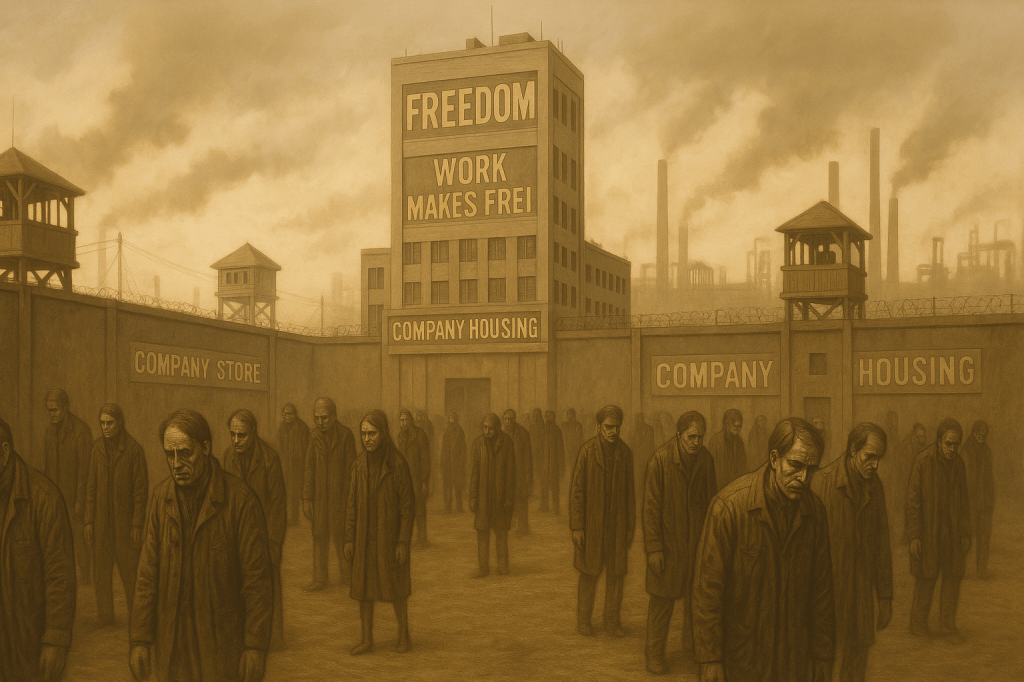
They sell the dream of autonomy—self-governing, tech-powered havens untethered from old institutions. But look closer, and you’ll see that Network States aren’t a rebellion against centralized power. They’re a rebrand, a more sophisticated, digitally optimized iteration of company towns, where the people inside serve the system without ever realizing they were locked in from the start.

Read More »