The marriage of RAND and SeaLight

A Caricature of Marxism and Imperialist Economism: Monism And Dualism

Slowly, but surely, I’m going through both of the following RAND publications. I just recently noticed that “Understanding and Countering China’s Maritime Gray Zone Operations” was posted over at SeaLight on the 12th of December. Ray Powell, from SeaLight, is quoted at least 14 times in the first publication. So far, I’ve seen RAND “recommend” the same tactics as they’ve deployed in the Philippines; civilian society organizations, embedded journalism, information warfare, influencers, and online trolls.
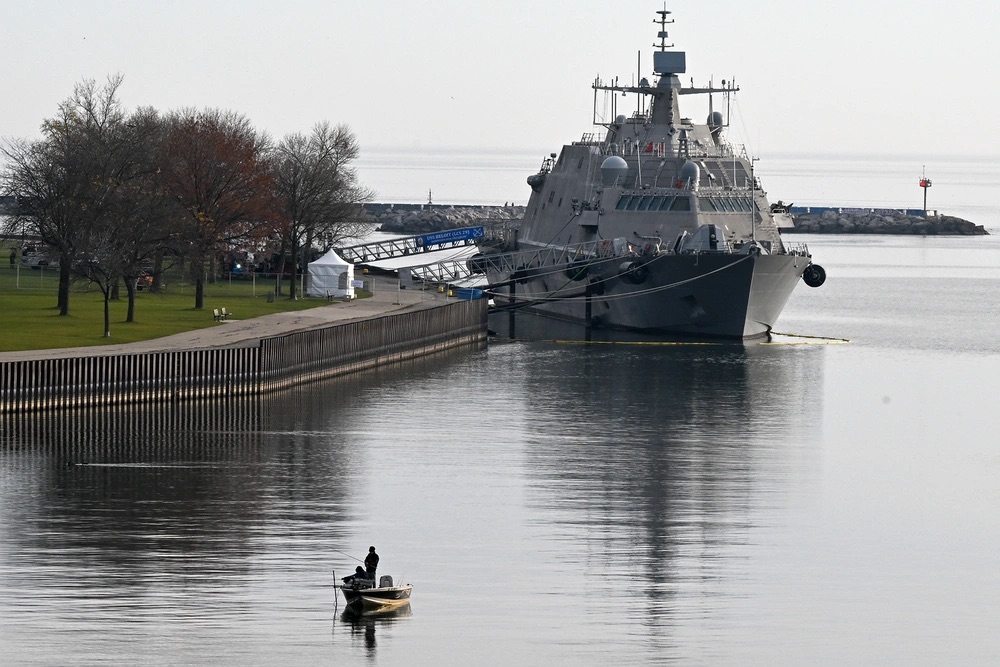
USS Beloit (LCS-29). Photo by EJ Hersom.

I’ve always known that they would try to expand their information operation to the other countries that are in ASEAN, just by following the SeaLight podcast. If not their information operation, regime change and terrorism (in Balochistan and Myanmar). I’ve also noticed that Powell has been referring to the Philippines’ “transparency initiative” as “non-violent resistance,” lately (RAND refers to it as “assertive transparency”). Ironic, considering that they’ve already succeeded in overthrowing the government of Bangladesh and are now attempting it in Cambodia, India and Pakistan. For those who don’t know about the regime change asset Gene Sharp and his neoliberal “nonviolence,” see the links on this page. Unfortunately, I don’t have as much time to dedicate to this right now due to other obligations.

Understanding and Countering China’s Maritime Gray Zone Operations | RAND

How the United States Can Support Allied and Partner Efforts to Counter China in the Gray Zone: Affirmative Engagement | RAND

RAND and SeaLight document (work in progress)

PART 2

Part 3a: RAND and SeaLight – Taiwan Relations Act

RAND and SeaLight Part 3b: Four Ways China Is Growing Its Media Influence in Southeast Asia

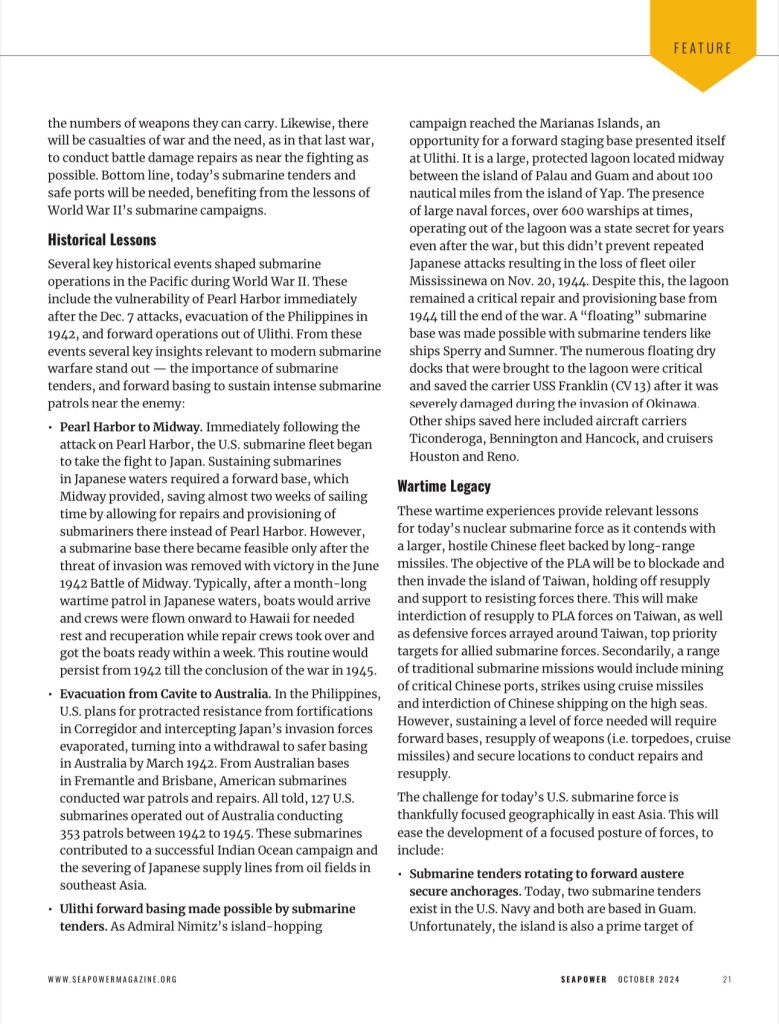
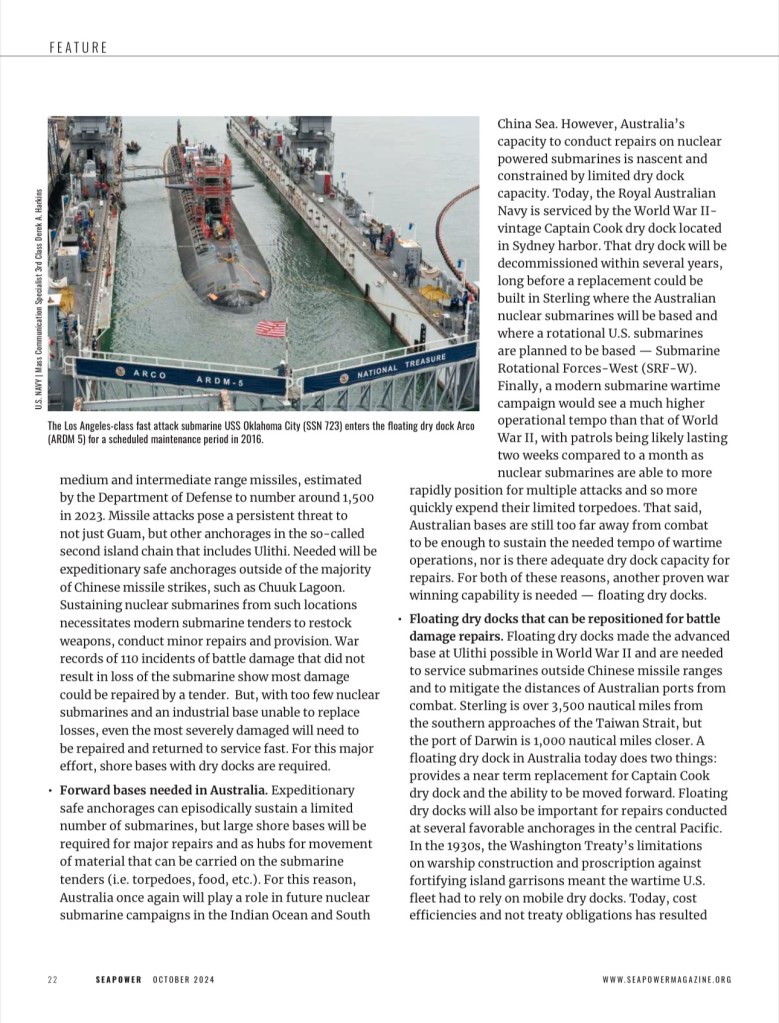
Looking Back, Looking Ahead: World War II Provides Lessons for Pacific Submarine Posture

Previously:

South China Sea: Maritime Counterinsurgency:

Brent Sadler is with the Heritage Foundation:

Its initial funding was provided by Joseph Coors, of the Coors beer empire, and Richard Mellon Scaife, heir of the Mellon industrial and banking fortune. Its founders include Paul Weyrich and Mickey Edwards. The Foundation maintains strong ties with the London Institute of Economic Affairs and the Mont Pelerin Society.SourceWatch

Richard Mellon Scaife (Mellon family), Committee on the Present Danger/MembersScaife Foundations (WikiSpooks), Atlas NetworkKock Network, State Policy Network, ALEC, Council for National Policy

South China Sea: Philippines’ anti-ship missile base puts Scarborough Shoal in cross hairs (more information)

What the article left out is; to shoot far, the Philippine military needs to see far. However, the Philippines don’t have any over-the-horizon (OTH) radar, military satellites, AWACS planes or other long-range ISR capabilities, to make use of the full range of the BrahMos missile. Without it the missile is limited to the range of its available ISR assets, which are measured in just dozens of kilometers.

However, if a BrahMos missile is ever launched against a long-range Chinese target, it will be easy to guess who would have supplied the essential Intelligence, Surveillance, and Reconnaissance (ISR) information and target identification to the Philippine military.

StarBoySAR

South China Sea: Philippines’ anti-ship missile base puts Scarborough Shoal in cross hairs

Even if the Philippines lacks the advanced communications, intelligence, and targeting systems needed to maximise the BrahMos’ capabilities, it could still leverage US support in these areas, Koh said, citing the sinking of Russia’s Moskva warship by Ukraine in 2022, which he said was achieved thanks to “targeting support provided by Kyiv’s allies, chiefly the Americans”.

The flagship of Russia’s Black Sea Fleet, the Moskva became the largest warship lost in combat since the second world war when it was hit by two Ukrainian Neptune anti-ship missiles in April 2022. US officials later told the media that the Pentagon had provided intelligence that led to the ship’s sinking.

For the Philippines, the BrahMos missiles are “significant game changers” [🙄], according to security strategist Chester Cabalza, president of the International Development and Security Cooperation think tank in Manila.

However, Don McLain Gill, an international-studies lecturer at De La Salle University in the Philippines, questioned whether the BrahMos purchase alone would deliver robust deterrence against China.

“It will be crucial for the BrahMos to be supplemented by efficient intelligence, surveillance, target-acquisition and reconnaissance, which is critical to track targets and ensure they can be used by command,” he said, warning Manila must invest further to maximise the missiles’ deterrent value.

Previously:

Philippines Builds First BrahMos Anti-Ship Missile Base Facing South China Sea