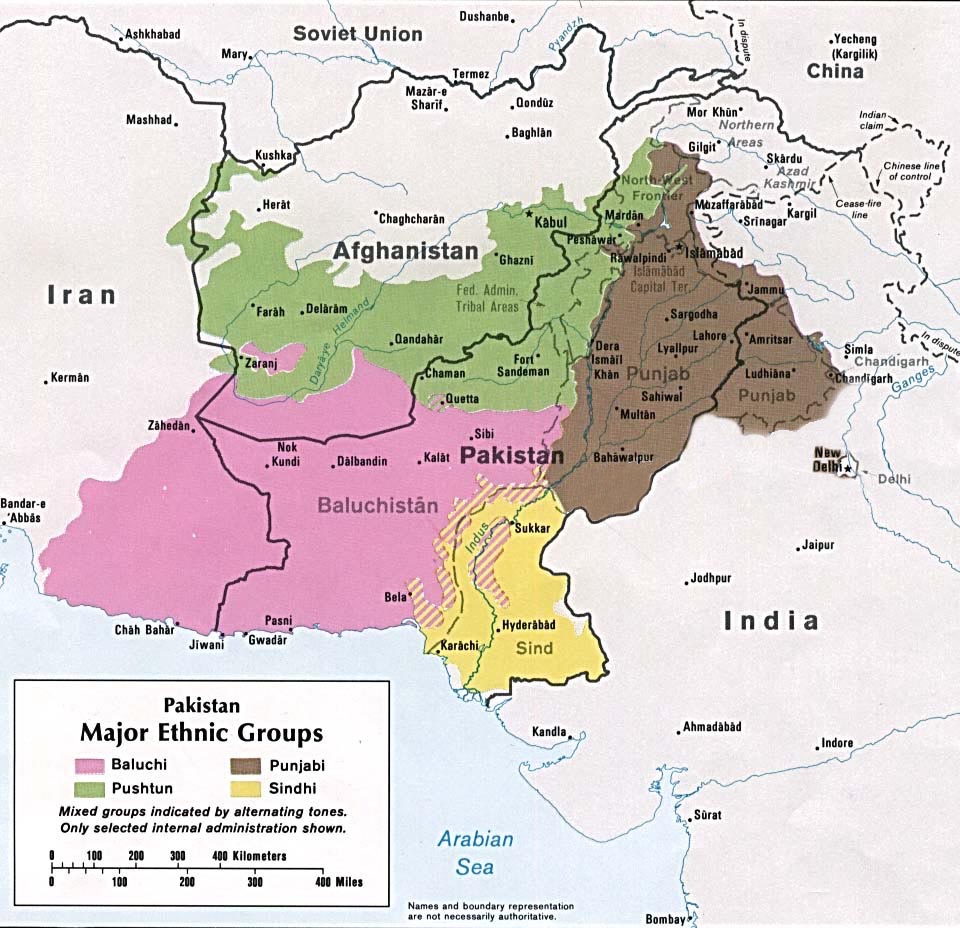
Hot spots where war may break out or escalate in 2025: Balochistan

source

Hot spots where war may break out or escalate in 2025

Balochistan – Iran and Pakistan

Balochistan is a little-known region spanning eastern Iran, western Pakistan, and southern Afghanistan. It is inhabited by the Baloch people, a unique nomadic ethno-linguistic group. Iran and Pakistan have struggled with insurgencies from the group for decades, embittered over a sense of disenfranchisement.

Read More »

U.S. proxies target Chinese Convoy near Karachi International airport days before the SCO meeting in Pak

YouTube

China says two citizens killed, one injured in Pakistan ‘terrorist attack’

In August, the BLA launched coordinated attacks in the province, in which more than 70 people were killed. It has claimed attacks in Balochistan, including the killing of seven barbers in Gwadar in May and the April killings of several people abducted from a highway.

The BLA specifically targets Chinese interests – in particular the strategic port of Gwadar on the Arabian Sea – accusing Beijing of helping Islamabad to exploit the province.

In March this year, five Chinese engineers and a Pakistani national were killed in an attack near the China-backed Dasu hydropower project. Nine Chinese engineers were killed in a similar attack near Dasu in 2021.

The BLA has also attacked Beijing’s consulate in Karachi.

The Port Qasim project involves the construction of two power plants near Karachi and is funded by China.

Pakistan is due to host the summit of the Shanghai Cooperation Organisation (SCO) in two weeks.

Related:

Balochistan Liberation Army

Canadian reporter caught falsely claiming Trudeau was briefed with names of ‘Chinese-funded’ election candidates

On November 7, 2022, Global News reporter Sam Cooper published a report titled “Canadian intelligence warned PM Trudeau that China covertly funded 2019 election candidates: Sources”. Cooper has a problem though: on November 20, Canadian PM Justin Trudeau admitted that he was never briefed about supposed Chinese-funded election candidates, doesn’t know their names (if they even exist) and only learned of the alleged Chinese election interference from media reports.

Canadian reporter caught falsely claiming Trudeau was briefed with names of ‘Chinese-funded’ election candidates

USA’s Dirty Tricks to stop China’s Rise

Jun 15, 2022 Over the last few years a number of Chines citizens have been killed in Pakistan. Is the USA behind this?

USA’s Dirty Tricks to stop China’s Rise via Barrett on YouTube.

Sources:

Suicide blast in southern Pakistan kills 3 Chinese, driver

NED in Pakistan

Free Baluchistan:

While doing less elsewhere in Pakistan, the United States should do more to support anti-Islamist forces along the southern Arabian Sea coast. First, it should support anti-Islamist Sindhi leaders of the Sufi variant of Islam with their network of 124,000 shrines. Most important, it should aid the 6 million Baluch insurgents fighting for independence from Pakistan in the face of growing ISI repression. Pakistan has given China a base at Gwadar in the heart of Baluch territory. So an independent Baluchistan would serve U.S. strategic interests in addition to the immediate goal of countering Islamist forces.

Previously:

US War on China’ Belt & Road Continues: Terrorist Attack Targets Chinese Engineers in Pakistan

US-backed Separatists Target Chinese Ambassador in Pakistan

China’s Pacific Islands Position Paper Debunks Fake News Claims

The Chinese Foreign Ministry released a position paper on the country’s relations with the ten Pacific Island Countries (PICs) that have diplomatic relations with Beijing. It comes as Foreign Minister Wang Yi wraps up his regional sojourn that saw him interacting with many of his counterparts and their other representatives. His trip was decried by American, Australian, and other Western media as supposedly signaling some sort of imperialist intentions on China’s part, yet the position paper debunks all of that.

China’s Pacific Islands Position Paper Debunks Fake News Claims

China faces an increase in extremist threats in central Asia, US panel is told

China faces an increase in extremist threats in central Asia, US panel is told

Raffaello Pantucci, a senior fellow at Singapore’s S. Rajaratnam School of International Studies, said that the Islamic State Khorasan (Isis-K) had identified the perpetrator of the suicide bomb attack on worshippers in a mosque in the Afghan city of Kunduz in October as a Uygur.

US policymakers are paying more attention to the growth of China’s geopolitical influence through programmes like the Belt and Road Initiative (BRI) – which includes the China-Pakistan Economic Corridor (CPEC) – as Washington’s relationship with Beijing has frayed on multiple fronts.

“It used to be the Uygur militants that tended to be responsible for attacks on Chinese diplomats or Chinese businessmen in Kyrgyzstan,” Pantucci added. “Increasingly we see Kyrgyz in general being quite angry towards the Chinese … and we can see similar narratives in Kazakhstan.”

Still, anger against Chinese does not mean that Americans are welcome, Jennifer Brick Murtazashvili, founding director at the University of Pittsburgh’s Centre for Governance and Markets, said.

“The US lost so much credibility because of the way it left Afghanistan,” she said. “Regardless of how you may feel about the intervention, regardless of how you may feel about the withdrawal of decision to withdraw the way the US left, I think it left a very bitter taste in the mouth of many people in the region.”

After all that work, instigating terrorists, they’re still not welcome back! Wonder why?! 🙄

3 Chinese nationals among 4 dead in suicide attack at Karachi University

At least four people, including three Chinese nationals, were killed while four others were injured in a suicide attack outside the University of Karachi’s (KU) Confucius Institute, officials said on Tuesday.

3 Chinese nationals among 4 dead in suicide attack at Karachi University

Related:

The “Baloch Liberation Army” Is a Foreign-Backed Feudal Terrorist Group

The US and India are well aware of this state of regional affairs and are attempting to exploit it to the utmost, taking advantage of the fact that this terrorist campaign is actually decades old but is being revived in response to CPEC and resultantly receiving a bunch of global news coverage because of it unlike before. To be clear, the Pakistani state is meeting the needs of the local population and addressing their various grievances, so those who are engaging in the BLA’s terrorism aren’t “freedom fighters” but loyal feudalists who are treasonously cooperating with foreign powers in order to suppress their own people. Even so, that angle of their campaign is conspicuously left out of the Mainstream Media’s coverage and only the anti-Chinese one is emphasized for reasons of “political convenience” since there’s a clear contradiction between the “democratic” principles that the US and India allege to support and the anti-democratic goals being advanced by the BLA.

Read More »

[2014] China and the Middle East: More Than Oil

China and the Middle East: More Than Oil

While China’s heavy dependence on Middle Eastern oil is an established fact, less is known about China’s early efforts to establish broad energy ties with the Middle East. Back in 1983, before the Chinese economy really took off, the overseas construction arm of China National Petroleum Corporation (CNPC) moved into the Kuwaiti market and later won an oil storage reconstruction project in 1995. Beijing also signed the Strategic Oil Cooperation agreement with Saudi Arabia in 1999, which laid the foundation for Saudi Arabia to become and remain China’s largest oil supplier. In exchange for stable crude supply, China has courted Saudi investment for expanding its refining capacity. One example is China Petroleum and Chemical Corporation’s (SINOPEC) meeting with Saudi Aramco to discuss a stake in a $1.2-billion refinery in the Chinese city of Qingdao. The two sides further joined hands in a $3.5-billion venture in Fujian province that included greater refinery capacity.4